Gujarat CMO Invites Devotees to Somnath Swabhiman Parva Mahapooja
Synopsis
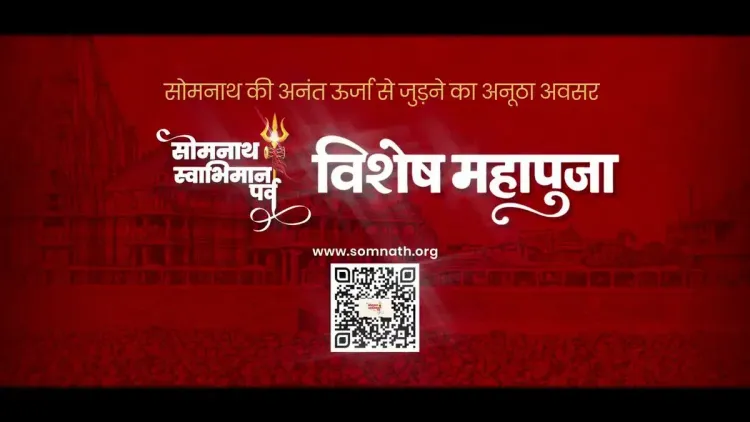
The Chief Minister's Office of Gujarat has called on devotees to register for the Somnath Swabhiman Parva, a PM Modi-inspired 12-hour mahapooja at the Somnath Jyotirlinga temple in Prabhas Patan, featuring abhishek, dhwaja pujan, and sacred vow rituals.
Key Takeaways
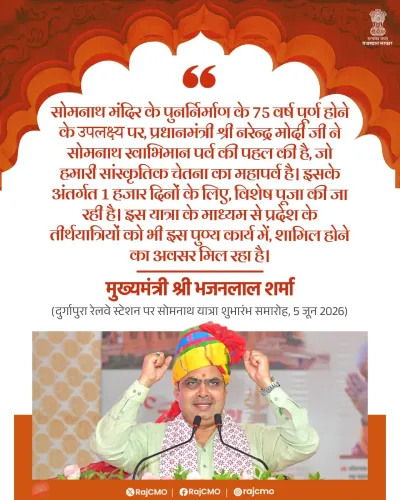
The Gujarat CMO's official X account on 5 July 2026 promoted the Somnath Swabhiman Parva , a special religious observance at Somnath Temple .
The event is described as inspired by Prime Minister Narendra Modi and includes a mahapooja, mahaabhishek, dhwaja pujan , and sacred vow ceremony.
Participation is structured as a 12-hour immersive devotional experience at the temple premises.
Devotees are required to register online at www.somnath.org ahead of the event.
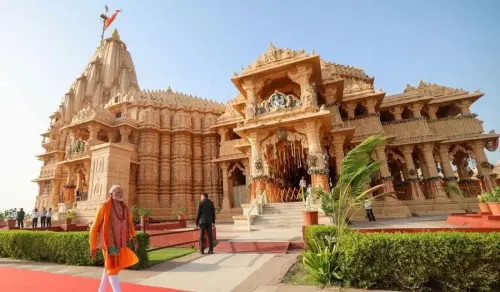
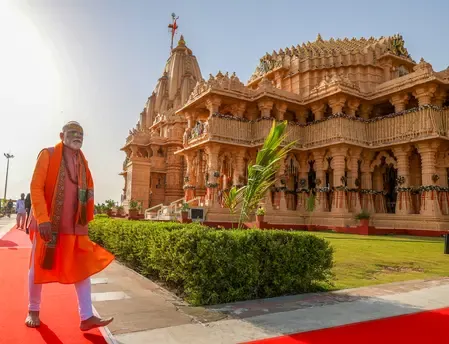
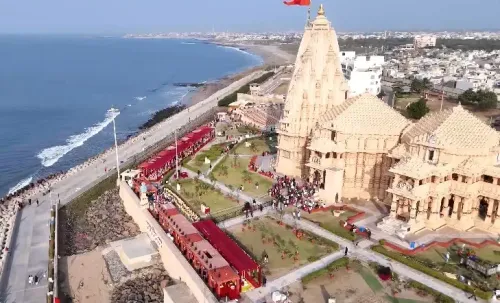
The Somnath Temple , one of twelve Jyotirlinga shrines, was rebuilt and inaugurated by President Rajendra Prasad on 11 May 1951 .
The promotion reflects Gujarat's broader strategy of using official state channels to drive participation in heritage and religious-tourism events.
The Chief Minister's Office of Gujarat on Sunday, 5 July 2026 invited devotees across the country to register for the Somnath Swabhiman Parva, a special 12-hour religious observance at the Somnath Temple in Prabhas Patan, Gujarat, describing it as an initiative inspired by Prime Minister Narendra Modi.
Context
The official post, shared in Hindi, called on devotees to participate in a 'vishesh mahapooja' (special grand worship) encompassing a 'pavitra sankalp' (sacred vow), 'mahaabhishek' (grand ritual bathing of the deity), and 'dhwaja pujan' (flag worship). The CMO described the event as an 'alaukik aur punyadayi anubhav' — an 'otherworldly and meritorious experience' — to be spent entirely in the presence of Somnath Dada, a reverential name for the presiding deity Mahadev. Devotees were directed to register at www.somnath.org to secure their participation.
Policy Backdrop
The Somnath Temple holds a singular place in India's post-independence cultural memory. The present structure was rebuilt after centuries of destruction and formally inaugurated by President Rajendra Prasad on 11 May 1951, making it one of the earliest acts of cultural restoration by the Indian republic. The temple is one of the twelve Jyotirlinga shrines — among the most sacred in the Hindu tradition — and draws pilgrims from across the country year-round.
Narendra Modi, who served as Gujarat Chief Minister before becoming Prime Minister, has a long association with Somnath's heritage and tourism development. State governments in Gujarat have consistently used official platforms to promote participation in temple rituals, positioning such events within broader religious-tourism frameworks that link ancient shrines with public engagement and infrastructure investment.
Stakeholders and Impact
The primary audience for the Swabhiman Parva is Hindu devotees and pilgrimage tourists, both from within Gujarat and from other states. The 12-hour format — featuring continuous chanting, ritual bathing, and flag worship — positions the event as an immersive spiritual retreat rather than a single ceremony. The CMO's use of an official government handle to amplify the call for registrations reflects the Gujarat administration's approach of channelling state visibility toward heritage and devotional events.
The online registration mechanism at somnath.org — the temple's official website — suggests that organisers are managing crowd flow and participation numbers in advance, indicating a structured, large-scale event. Pilgrimage tourism to Somnath has grown steadily, and a state-backed promotional push of this nature is likely to drive significant registration interest.
What's Next
Attention will now turn to registration volumes on somnath.org ahead of the programme and any follow-up statements from the state government on attendance figures or subsequent events under the Somnath Swabhiman Parva banner. If the event draws large participation, it could set a template for similar 12-hour devotional observances at other Jyotirlinga sites in Gujarat and beyond, reinforcing the state's position as a hub for organised religious tourism.
Point of View
The post draws a direct line between the BJP's cultural-nationalist agenda and temple revivalism — a political grammar that has proved durable across multiple electoral cycles. The 12-hour structured format and online registration mechanism suggest the event is being managed as a scalable public-engagement exercise, not merely a devotional gathering. If attendance is strong, it will likely be cited as evidence for expanding similar state-backed observances at other major shrines.
NationPress
5 Jul 2026
Frequently Asked Questions
What is the Somnath Swabhiman Parva?
The Somnath Swabhiman Parva is a special religious observance at the Somnath Temple in Prabhas Patan, Gujarat, featuring a 12-hour mahapooja, mahaabhishek, dhwaja pujan, and sacred vow rituals, promoted as an initiative inspired by Prime Minister Narendra Modi.
How can I register for the Somnath Swabhiman Mahapooja?
Devotees can register for the Somnath Swabhiman Mahapooja by visiting the official temple website at www.somnath.org and completing the online registration process.
What rituals are included in the Somnath Swabhiman Parva mahapooja?
The event includes a pavitra sankalp (sacred vow), mahaabhishek (grand ritual bathing of the deity), dhwaja pujan (flag worship), and continuous Vedic chanting over a 12-hour period.
Why is the Somnath Temple significant?
The Somnath Temple is one of the twelve Jyotirlinga shrines in India and holds deep cultural importance as a symbol of post-independence revival; the present structure was inaugurated by President Rajendra Prasad on 11 May 1951.
What is the Gujarat government's role in the Somnath Swabhiman Parva?
The Chief Minister's Office of Gujarat used its official X account to invite and encourage devotees to register for the event, reflecting the state government's practice of promoting temple heritage and religious tourism through official channels.