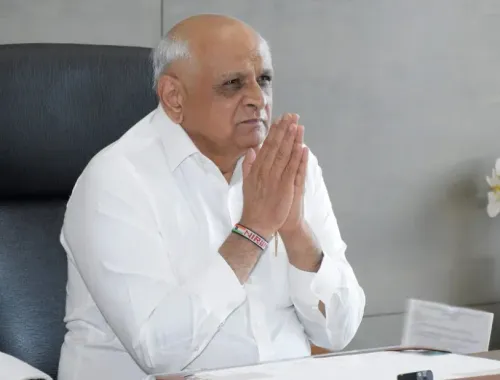
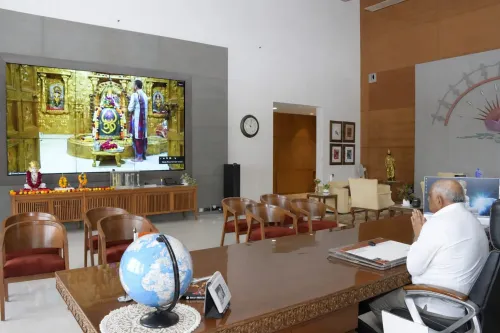
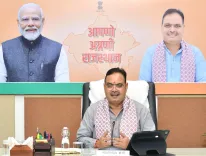
CM Bhupendra Patel Invites Devotees to Somnath Swabhiman Mahapooja

Synopsis
Gujarat Chief Minister Bhupendra Patel on July 5, 2026 called devotees to participate in the Somnath Swabhiman Parva Mahapuja, organised by the Shri Somnath Trust at the first Jyotirlinga shrine, with both in-person and online registration options available.
Key Takeaways
Gujarat CM Bhupendra Patel promoted the Somnath Swabhiman Parva on July 5, 2026 , crediting its inspiration to PM Narendra Modi .
The Shri Somnath Trust is organising a Vishesh Mahapuja dedicated to Lord Somnath Mahadev and Mata Parvati at the first Jyotirlinga shrine.
Devotees can participate either in person at the temple's Sabha Mandap in Prabhas Patan, Gujarat , or through an online registration platform.
The 'Swabhiman' framing continues the BJP 's long-running cultural emphasis on reclaiming and celebrating India's heritage temple sites.
The digital participation option reflects a post- 2020 trend of expanding remote access to major temple rituals across India.
The Somnath Temple was reconstructed and consecrated in May 1951 under the Sardar Patel-led Somnath Trust initiative.
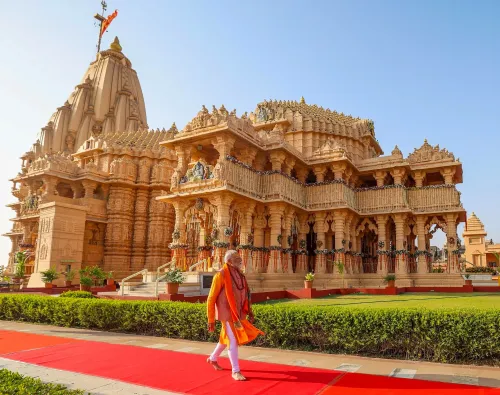
Gujarat Chief Minister Bhupendra Patel on Sunday, July 5, 2026, called on devotees across India to participate in the 'Somnath Swabhiman Parva', a multi-day religious-cultural festival centred on the first Jyotirlinga shrine at Somnath, Gujarat. Patel credited the festival's inspiration to Prime Minister Narendra Modi and urged the faithful to join a special Vishesh Mahapuja organised by the Shri Somnath Trust, either in person at the temple or through online registration from home.
Context
Posting in Hindi on X, CM Patel opened with the invocation 'Har Har Mahadev' and described the Somnath Swabhiman Parva as having become 'a symbol of the pride of India's Sanatan faith.' He framed the Mahapuja as a rare spiritual opportunity, writing: 'Yah avsar hai anant urja se judne ka... yah avsar hai chaitanya ke sagar se nadi ki tarah milne ka' — 'This is an occasion to connect with infinite energy... to merge like a river into the ocean of consciousness.' Devotees were invited to register for the ritual on the same day.
The Shri Somnath Trust, the statutory body overseeing temple operations and rituals, is the organising authority for the Mahapuja. The trust manages all major pujas, devotee facilities, and the broader administration of the Somnath Temple complex in Prabhas Patan, Saurashtra.
Policy Backdrop
The Somnath Temple holds deep historical and political significance in modern India. Its reconstruction and consecration, completed in May 1951 under the Sardar Patel-led Somnath Trust initiative, marked a landmark moment in post-independence cultural reclamation. PM Modi has addressed the Somnath Trust and spoken on temple redevelopment themes in public addresses from 2013 onward, including multiple personal visits to the shrine.
The 'Swabhiman' framing — meaning self-respect or self-assertion — aligns with a consistent pattern in which BJP-led governments at the state and national level have highlighted heritage temple sites as symbols of civilisational continuity. Gujarat has systematically linked state branding with its major Jyotirlinga and pilgrimage destinations to promote religious tourism as an economic and cultural priority.
Stakeholders and Impact
The primary beneficiaries of the Mahapuja initiative are pilgrims and devotees who may not be able to travel to Somnath in person. The option to participate online mirrors adaptations seen at major shrines across India since 2020, when digital access to temple rituals expanded significantly to serve a geographically dispersed devotee base.
For the Shri Somnath Trust, the event represents an opportunity to deepen engagement with a national and diaspora audience. The dual in-person and digital model — registration at the temple's Sabha Mandap (assembly hall) or via an online platform — broadens the reach of the ritual beyond Gujarat's borders. Local hospitality, transport, and religious-services sectors in Prabhas Patan also stand to benefit from increased footfall during the festival period.
What's Next
The Shri Somnath Trust is expected to release participation data following the conclusion of the Swabhiman Parva, which could feed into Gujarat's broader religious-tourism metrics for 2026. Any follow-up events tied to the state's annual temple and pilgrimage calendar will be closely watched as indicators of how the Swabhiman Parva is institutionalised going forward. CM Patel's public amplification of the event signals the Gujarat government's continued investment in positioning Somnath as a flagship destination in India's cultural and spiritual landscape.
Point of View
Patel reinforces a top-down narrative of saffron governance as the custodian of Sanatan heritage. The dual online-offline model is a notable operational evolution, extending the political and devotional reach of such events well beyond Gujarat's borders. How the Shri Somnath Trust monetises and scales this digital participation model could set a template for other major Jyotirlinga shrines under BJP-governed states.
NationPress
3 Oct 2026
Frequently Asked Questions
What is the Somnath Swabhiman Parva?
The Somnath Swabhiman Parva is a multi-day religious and cultural festival centred on the Somnath Temple in Prabhas Patan, Gujarat, celebrating the pride of India's Sanatan heritage and featuring special rituals organised by the Shri Somnath Trust.
How can I register for the Somnath Swabhiman Mahapuja?
Devotees can participate in the Vishesh Mahapuja either by attending in person at the temple's Sabha Mandap in Prabhas Patan, Gujarat, or by registering online through the platform announced by the Shri Somnath Trust.
Who is organising the Somnath Swabhiman Mahapuja?
The Vishesh Mahapuja is being organised by the Shri Somnath Trust, the statutory body that manages the Somnath Temple's operations, rituals, and devotee facilities.
What is the significance of the Somnath Temple?
The Somnath Temple in Prabhas Patan, Gujarat, is revered as the first of the twelve Jyotirlinga shrines dedicated to Lord Shiva. It was reconstructed and consecrated in May 1951 under the Sardar Patel-led Somnath Trust initiative after centuries of destruction and rebuilding.
Why did CM Bhupendra Patel credit PM Modi for the Somnath Swabhiman Parva?
CM Patel stated in his post that the Somnath Swabhiman Parva was organised under the inspiration of Prime Minister Narendra Modi, reflecting PM Modi's long-standing public emphasis on the cultural and spiritual significance of the Somnath Temple.