Gujarat Constitution Day: Youth seminar, 251-photo Patel exhibit
Synopsis
Gujarat marked Constitution Day with a seminar for law students at the Assembly, where Speaker Shankar Chaudhary urged them to settle disputes through dialogue rather than vandalism. In Ahmedabad, Governor Acharya Devvrat opened a Sardar Patel exhibition of 251 photographs and documents, several never shown publicly before. It is open until 2 December.
Key Takeaways
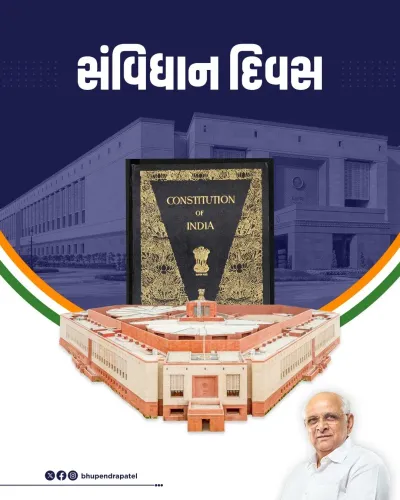
Gujarat marked Constitution Day on Thursday with a law students' seminar at the State Legislative Assembly in Gandhinagar .
Speaker Shankar Chaudhary cited Articles 168, 170 and 172 and urged students to resolve disagreements through dialogue, not vandalism.
Education Minister Dr Pradyuman Vaja recalled that the Constitution was adopted on 26 November 1949 and took effect on 26 January 1950 .
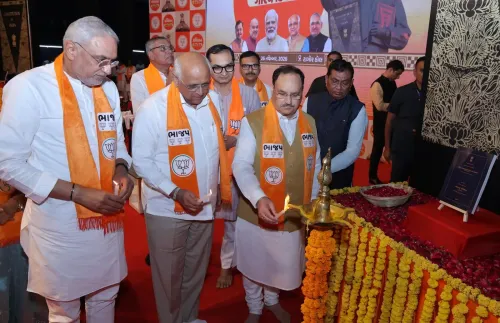
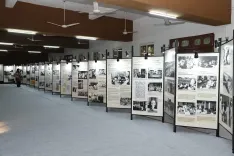
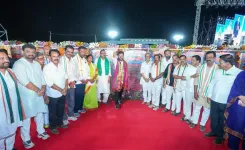
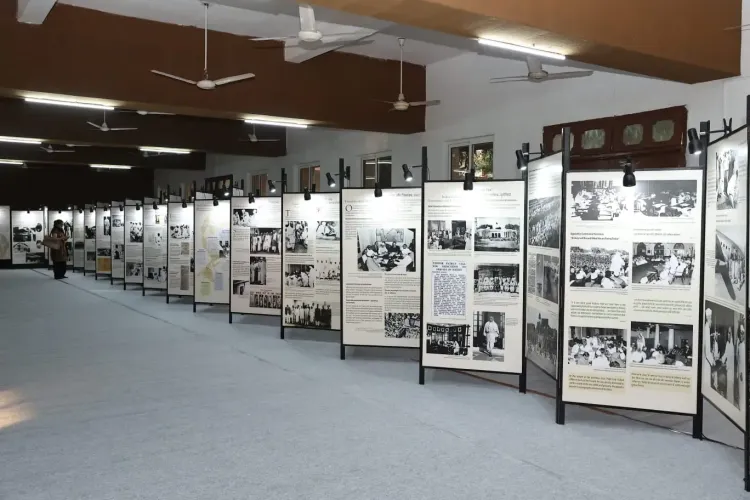
Governor Acharya Devvrat opened 'Sardar Patel: Life and Times', with 251 rare photographs and documents in 28 sections.
The exhibition at Gujarat Vidyapith runs until 2 December , from 10:30 am to 6 pm daily.
Gujarat observed Constitution Day on Thursday with two linked events. Law students gathered for a seminar at the State Legislative Assembly in Gandhinagar, and Governor Acharya Devvrat opened an exhibition of 251 rare photographs and historical documents on Sardar Vallabhbhai Patel at Gujarat Vidyapith in Ahmedabad. Both events focused on teaching young people about constitutional values, democratic institutions and India's nation-building legacy.
Speaker Shankar Chaudhary's Message to Young Lawmakers
At the Assembly, Speaker Shankar Chaudhary addressed students under the Ganesh Vasudev Mavalankar Training Committee. He said young people would become the future carriers of the legislature and would directly take part in making laws.
Chaudhary explained the constitutional provisions on state legislatures, including their composition and duration. He cited Articles 168, 170 and 172 of Part VI of the Constitution. He also described how the three pillars of the state divide their work: “Law-making took place within legislative Houses, while the executive, comprising the Cabinet and bureaucracy, is responsible for implementation. The judiciary, meanwhile, addressed injustice, questions of interpretation and ambiguities in laws and their drafting.”
He encouraged students to become advocates and judges. He said their ability to argue in legal language would help the administration of justice.
Constitutional Opportunity and Civilisational Roots
Chaudhary pointed to his own path, from a student in an ordinary family to Speaker of the Assembly, as proof of the opportunities the Constitution offers. He also cited Prime Minister Narendra Modi's rise from an economically disadvantaged family in Vadnagar to the country's highest executive office.
Speaking about the illustrations in the original Constitution, he said: “They represented India's ancient civilisation, cultural heritage and philosophy of governance. The bull from Mohenjo-daro reflected India's ancient agricultural civilisation and demonstrated that the country is not a newly formed nation.” He said the depictions of Vedic ashrams and yajnas carried a message of nurturing nature rather than exploiting it. He linked them to the principles of 'Sarve Bhavantu Sukhinah' and 'Vasudhaiva Kutumbakam'.
He urged students to follow systematic processes rather than look for shortcuts. Invoking 'Charai Veti, Charai Veti', he said: “Reforms could be undertaken in response to changing times and generations, but the fundamental principles should remain intact.” He noted that citizens themselves fund taxes and public facilities, and added: “Therefore, disagreements and dissatisfaction should be addressed through dialogue and discipline rather than vandalism, with people respecting established rules.”
He also suggested that students hold structured debates on constitutional subjects under their professors' guidance and keep recordings of the discussions for future learning.
Education Minister on 'We, the People'
Education Minister Dr Pradyuman Vaja called the Constitution the supreme legal document governing a country's administration. He said the opening words of the Preamble, 'We, the People of India', represented the strength of democracy and were not merely a phrase.
He recalled that the Constituent Assembly adopted the Constitution on 26 November 1949 and that it came into effect on 26 January 1950. “India's Constitution incorporated several important features from constitutions across the world, including fundamental rights and duties, the parliamentary system, the Directive Principles of State Policy and the ideals of liberty, equality and fraternity,” he said.
Students and faculty from several colleges took part in the discussions, including Motilal Nehru Law College, Government Law College, Maninagar, Siddharth Law College, Vivekanand Law College and the Institute of Law, Nirma University. The topics were:
- the Uniform Civil Code and religious freedom
- digital rights and fundamental rights
- the Constitution's achievements and challenges over more than 75 years
Sardar Patel Exhibition Opens at Gujarat Vidyapith
In Ahmedabad, Governor Devvrat inaugurated 'Sardar Patel: Life and Times' to mark Patel's 150th birth anniversary. The exhibition traces Patel's life through 251 rare photographs and original documents:
- his childhood in Karamsad
- his career as a barrister
- his leadership in the Kheda and Bardoli Satyagrahas
- his role in the freedom struggle
- his decisive part in integrating the princely states after Independence
Several of the items have not been shown to the public before. The display is arranged in 28 thematic and chronological sections.
The exhibition is open to students, researchers and history enthusiasts at the Mahadev Desai Upasana Hall on the Gujarat Vidyapith campus. It runs until 2 December, from 10:30 am to 6 pm daily.
Point of View
But putting law students inside the Assembly is a sensible way to make governance concrete. The more revealing part is what the students chose to discuss: the Uniform Civil Code, religious freedom and digital rights. These are live and contested questions, not settled textbook material. The Speaker's call for dialogue over vandalism is welcome. Its credibility will depend on whether legislatures themselves model that discipline, since disruption has become routine in many Houses. The Patel exhibition, with previously unseen archival material, may prove the more lasting contribution, provided it reaches students beyond Ahmedabad.
NationPress
27 Nov 2026
Frequently Asked Questions
How did Gujarat observe Constitution Day this year?
Gujarat held a seminar for law students at the State Legislative Assembly in Gandhinagar. Governor Acharya Devvrat also opened an exhibition on Sardar Vallabhbhai Patel at Gujarat Vidyapith in Ahmedabad.
What did Speaker Shankar Chaudhary tell the students?
He said young people would become future carriers of the legislature and should pursue careers as advocates and judges. He explained Articles 168, 170 and 172 of the Constitution and urged that disagreements be handled through dialogue and discipline rather than vandalism.
What is the 'Sardar Patel: Life and Times' exhibition?
It is an exhibition of 251 rare photographs and original documents marking Patel's 150th birth anniversary, arranged in 28 thematic and chronological sections. Several of the items have not been shown to the public before.
Where and until when can the public visit the Patel exhibition?
It is at the Mahadev Desai Upasana Hall on the Gujarat Vidyapith campus in Ahmedabad. It is open until 2 December, from 10:30 am to 6 pm daily.
When was the Indian Constitution adopted?
The Constituent Assembly adopted the Constitution on 26 November 1949, and it came into effect on 26 January 1950. Constitution Day is observed every year on 26 November to mark the adoption.