Gujarat AHTU cops trained in digital forensics to combat human trafficking
Synopsis
As Gujarat's human trafficking arrests jumped 35% in a single year, Rashtriya Raksha University put 41 AHTU inspectors through a live OSINT lab and forensic deep-dive — a signal that India's anti-trafficking enforcement is shifting from reactive to technology-led. The 'Trapped Behind the Scam' workshop is one of the more concrete capacity-building moves in a space where convictions have long lagged arrests.
Key Takeaways
Rashtriya Raksha University (RRU) trained 41 Police Inspectors from Gujarat's Anti-Human Trafficking Units (AHTUs) in digital, forensic, and financial investigation techniques.
The three-day workshop 'Trapped Behind the Scam' ran from 20 to 22 August in Gandhinagar , coinciding with the UN World Day Against Trafficking in Persons .
Human trafficking arrests in Gujarat rose from 48 in 2023 to 65 in 2024 , according to MHA data placed before Parliament.
Officers received a live demonstration at RRU's Open-Source Intelligence (OSINT) Laboratory .
The programme was organised by RRU's National Resource Centre for Anti-Human Trafficking (NRCHT) , a joint initiative with the India Police Foundation .
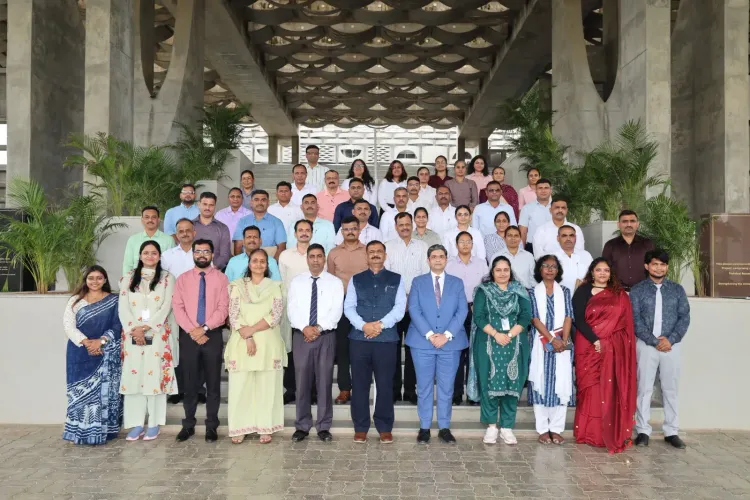
Rashtriya Raksha University (RRU) has trained 41 Police Inspectors from Anti-Human Trafficking Units (AHTUs) across Gujarat in technology-enabled investigation techniques, as the state's human trafficking arrests rose from 48 in 2023 to 65 in 2024, according to data placed before Parliament by the Ministry of Home Affairs (MHA). The three-day workshop, held from 20 to 22 August at RRU's campus in Gandhinagar, was timed to coincide with the United Nations World Day Against Trafficking in Persons.
Workshop Overview
Titled 'Trapped Behind the Scam', the programme was organised by RRU's National Resource Centre for Anti-Human Trafficking (NRCHT) — a joint initiative of RRU and the India Police Foundation — under the university's School of Criminal Law and Military Law. Sessions covered the evolving methods used by traffickers, transnational organised crime, forensic and financial investigation techniques, and inter-agency coordination. Child trafficking and the critical role of collaboration between police, NGOs, social welfare departments, health professionals, and prosecutors were also examined in depth.
Key Voices at the Inaugural Session
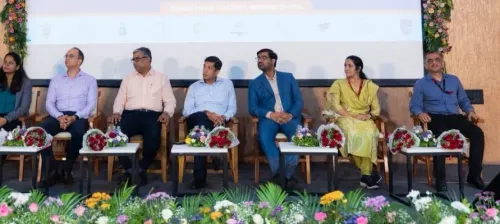
Aditya Purohit, National Security Staff Officer to the Vice Chancellor, underscored the need for law-enforcement agencies to harness technology, data, and specialised knowledge to counter emerging crime forms. Sunil Kavishwar, Director of the School of Criminal Law and Military Law, described the workshop as a 'tactical laboratory', emphasising hands-on learning alongside classroom instruction and highlighting digital evidence, forensic investigation, financial investigation, and inter-agency coordination as pillars of effective trafficking probes.
Prof. Dr Kalpesh Wandra, Pro Vice Chancellor at RRU, stressed the importance of regular, practical training for police officers as technology becomes ever more central to criminal investigations. Retired IPS officer and former senior National Investigation Agency (NIA) official Atul Kulkarni addressed participants via video conference, drawing on his experience investigating organised crime and human trafficking.
OSINT Lab Demonstration
As part of the practical component, officers visited RRU's advanced Open-Source Intelligence (OSINT) Laboratory, where they received a live demonstration of how OSINT tools and other technology-based platforms can strengthen police investigations. The hands-on exposure was designed to bridge the gap between theoretical training and field application — a gap that experts say has historically hampered trafficking prosecutions.
Rising Arrests and the Enforcement Context
According to data provided by the MHA before Parliament, human trafficking-related arrests in Gujarat climbed from 48 in 2023 to 65 in 2024 — a rise of roughly 35% in a single year. The MHA's Anti-Trafficking Cell is responsible for coordinating the national law-enforcement response to trafficking and issues guidelines to states and Union Territories to strengthen enforcement capacity. This workshop is part of a broader push to ensure that investigative capabilities keep pace with increasingly sophisticated trafficking networks that exploit digital platforms and financial systems to evade detection.
What Comes Next
The workshop also served as a peer-learning forum, enabling officers from different districts to exchange field experiences and discuss challenges in identifying, investigating, and preventing trafficking. RRU's NRCHT is expected to continue rolling out similar training programmes as part of its mandate for research, training, and professional development in anti-trafficking work across India.
Point of View
And the data alone cannot tell us which. What the RRU workshop tacitly acknowledges is that arrests without convictions are a hollow metric; the real bottleneck in trafficking cases has always been evidence quality, not enforcement intent. Training inspectors in OSINT and financial forensics is the right lever to pull, but a three-day workshop for 41 officers across an entire state is a modest intervention against a transnational organised-crime network. The harder question — whether Gujarat's prosecution and victim-support infrastructure can absorb the caseload that better detection will generate — remains unanswered.
NationPress
7 Oct 2026
Frequently Asked Questions
What was the 'Trapped Behind the Scam' workshop held at RRU?
It was a three-day specialised training programme for 41 Police Inspectors from Gujarat's Anti-Human Trafficking Units, held from 20 to 22 August at Rashtriya Raksha University in Gandhinagar. The workshop covered digital forensics, OSINT tools, financial investigation, and inter-agency coordination in human trafficking cases.
Why did Gujarat police need this training?
Human trafficking arrests in Gujarat rose from 48 in 2023 to 65 in 2024, according to MHA data presented before Parliament. As trafficking networks increasingly exploit digital platforms and financial systems, investigators require technology-enabled skills to build stronger cases.
What is RRU's National Resource Centre for Anti-Human Trafficking?
The NRCHT is a joint initiative of Rashtriya Raksha University and the India Police Foundation that undertakes research, training, and professional development in anti-trafficking work. It organised the workshop under RRU's School of Criminal Law and Military Law.
What practical training did officers receive at the workshop?
Officers visited RRU's advanced Open-Source Intelligence (OSINT) Laboratory for a live demonstration of how OSINT and other technology-based tools can support police investigations. The practical component complemented classroom sessions on forensic and financial investigation techniques.
Who addressed the officers during the workshop?
Key speakers included Aditya Purohit (National Security Staff Officer to the Vice Chancellor), Sunil Kavishwar (Director, School of Criminal Law and Military Law), Prof. Dr Kalpesh Wandra (Pro Vice Chancellor, RRU), and retired IPS officer Atul Kulkarni, a former senior NIA official who addressed participants via video conference.