Gujarat Dy CM Sanghavi reviews law and order, pushes Drug-Free Gujarat drive
Synopsis
Gujarat's anti-drug push just got a fresh push from the top. Deputy CM Harsh Sanghavi's Saturday review with senior police follows Union Home Minister Amit Shah's wide-ranging security directive last week — covering narcotics networks, coastal surveillance, cybercrime, and illegal migration — framing Gujarat as a critical front in India's drug-free-by-2029 mission.
Key Takeaways
Gujarat Deputy CM Harsh Sanghavi held a law and order review meeting with senior police officials on 14 November 2026 in Gandhinagar .
Special focus was on intensifying the Drug-Free Gujarat campaign as part of a national goal of a drug-free India by 2029 .
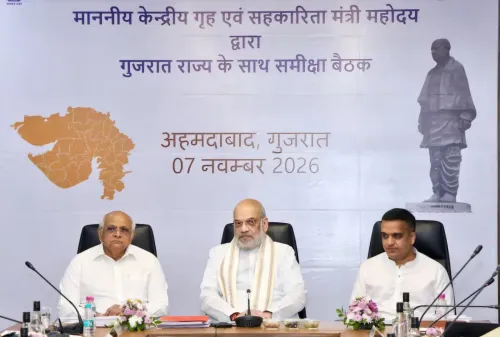
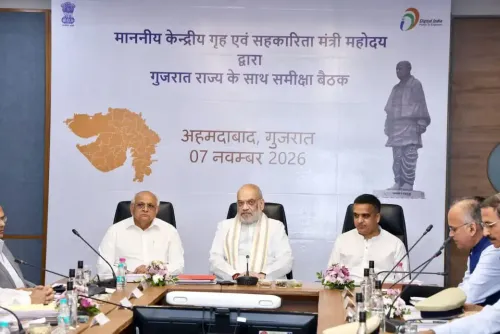
The meeting follows a high-level review by Union Home Minister Amit Shah on 7 November in Ahmedabad covering narcotics, cybercrime, border security, and criminal law implementation.
Shah directed agencies to target entire drug trafficking networks, not just street-level peddlers, and to conduct financial investigations to seize illicit assets.
Gujarat filed 92% of chargesheets within 60 days and deported 2,412 illegal foreign nationals — both flagged positively by Shah.
More than 25,000 pending forensic cases are to be expedited, and the '1933' anti-drug control room is set for expansion.
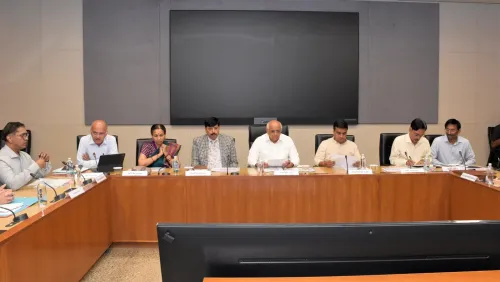
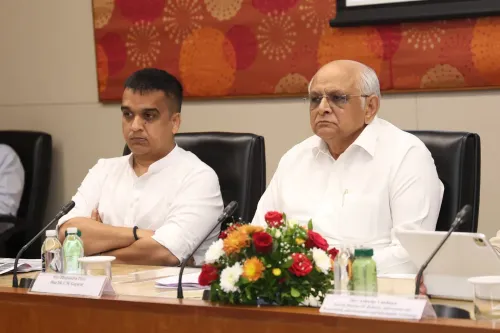
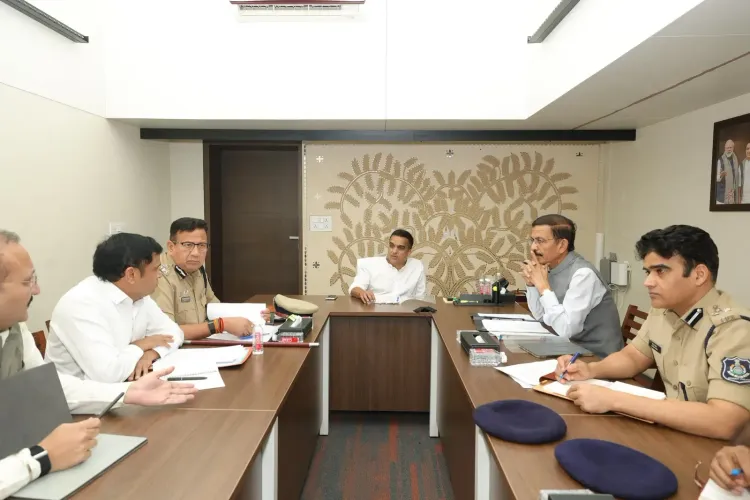
Gujarat Deputy Chief Minister Harsh Sanghavi on Saturday, 14 November 2026, convened a high-level meeting with senior police officials in Gandhinagar to review the state's law and order situation, placing special emphasis on accelerating the campaign against drug abuse and reinforcing public safety measures.
What Sanghavi Said
Sharing details of the meeting on social media platform X, Sanghavi wrote: 'Held a meeting with senior police officials to review the law and order situation and discuss strategies to further strengthen public safety and security. Special emphasis was laid on intensifying the fight against drug abuse and advancing our collective commitment towards a 'Drug-Free Gujarat'.'
The meeting signals a renewed administrative push on the anti-narcotics front, coming in the wake of a broader national direction set by the Centre.
Amit Shah's High-Level Review a Week Ago
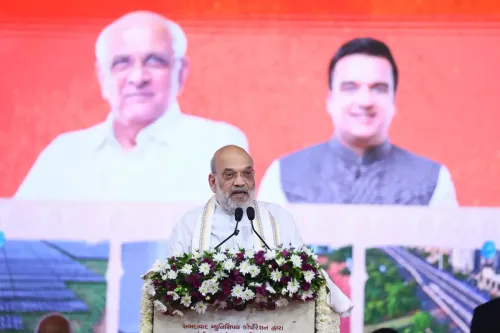
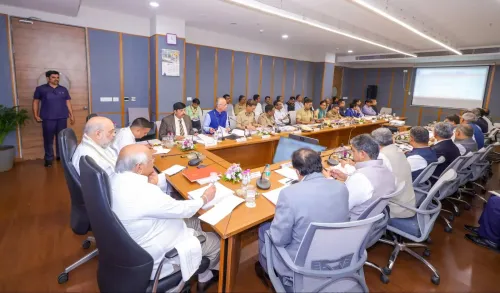
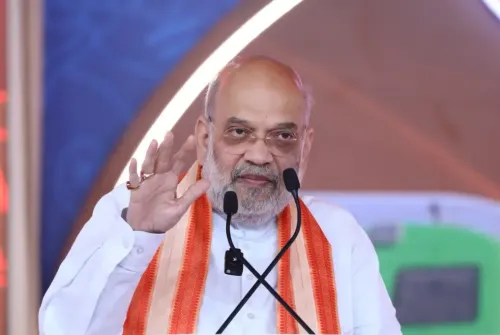
Saturday's meeting follows a high-level security review convened by Union Home Minister Amit Shah on 7 November in Ahmedabad, where he met Chief Minister Bhupendra Patel and Sanghavi to assess the state's internal security landscape. That meeting covered narcotics trafficking, cybercrime, police modernisation, border and coastal security, counter-terrorism, illegal migration, disaster management, and implementation of the new criminal laws. Senior officials from the Union Ministry of Home Affairs, the state Home Department, and multiple security agencies attended.
Border Security and Drug Trafficking Directives
With Gujarat sharing an international border with Pakistan and maintaining a coastline of nearly 2,340 km, Shah stressed the urgency of strengthening border and coastal surveillance and improving coordination among the Border Security Force (BSF), state police, the Coast Guard, and central agencies. On narcotics, Shah directed agencies to dismantle entire trafficking networks and pursue their principal operators rather than focusing narrowly on street-level peddlers. He also called for robust financial investigations to identify and seize assets linked to the illegal trade — a move that signals an intent to cut off economic lifelines of drug syndicates.
Criminal Law Implementation and Cybercrime
Shah reviewed Gujarat's compliance with the new criminal laws, noting that the state had filed 92% of chargesheets within 60 days and 86% within 90 days — performance the Home Minister described approvingly. He also called for expanding the '1933' anti-drug control room, strengthening the S4C unit and the 1930 cybercrime helpline, and expediting the disposal of more than 25,000 pending forensic cases. The deportation of 2,412 illegal foreign nationals through special drives was also acknowledged. Shah reiterated the Centre's national goal of a drug-free India by 2029, calling for close coordination between central and state agencies with regular progress reviews.
What Comes Next
Sanghavi's Saturday review suggests Gujarat is translating Shah's directives into ground-level action. With the state's strategic geography — a long coastline historically linked to smuggling routes — enforcement coordination between maritime and land agencies will be central to any meaningful progress. All eyes are now on whether the intensified campaign produces measurable outcomes in trafficking arrests and asset seizures in the weeks ahead.
Point of View
But the real measure will be outcomes, not optics. Gujarat's long coastline and Pakistan border have historically been conduits for narcotics and arms, and directing agencies to pursue trafficking kingpins rather than peddlers is the right call in theory; it has also been said before. The directive to seize criminal assets is the most consequential element — financial disruption of networks is the one lever that consistently degrades trafficking operations. Without publicly reported data on seizures, arrests, and asset freezes, 'Drug-Free Gujarat' risks remaining a slogan rather than a strategy.
NationPress
14 Nov 2026
Frequently Asked Questions
Why did Gujarat Dy CM Harsh Sanghavi hold a law and order review on 14 November?
Sanghavi convened the meeting to assess the state's public safety situation and accelerate action on drug abuse, following a national directive from Union Home Minister Amit Shah issued during a high-level security review on 7 November in Ahmedabad. The meeting is part of a broader push toward achieving a drug-free India by 2029.
What did Amit Shah direct during the Gujarat security review on 7 November?
Shah directed agencies to target entire drug trafficking networks and their principal operators, conduct financial investigations to seize illicit assets, expand the '1933' anti-drug control room, and strengthen the 1930 cybercrime helpline. He also stressed improved border and coastal surveillance given Gujarat's nearly 2,340 km coastline and international border with Pakistan.
What is the 'Drug-Free Gujarat' campaign?
It is a state-level anti-narcotics initiative aimed at eliminating drug abuse and trafficking in Gujarat, aligned with the Centre's national target of a drug-free India by 2029. The campaign involves enforcement drives, public awareness programmes, and financial investigations against trafficking networks.
How is Gujarat performing on the new criminal laws?
According to reports from the 7 November review, Gujarat filed 92% of chargesheets within 60 days and 86% within 90 days — performance the Home Minister noted approvingly. The state also deported 2,412 illegal foreign nationals through special drives.
What are the pending issues flagged at the Gujarat security review?
More than 25,000 forensic cases remain pending and are to be fast-tracked. Authorities were also directed to expand the capacity of the S4C unit, reinforce counter-terrorism agencies, and intensify the identification and deportation of illegal foreign nationals in accordance with the law.