Gujarat to go plastic-free at Ambaji Temple, cut 135.6 tonnes of waste yearly
Synopsis
Gujarat is taking its plastic-free prasad model from Somnath to Ambaji — and the numbers are striking. With 10 lakh boxes distributed every month, the switch to sugarcane bagasse containers and reusable tins could cut 135.6 tonnes of plastic waste a year. If it holds, the blueprint could reshape waste management at pilgrimage sites across India.
Key Takeaways
The Gujarat Pollution Control Board (GPCB) plans to introduce eco-friendly prasad packaging at the Ambaji temple , preventing an estimated 135.6 tonnes of plastic waste annually.
The temple currently uses around 15,000 plastic boxes per day and distributes approximately 10 lakh boxes every month.
Alternatives developed by NID Ahmedabad include moulded sugarcane bagasse containers , plastic-free paper boxes , and reusable tin boxes .
The model was first implemented at the Somnath temple , inaugurated by Chief Minister Bhupendra Patel on 17 September 2026 , where it is set to eliminate over 203 tonnes of plastic annually.
Officials indicated the approach could be extended to other pilgrimage centres across Gujarat and beyond.
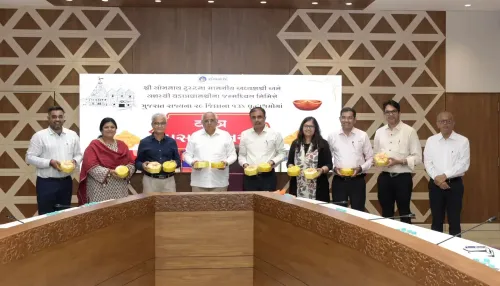
The Gujarat Pollution Control Board (GPCB) is set to introduce eco-friendly prasad packaging at the Ambaji temple, with the proposed shift away from conventional plastic boxes expected to prevent approximately 135.6 tonnes of packaging-related plastic waste every year. The initiative builds on a similar rollout at the Somnath temple in September 2026 and marks a deliberate effort to extend sustainable practices across Gujarat's major pilgrimage centres.
Scale of the Problem at Ambaji
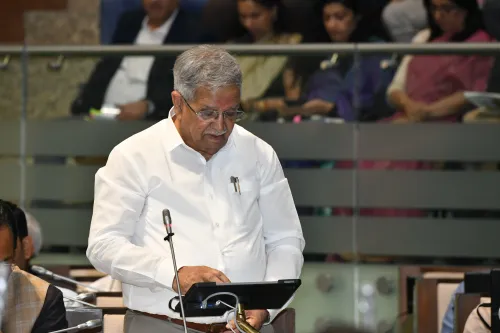
Forest and Environment Minister Arjun Modhwadia said the Ambaji temple currently distributes around 15,000 plastic prasad boxes on a normal day, a figure that climbs sharply during festivals and special occasions. Across a month, approximately 10 lakh boxes are handed out, generating an estimated 11,299.5 kg of packaging-related plastic waste. 'The proposed transition to eco-friendly alternatives could prevent approximately 135.6 tonnes of plastic waste annually at Ambaji. The packaging solutions are intended to maintain the hygiene, functionality and convenience required for prasad distribution while preserving its cultural identity,' Modhwadia said.
What the Alternatives Look Like
The National Institute of Design (NID), Ahmedabad, was engaged by GPCB through a professional design consultancy assignment to develop packaging suited to both the Somnath and Ambaji temples. Field studies examined devotee footfall, prasad quantities, preparation and packaging processes, storage conditions, distribution patterns and existing waste-generation practices at both sites. The study concluded that a single packaging type would not meet all requirements — prasad for immediate consumption needed lightweight, biodegradable materials, while products carried home or over longer distances required sturdier containers. The proposed alternatives include paper boxes and moulded sugarcane bagasse containers — made from a by-product of sugarcane processing — for short-term use, alongside durable reusable tin boxes that devotees can keep.
The Somnath Precedent
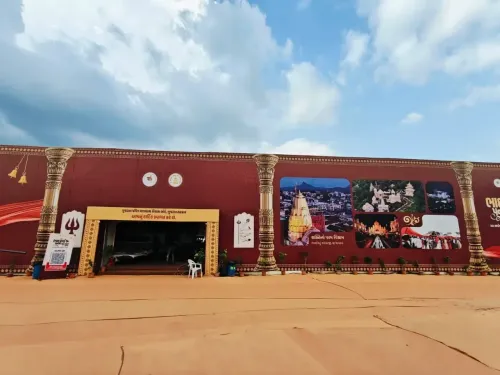
At Somnath, the eco-friendly transition is already under way. Chief Minister Bhupendra Patel formally inaugurated the initiative on 17 September 2026. The temple distributes roughly 4,200 kg of prasad in nearly 27,700 boxes every day; the switch to plastic-free paper boxes and reusable tin containers is expected to eliminate more than 203 tonnes of plastic use annually. Ambaji is the second temple to be brought under the framework, with separate packaging solutions designed for immediate consumption, regular takeaway and reusable categories.
Broader Ambition
Minister of State for Forests and Environment Pravin Mali said the initiative sought to make environmental responsibility an integral part of religious practice. 'By introducing biodegradable and reusable alternatives at prominent pilgrimage centres, GPCB aims to demonstrate how thoughtful design, institutional action and public participation can deliver measurable environmental benefits,' Mali said. Officials indicated that, with the model operational at Somnath and in development for Ambaji, the approach could eventually be considered for other pilgrimage centres across Gujarat and beyond. This comes amid growing pressure on state governments to address single-use plastic waste at high-footfall religious sites, where daily volumes of packaging often dwarf those of urban markets.
Point of View
Not merely a ban. By distinguishing immediate-consumption packaging from take-home containers, the framework avoids the bluntness of earlier plastic restrictions that often failed at temples for practical reasons. The harder question is whether Ambaji's rollout will be enforced after the inauguration spotlight fades — Somnath's numbers will be the real test case. If 135.6 tonnes is actually diverted annually, Gujarat will have built a replicable playbook for the roughly 700 major temples across India that collectively generate enormous single-use plastic loads with almost no accountability.
NationPress
26 Oct 2026
Frequently Asked Questions
What is the eco-friendly prasad packaging initiative at Ambaji temple?
It is a plan by the Gujarat Pollution Control Board (GPCB) to replace conventional plastic prasad boxes at the Ambaji temple with biodegradable and reusable alternatives, including sugarcane bagasse containers, paper boxes, and tin boxes. The switch is expected to prevent approximately 135.6 tonnes of plastic waste annually.
How much plastic waste does Ambaji temple currently generate?
The Ambaji temple distributes around 15,000 plastic prasad boxes on a normal day and approximately 10 lakh boxes per month, generating an estimated 11,299.5 kg of packaging-related plastic waste monthly.
What happened at Somnath temple with eco-friendly packaging?
Chief Minister Bhupendra Patel inaugurated plastic-free prasad packaging at the Somnath temple on 17 September 2026. Prasad is now distributed in paper boxes and reusable tin containers, a move expected to eliminate more than 203 tonnes of plastic use annually given the temple's daily distribution of around 27,700 boxes.
Who developed the eco-friendly packaging alternatives?
The National Institute of Design (NID), Ahmedabad, developed the alternatives through a professional design consultancy assignment commissioned by GPCB. Field studies at both Somnath and Ambaji informed distinct solutions for immediate consumption, regular takeaway, and reusable packaging needs.
Could this model be adopted at other temples in India?
Officials have indicated that, following rollouts at Somnath and Ambaji, the approach could be considered for other pilgrimage centres in Gujarat and elsewhere in India. The framework's scalability will depend on how successfully the Ambaji implementation is executed and monitored.