Gujarat floods: Ministers deployed to South Gujarat, Valsad shuts factories on 23 July
Synopsis
With an IMD red alert blanketing South Gujarat, Chief Minister Bhupendra Patel has deployed Deputy CM Harsh Sanghavi and cabinet colleagues directly to Surat, Valsad, and Navsari — while Valsad's industrial belt goes dark for a day. The scale of the administrative mobilisation signals that this is no ordinary monsoon spell.
Key Takeaways
Chief Minister Bhupendra Patel deployed Deputy CM Harsh Sanghavi , Tribal Development Minister Naresh Patel , and IAS officers Ramya Mohan and Alok Pandey to Surat , Valsad , and Navsari on 23 July .
The IMD has issued a red alert for heavy rainfall across multiple South Gujarat districts.
Valsad district administration ordered all factories and industrial units closed for 23 July , citing worker safety.
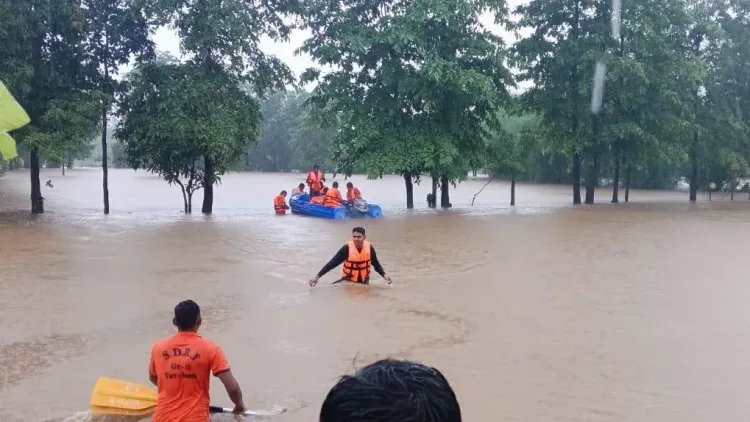
Rescue and evacuation operations are ongoing in Sanjan (Umargam) and Dhodiyawad, Dolvan taluka, Tapi district .
Industrial units in Valsad were directed to secure hazardous chemicals , machinery, and electrical systems against flood damage.
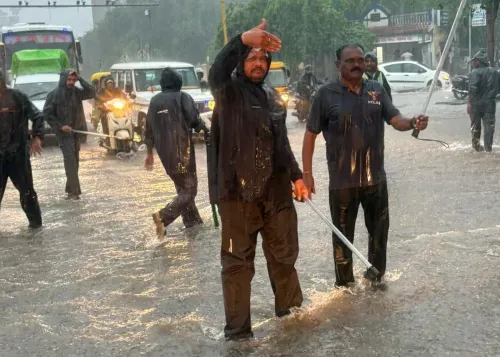
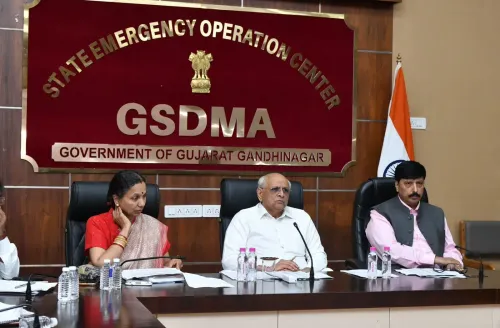
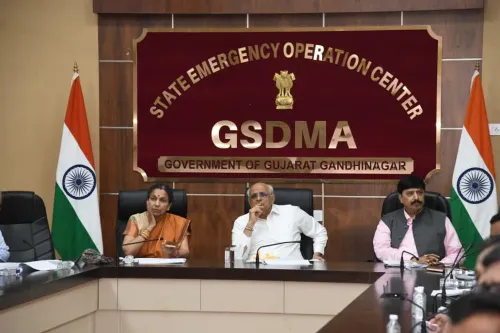
The Gujarat government on Thursday, 23 July sharply escalated its flood response across South Gujarat, deploying senior ministers and top bureaucrats to the worst-hit districts as the Valsad district administration ordered all factories and industrial units to shut for the day amid flood-like conditions. The move signals one of the most coordinated administrative responses the state has mounted this monsoon season.
Ministers and Officers Deployed on Ground
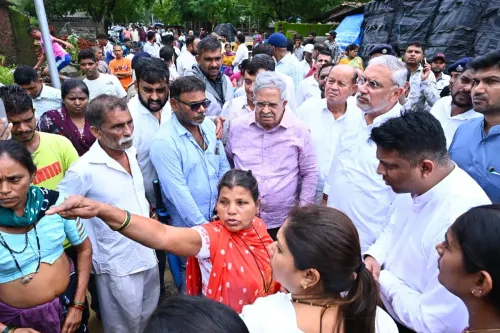
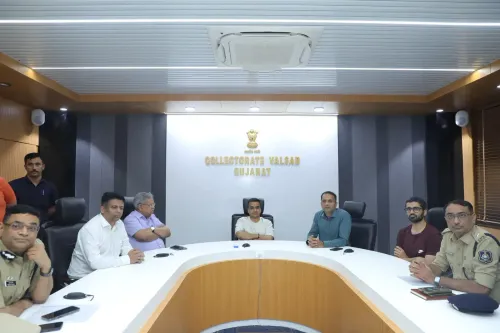
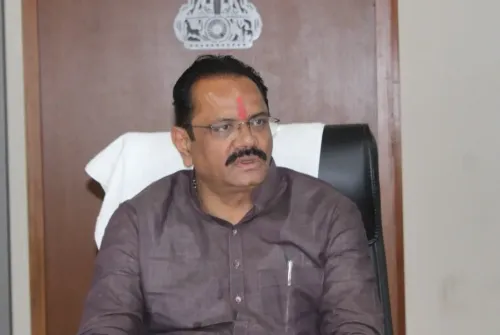
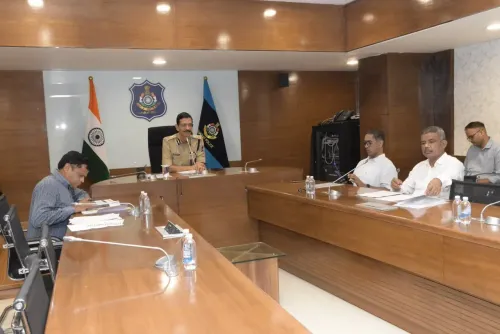
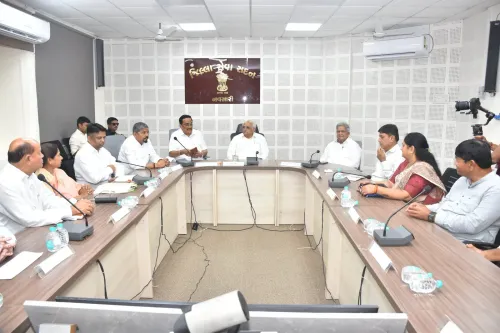
Chief Minister Bhupendra Patel deputed Deputy Chief Minister Harsh Sanghavi, Tribal Development Minister Naresh Patel, and senior IAS officers Ramya Mohan and Alok Pandey to Surat, Valsad, and Navsari to support local administrations overwhelmed by the deluge. The Chief Minister also directed district-level secretaries in all areas under an India Meteorological Department (IMD) red alert to immediately proceed to their postings and oversee relief and rescue operations.
Rescue Operations Under Way
Rescue and evacuation efforts were continuing in villages in the Sanjan area of Umargam, with additional teams deployed at Dhodiyawad in Dolvan taluka of Tapi district. The IMD red alert covering multiple South Gujarat districts points to continued heavy to very heavy rainfall in the region, complicating ground operations.
Valsad Shuts Factories, Directs Worker Safety
In a significant precautionary step, the Valsad district administration announced the closure of all factories and industrial units across the district for the entirety of 23 July. The administration cited worker safety and larger public interest as the primary drivers of the decision.
Factory managements and occupiers were instructed to ensure all workers are sent home safely. Only the minimum staff required for essential and emergency services was permitted to remain on duty, with mandatory safety measures in place. Industrial units were further directed to secure hazardous chemicals, machinery, electrical systems, and other critical equipment against flood damage.
'The decision has been implemented with immediate effect, keeping in mind the safety of workers and the larger public interest,' the Valsad district administration said in an official statement.
Context and What It Means
South Gujarat's industrial corridor — spanning Surat, Valsad, and Navsari — hosts a dense concentration of textile mills, chemical plants, and small-scale manufacturing units. A single-day industrial shutdown in Valsad alone can affect tens of thousands of workers, underlining the scale of disruption that extreme rainfall events now routinely impose on the region. This comes amid a broader pattern of intensifying monsoon events across the Gujarat coastline in recent years.
As the IMD red alert remains active, the state government's response will be closely watched for both its speed of relief delivery and its coordination between the administrative machinery and district-level disaster management teams.
Point of View
And the administration deserves credit for acting pre-emptively rather than reactively. What remains unaddressed is whether the state's disaster relief infrastructure — NDRF teams, shelter capacity, food supply chains — is scaling at the same pace as the political response. Monsoon flooding in this corridor is no longer an aberration; it is a recurring stress test that demands permanent structural investment, not just annual emergency deployments.
NationPress
21 Oct 2026
Frequently Asked Questions
Why did Gujarat deploy ministers to South Gujarat on 23 July?
Chief Minister Bhupendra Patel deployed Deputy CM Harsh Sanghavi, Tribal Development Minister Naresh Patel, and senior IAS officers to Surat, Valsad, and Navsari on 23 July to support local administrations overwhelmed by heavy rainfall and flood-like conditions. The IMD had issued a red alert for heavy rainfall across multiple South Gujarat districts.
Why did Valsad shut its factories on 23 July?
The Valsad district administration ordered all factories and industrial units to remain closed on 23 July, citing the safety of workers and the larger public interest amid continuing heavy rainfall and flood-like conditions. Factory managements were instructed to send all workers home safely.
Which areas are worst affected by the South Gujarat floods?
Rescue and evacuation operations are ongoing in the Sanjan area of Umargam and at Dhodiyawad in Dolvan taluka of Tapi district. Districts including Surat, Valsad, and Navsari are among the worst-hit areas under the IMD red alert.
What precautions were directed for Valsad industrial units?
Industrial units in Valsad were directed to secure hazardous chemicals, machinery, electrical systems, and other critical equipment against flood damage. Only minimum staff required for essential and emergency services were permitted to remain on duty, with all necessary safety measures in place.
What is an IMD red alert and what does it mean for Gujarat?
An IMD red alert signals extremely heavy rainfall (above 204.4 mm in 24 hours) and is the highest warning level issued by the India Meteorological Department. For Gujarat, it means district administrations are expected to be on maximum alert, with rescue teams pre-positioned and residents advised to avoid unnecessary movement.