Gujarat's Chhota Udepur Plants 12 Lakh Trees Under Mission Plantation

Synopsis
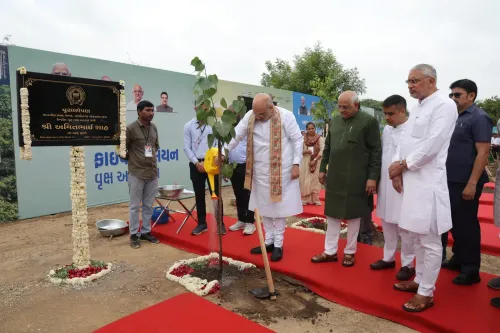
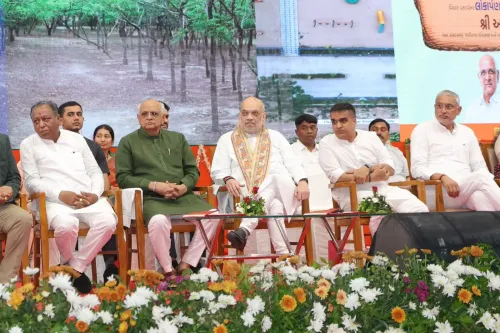
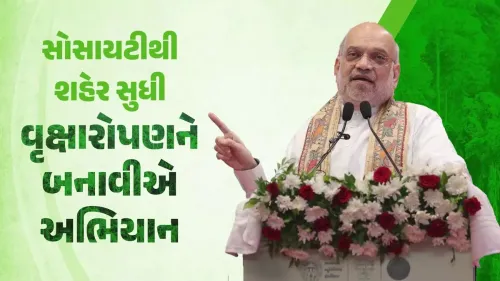
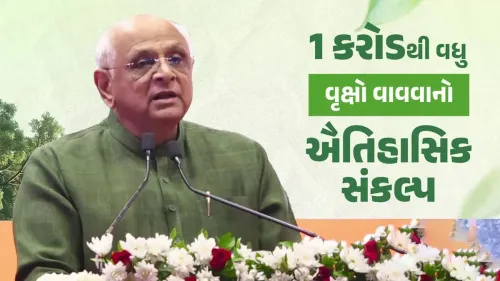
The Chief Minister's Office of Gujarat announced that Chhota Udepur district has planted 12 lakh trees under Mission Plantation, dedicated to PM Modi's 12 years of governance. The drive advances CM Bhupendra Patel's Harit Gujarat programme and marks a significant state-level afforestation milestone.
Key Takeaways
12 lakh trees have been planted by the Chhota Udepur district administration under #MissionPlantation .
The drive is dedicated to Prime Minister Narendra Modi's 12 years of governance , with tree count symbolically matching the number of years.
The initiative is framed as part of CM Bhupendra Patel's Harit Gujarat programme to expand green cover across the state.
The campaign aligns with central schemes including the National Afforestation Programme and the Green India Mission .
Chhota Udepur , a tribal-majority district in eastern Gujarat, is a key geography for forest conservation drives.
Survival metrics and any extension of the target to other Gujarat districts remain to be announced.
The Chief Minister's Office of Gujarat announced on Monday, 15 June 2026 that the Chhota Udepur district administration has planted 12 lakh trees under #MissionPlantation, dedicating the drive to Prime Minister Narendra Modi's 12 years of governance and advancing the state's Harit Gujarat green-cover mission under Chief Minister Bhupendra Patel.
Context
The post, written in Gujarati, states: 'Chhota Udepur vahivati tantra dvara #MissionPlantation antargat maananiya Vadapradhanshrina 12 varshna sushasan ne samarpit 12 lakh vrikshonu vavetara...' — meaning the local administration has undertaken the planting of 12 lakh trees dedicated to PM Modi's 12 years of good governance. The drive is described as a commendable step toward building a 'Green Gujarat' (Harit Gujarat) under CM Patel's leadership.
The announcement reflects a pattern increasingly common in Indian state politics: aligning large-scale public works or environmental milestones with the governance anniversaries of central leadership, lending symbolic weight to administrative action.
Policy Backdrop
Harit Gujarat is the state government's flagship programme aimed at expanding green cover and promoting environmental conservation across Gujarat. It operates in parallel with central schemes such as the National Afforestation Programme and the Green India Mission, both administered by the Ministry of Environment, Forest and Climate Change, which have seen renewed state participation since 2014.
Mission Plantation is a district-level campaign coordinated by local administrations to meet afforestation targets tied to national governance milestones. Chhota Udepur, a tribal-majority district in eastern Gujarat, has been identified as a key area for such conservation drives given its forest-adjacent geography.
Stakeholders and Impact
The primary actors in this initiative are the Chhota Udepur district administration and local communities who participate in the actual planting and maintenance of saplings. If the 12 lakh trees survive to maturity, the drive would meaningfully contribute to Gujarat's state-level green-cover targets and align with India's broader commitment to increasing tree and forest cover under its climate action pledges.
Local communities in Chhota Udepur stand to benefit from improved micro-climate conditions, soil conservation, and livelihood opportunities tied to forest-based activities — outcomes that have historically accompanied successful afforestation programmes in tribal districts of western India.
What's Next
The key metric to watch will be the survival rate of the planted saplings, as large-scale plantation drives in India have historically faced scrutiny over the gap between trees planted and trees that survive to maturity. The Gujarat government has not yet released a monitoring or survival-data framework for this specific drive.
Observers will also watch whether the 12-lakh tree target under Mission Plantation is extended to other Gujarat districts under the Harit Gujarat umbrella, which could signal a state-wide scale-up of the programme ahead of the next electoral cycle.
Point of View
Tying administrative outputs directly to central leadership milestones. Dedicating 12 lakh trees to 12 years of PM Modi's governance is a deliberate symbolic choice that blurs the line between governance record and political branding. For Gujarat's Harit Gujarat programme, however, the real test will be post-plantation survival data — a metric that has historically exposed the gap between announced targets and on-ground outcomes in India's afforestation drives. If the state publishes credible monitoring data, this initiative could serve as a replicable model for district-level green missions across India.
NationPress
20 Sept 2026
Frequently Asked Questions
What is Mission Plantation in Gujarat?
Mission Plantation is a tree-planting campaign coordinated by district administrations in Gujarat, aimed at meeting afforestation targets linked to national governance milestones and the state's Harit Gujarat programme.
How many trees were planted in Chhota Udepur under Mission Plantation?
The Chhota Udepur district administration planted 12 lakh trees under Mission Plantation, dedicated to PM Narendra Modi's 12 years of governance.
What is Harit Gujarat?
Harit Gujarat is the Gujarat state government's flagship environmental programme focused on expanding green cover and promoting conservation across the state, led by Chief Minister Bhupendra Patel.
Where is Chhota Udepur district located?
Chhota Udepur is a tribal-majority district in eastern Gujarat, known for its forest-adjacent geography and active participation in state conservation drives.
Is the 12 lakh tree plantation in Gujarat verified?
The Chief Minister's Office of Gujarat announced the 12 lakh tree planting figure; however, survival metrics and independent verification of current plantation status have not yet been officially released.