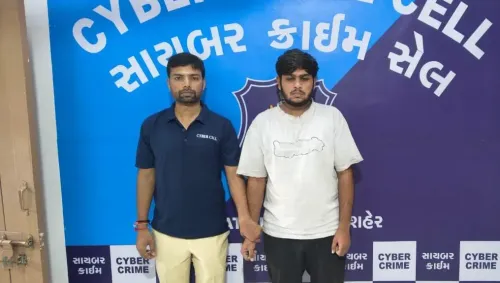
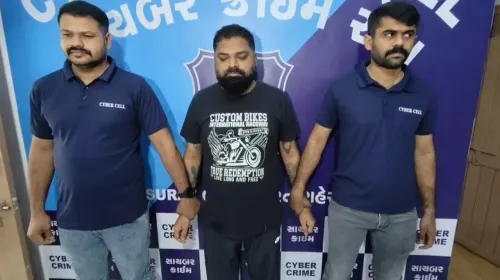
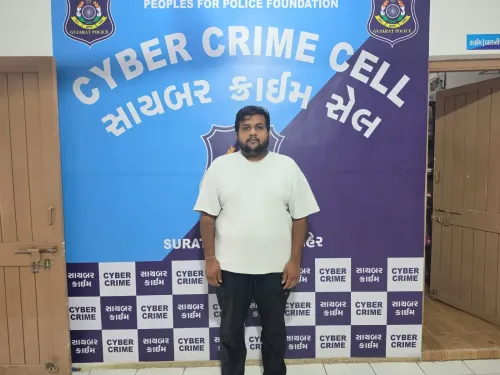
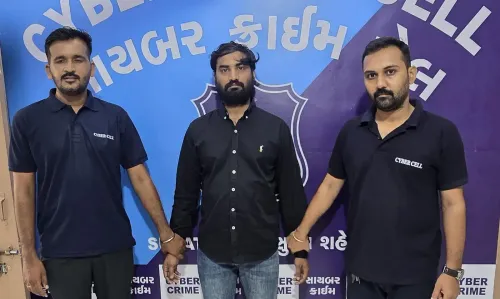
Surat cyber fraud: ₹150 reel task used to swindle ₹26.12 lakh, student arrested
Synopsis
A ₹150 reel-viewing payout on ShareChat was all it took to set a Surat resident on the path to losing ₹26.12 lakh. The arrested student allegedly rented out his bank account for a 3% cut — a growing modus operandi in India's cyber-fraud ecosystem — while the mastermind, identified only as Arif, remains at large. The case also flags ₹1.97 crore in alleged fraud across four states linked to the same account.
Key Takeaways
Aditya Pandey , a 20-year-old student , was arrested from Silvassa in connection with a ₹26.12 lakh cyber fraud targeting a Surat resident.
The fraud began with a ₹150 payment for viewing ShareChat reels, used to build the victim's trust before larger 'investment' transfers were solicited via Telegram .
Pandey allegedly provided his HDFC Bank account to an absconding accused, Arif , for a 3% commission ; his account received ₹1.20 lakh from the complainant on 8 January 2026 .
Total transactions through Pandey's account between 4 December 2024 and 12 May 2026 amounted to ₹51,31,272 ; the NCRP flagged 4 complaints across states totalling ₹1,97,18,059 in alleged fraud.
The case is registered under the Bharatiya Nyaya Sanhita, 2023 and the IT Act ; the absconding accused Arif is still being tracked.
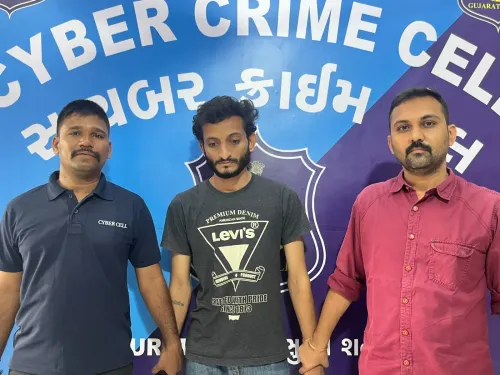
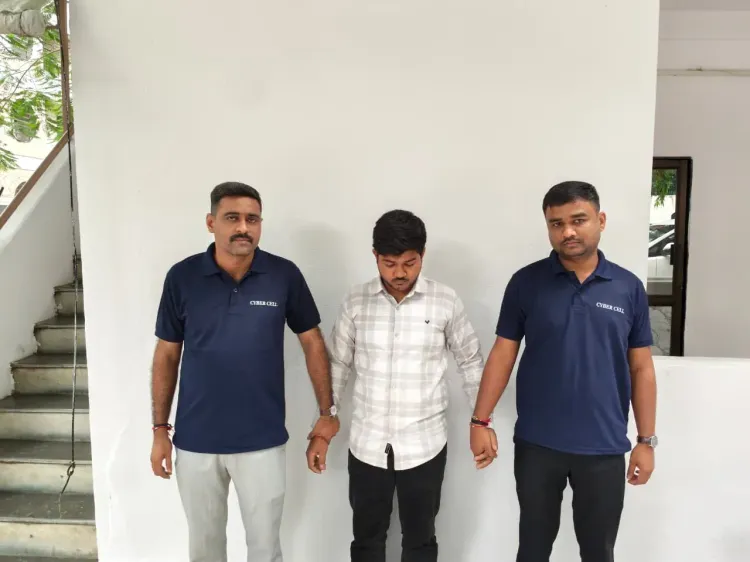
A 20-year-old student, Aditya Pandey, has been arrested from Silvassa in connection with an alleged ₹26.12 lakh cyber fraud targeting a resident of Surat, Gujarat, in which the victim was first lured with a nominal ₹150 payment for viewing social media reels before being manipulated into making large-scale 'investment' transfers, police confirmed on Wednesday, 2 September. The arrest was carried out by the Cyber Crime Cell of Surat City Police following a technical investigation.
How the Fraud Unfolded
According to police, the complainant was first contacted via Telegram and offered paid tasks involving viewing and liking reels on ShareChat. To establish credibility, the fraudsters deposited ₹150 directly into the complainant's bank account after the initial task was completed — a classic confidence-building tactic used in so-called 'task-based' cyber scams.
The victim was subsequently told that significantly higher earnings were possible through 'payment and investment tasks.' The accused allegedly shared links to fake and forged websites via Telegram, where the complainant was instructed to open an account and transfer funds to multiple bank accounts under the guise of investment activity.
The complainant ultimately transferred ₹26,12,791. When withdrawal attempts were made, the transactions were blocked — at which point the complainant realised the operation was fraudulent and approached the authorities.
Role of the Arrested Accused
Aditya Pandey, a resident of Dadra and Nagar Haveli and originally from Ghazipur, Uttar Pradesh, is alleged to have provided his personal HDFC Bank account to an absconding accused identified only as Arif, in exchange for a three per cent commission on transactions routed through it. Police said Pandey's account received ₹1.20 lakh from the complainant on 8 January 2026.
An audit of Pandey's savings account revealed total transactions of ₹51,31,272 between 4 December 2024 and 12 May 2026, of which police identified ₹1,63,020 as disputed. A check through the National Cyber Reporting Portal (NCRP) further flagged four complaints registered across different states, with an aggregate alleged fraud amount of ₹1,97,18,059.
What the Police Said
Deputy Commissioner of Police (Cyber Cell) Bishakha Jain confirmed that technical investigation led investigators to Pandey's HDFC Bank account, resulting in his arrest. 'Through technical investigation, the HDFC Bank account holder, Aditya Pandey, was identified and arrested,' she said.
Jain noted that Pandey had no prior criminal record known to police at the time of arrest, though the four NCRP complaints surfaced during the probe. She added that the relevant local police in those states would be informed accordingly. Efforts to apprehend the absconding accused Arif are ongoing.
Explaining the broader method, Jain observed that social media and messaging platforms enable fraudsters to approach victims — and recruit account holders — without any face-to-face contact. 'Criminals use such platforms both to approach potential victims and to find people whose bank accounts or other resources can be used in carrying out fraud,' she noted.
Legal Sections Invoked
A case has been registered at the Cyber Crime Police Station under Sections 318(4), 336(2), 338, 336(3), 340(2), 61(2) and 3(5) of the Bharatiya Nyaya Sanhita, 2023, along with Section 66(D) of the Information Technology Act.
Police Advisory to Citizens
Surat City Police have urged the public to exercise caution regarding advertisements promising high returns through online share-market investments or other lucrative schemes circulated on social media. Citizens have been advised to verify the identity of unknown individuals before conducting any financial transactions online. This case is the latest in a pattern of 'task-based' investment scams that have proliferated across Indian cities, exploiting the trust generated by small initial payouts to extract significantly larger sums.
Point of View
Sometimes naively — with small commission offers, creating a layered network that insulates masterminds from investigators. The NCRP flag of nearly ₹2 crore in linked complaints across four states from a single account should prompt regulators and banks to implement real-time mule-detection triggers rather than relying on post-complaint forensics. The absconding 'Arif' is unlikely to be an isolated operator; the 3% commission structure suggests a franchised fraud network that will simply recruit the next account holder.
NationPress
2 Sept 2026
Frequently Asked Questions
How did the Surat cyber fraud work?
The fraudsters contacted the victim on Telegram, offering paid tasks for viewing ShareChat reels and crediting ₹150 to their account to build trust. The victim was then persuaded to transfer money to multiple accounts through fake investment websites, ultimately losing ₹26,12,791 before realising the scheme was fraudulent.
Who is Aditya Pandey and what was his role?
Aditya Pandey is a 20-year-old student from Dadra and Nagar Haveli, originally from Ghazipur in Uttar Pradesh. He allegedly provided his HDFC Bank account to an absconding accused named Arif for routing cyber-fraud proceeds, receiving a 3% commission on transactions passed through it.
How much money passed through the accused's bank account?
According to police, Pandey's savings account recorded transactions totalling ₹51,31,272 between 4 December 2024 and 12 May 2026. The NCRP flagged four complaints from different states linked to the account, with an aggregate alleged fraud amount of ₹1,97,18,059.
What charges have been filed in this case?
A case has been registered at the Cyber Crime Police Station under Sections 318(4), 336(2), 338, 336(3), 340(2), 61(2), and 3(5) of the Bharatiya Nyaya Sanhita, 2023, and Section 66(D) of the Information Technology Act. The absconding accused Arif is yet to be arrested.
How can citizens protect themselves from such task-based investment scams?
Surat City Police advise the public to be wary of unsolicited messages on Telegram or social media offering paid tasks or high investment returns. Citizens should verify the identity of unknown contacts before making any financial transfers and report suspicious activity to the National Cyber Reporting Portal (NCRP) at cybercrime.gov.in.