Jensen Huang: India must move faster on AI, recalls Modi's vision a decade ago
Synopsis
Nvidia CEO Jensen Huang used the G20 Innovation Ministerial stage to deliver a pointed message to India: the AI window is open, but it won't stay that way. His recall of PM Modi discussing AI a decade ago reframes India's AI ambitions — not as a new aspiration, but as a long-overdue execution moment.
Key Takeaways
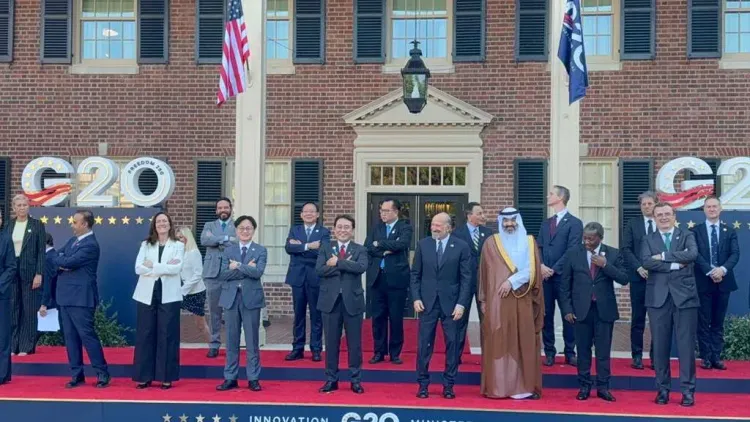
Nvidia CEO Jensen Huang called on India to move faster on AI at the G20 Innovation Ministerial in Chapel Hill, North Carolina on 2 September .
Huang recalled PM Narendra Modi discussing AI roughly a decade ago , citing it as an early signal of India's engagement with the technology.
He urged Indian companies and start-ups to build a domestic AI economy , leveraging the country's established IT strength.
On regulation, Huang advised governments to target practical and actual harm , not theoretical risks, during AI's formative stage.
Huang said AI systems have improved significantly over the past two years , with less hallucination and greater factual grounding.
Nvidia , founded in 1993 , has become central to global AI infrastructure through its graphics and AI training chips.
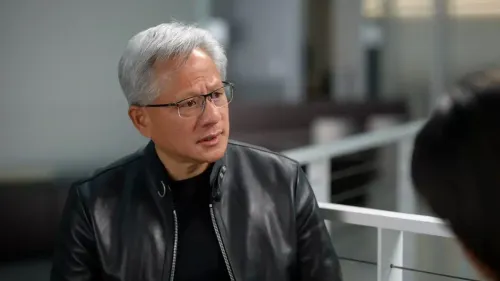
Nvidia Chief Executive Jensen Huang on 2 September urged India to accelerate its adoption of Artificial Intelligence, calling the country one of the world's foremost information technology powers and pressing its companies and start-ups to construct a homegrown AI economy. Speaking on the sidelines of the G20 Innovation Ministerial in Chapel Hill, North Carolina, Huang said the pace of AI development left no room for hesitation.
India's AI Opportunity
'AI is moving fast, so every country has to move faster,' Huang told reporters at the event. He framed the rise of AI as the dawn of an entirely new technology platform — one that India, with its deep-rooted IT industry, is uniquely positioned to capitalise on. 'India is one of the world's leading IT industries, and this is the beginning of a new IT platform,' he said.
Huang expressed particular enthusiasm for the role of local entrepreneurs. 'I'm really anxious to see and very excited to see the local companies and the local startups starting in India, starting to take advantage of the technology, contributing to the technology, and then building the local AI economy with it,' he said.
Huang Recalls PM Modi's Early AI Vision
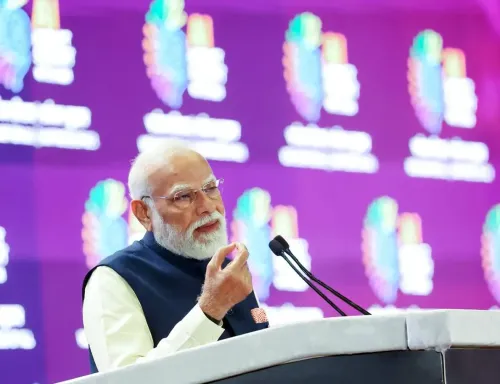
In a notable aside, Huang recalled an encounter with Prime Minister Narendra Modi roughly a decade ago, during which the Prime Minister was already discussing AI's potential. 'I had the benefit of seeing Modi a decade ago, talking about AI,' Huang said — a recollection that underscores how early India's political leadership engaged with the technology, even before it became a global priority.
On Regulation: Target Actual Harm, Not Hypothetical Risk
Asked about the governance framework for AI, Huang cautioned policymakers against over-regulating a technology still in its formative stages. 'The advice that I would have is to regulate practical and actual harm and not regulate theoretical and hypothetical harm,' he said. He drew a parallel with the evolution of automobile safety, arguing that advancing the technology itself — rather than constraining it prematurely — was the surest path to safety. 'Just as cars today are much safer because the technology is better than the cars were 100 years ago, we need to make the technology as advanced as possible,' Huang said.
He acknowledged that AI systems had improved markedly over the past two years, hallucinating less and becoming more grounded in factual information. 'We need to keep moving in that direction,' he added.
Global AI Stack and US Policy
Huang described AI as productive economic infrastructure, noting that while the United States intended to lead by building the complete technology stack, other nations should be free to select the components suited to their own AI economies. He said the US administration was supportive of technology development globally and wanted G20 countries to adopt AI to drive their own growth. On semiconductor tariffs, Huang said he had no discussions on the subject at the ministerial.
Nvidia's Role in the AI Era
Founded in 1993, Nvidia initially built its reputation on graphics processing units for gaming before its chips became the backbone of AI training infrastructure worldwide. Huang, a co-founder, has led the company since its inception. The firm's rapid ascent has positioned him as one of the most influential voices in global debates on AI infrastructure, safety, and regulation. Every technology company, he stressed, bears individual responsibility for safe development. 'As we race quickly to make the technology better and more useful and safer, we also build it safely,' he said.
With India at an inflection point in its digital economy, Huang's remarks at the G20 ministerial add fresh weight to calls for a structured national AI strategy.
Point of View
But AI rewards speed, and speed has not been India's regulatory or infrastructural strong suit. The recall of Modi's decade-old AI conversation is diplomatically shrewd — it flatters Indian leadership while implicitly asking why the head start hasn't translated into a dominant domestic AI industry. The regulation advice is equally pointed: India's instinct to legislate early, as seen in its evolving data protection framework, risks chilling the very start-up ecosystem Huang wants to see flourish. The real question is whether India builds AI or merely consumes it.
NationPress
2 Sept 2026
Frequently Asked Questions
What did Nvidia CEO Jensen Huang say about India and AI?
Jensen Huang said India must move faster to seize AI opportunities, describing it as one of the world's leading IT powers. He urged Indian companies and start-ups to build a domestic AI economy, speaking at the G20 Innovation Ministerial in Chapel Hill, North Carolina on 2 September.
What did Jensen Huang recall about PM Modi and AI?
Huang recalled meeting Prime Minister Narendra Modi roughly a decade ago, during which Modi was already discussing Artificial Intelligence. He described having 'the benefit of seeing Modi a decade ago, talking about AI,' highlighting India's early political engagement with the technology.
What is Jensen Huang's stance on AI regulation?
Huang advised policymakers to regulate practical and actual harm rather than theoretical or hypothetical risks, arguing that AI is still in its formative stages. He compared AI safety to improvements in automobile technology, saying advancing the technology itself is the best route to making it safer.
Why is Nvidia significant in the global AI debate?
Nvidia, founded in 1993, produces the chips that power most AI training infrastructure worldwide. CEO Jensen Huang, a co-founder who has led the company since its inception, has become one of the most prominent voices on AI infrastructure, safety, and regulation globally.
What did Huang say about the US approach to AI versus other countries?
Huang said the United States aims to lead by building the full AI technology stack, but other countries should be able to select the components they need to develop their own AI economies. He added that the US administration wants G20 nations to adopt AI and use it to drive domestic growth.