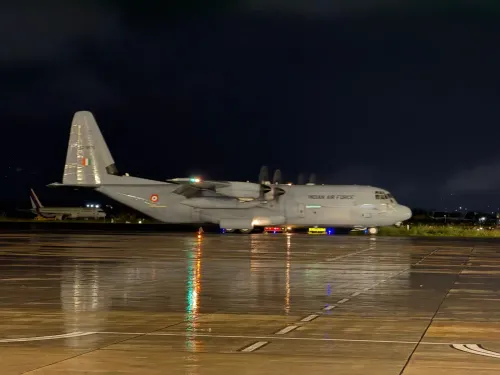
5th IAF aircraft lands in Kathmandu with rescue team, 5.5 tonnes of medicines
Synopsis
India's fifth IAF relief flight has landed in Kathmandu with a rescue team and 5.5 tonnes of medicines, pushing total Indian aid beyond 68 tonnes — even as Nepal's flood death toll crosses 1,114 and over 3,900 remain missing. Nepal's PM is now calling on the world to take Himalayan climate risks seriously, raising the disaster's stakes well beyond bilateral aid.
Key Takeaways
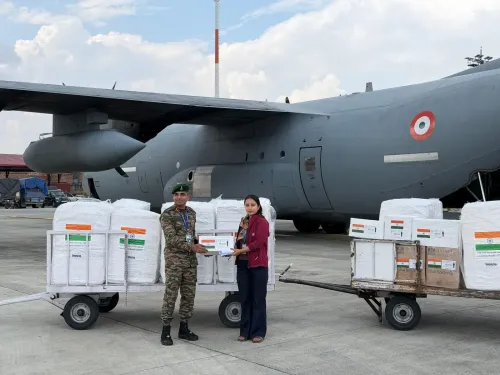
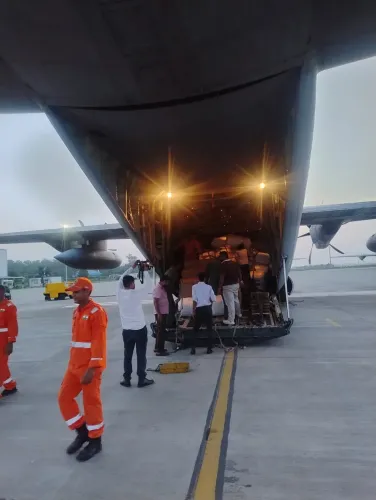
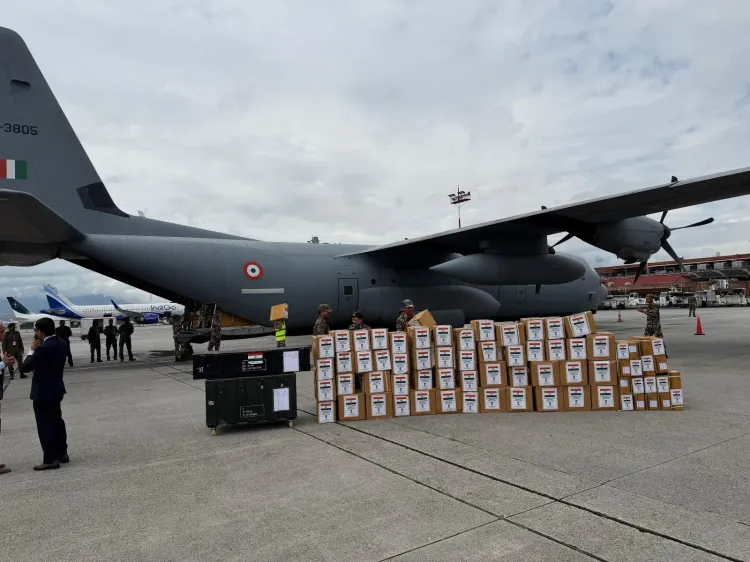
A fifth IAF aircraft landed in Kathmandu on 2 September with an 11-member rescue team and 5.5 tonnes of medicines .
India has now sent over 68 tonnes of emergency relief to Nepal across five flights.
The NDRRMA confirmed at least 1,114 deaths by 9 am Wednesday ; around 3,916 people remain out of contact.
The disaster was triggered by a glacial collapse in Tibet on 26 August , blocking the Lengde Khola tributary before the water breached and flooded downstream.
Nepal PM Balendra Shah called on the international community to take Himalayan climate risks more seriously, addressing parliament as the toll crossed 1,100 .
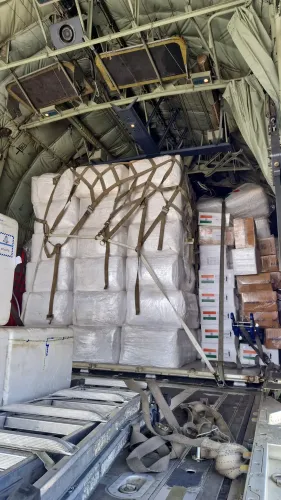
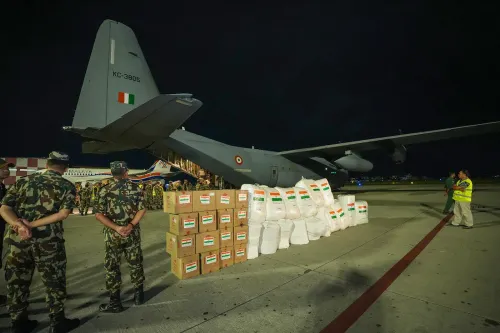
Relief supplies include blankets, tarpaulins, hygiene kits, food packets, solar lamps, water purification tablets, and portable generators.
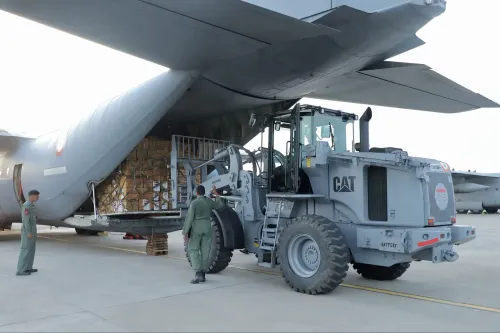
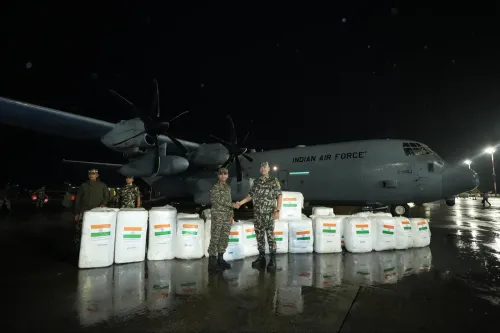
A fifth Indian Air Force (IAF) aircraft touched down in Kathmandu on Wednesday, 2 September, carrying an 11-member rescue team with specialised equipment and 5.5 tonnes of essential medicines, as India deepens its humanitarian response to the catastrophic flash floods that have killed more than 1,100 people in Nepal. The latest delivery brings India's total emergency relief dispatched to the Himalayan nation to over 68 tonnes.
Latest Relief Delivery
According to the Ministry of External Affairs (MEA), the fresh tranche of relief material was formally handed over to the local government by Indian Ambassador Naveen Srivastava upon arrival. The consignment supplements earlier shipments that included blankets, sleeping bags, heavy-duty tarpaulins, plastic sheeting, hygiene kits, food packets, solar lamps, water purification tablets, and portable generators.
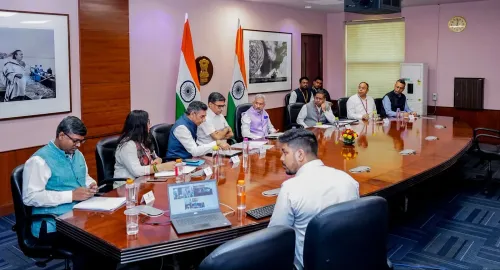
External Affairs Minister S. Jaishankar confirmed the dispatch earlier in the day, posting on X: 'The fifth Indian aircraft has departed for Nepal. It is carrying a 11-member rescue team with specialised equipment, and 5.5 tonnes of essential medicines.'
Scale of the Disaster
The floods were triggered by a glacial collapse in Tibet on 26 August, which sent a wall of water down the Bhotekoshi River and its tributaries, devastating settlements and infrastructure across the region. Experts say an avalanche blocked the Lengde Khola, a tributary of the Bhotekoshi near the Nepal-China border; the accumulated water eventually breached the natural dam and surged downstream toward the Trishuli River.
By 9 am on Wednesday, the National Disaster Risk Reduction and Management Authority (NDRRMA) had confirmed the recovery of at least 1,114 bodies. Around 3,916 people remain out of contact, according to NDRRMA data.
Nepal PM's Climate Warning
Nepal Prime Minister Balendra Shah on Wednesday called for stronger international attention to growing climate-related risks in the Himalayan region, addressing the House of Representatives as the death toll crossed 1,100. Shah said Nepal must raise its voice more forcefully about the disasters it faces due to climate change.
Describing the scale of the crisis, Shah said: 'The huge disaster, whose impacts of climate change we have suddenly experienced, has kept us working around the clock to manage the damage. At the same time, another profound question has arisen in our minds: How did this disaster come upon us?' The remarks signal that Kathmandu intends to press the issue at international forums, particularly as glacial lake outburst floods become more frequent across the Hindu Kush-Himalayan belt.
India's Broader Relief Operation
This is the fifth and largest-scale mission in a rapid-response operation that India launched within days of the disaster. The relief effort reflects the 'Neighbourhood First' policy, under which New Delhi has consistently prioritised disaster response in South Asia. Notably, this is not the first time India has airlifted emergency supplies to Nepal following a glacial or flood event — a pattern that underscores both the frequency of such disasters and the depth of bilateral ties.
With thousands still unaccounted for and the monsoon season ongoing, the humanitarian situation in Nepal remains critical. Further relief missions have not been ruled out, according to official statements.
Point of View
But the deeper story is what Nepal's Prime Minister said in parliament: that a glacial collapse in Tibet triggered a flood that killed over 1,100 people, and nobody saw it coming. Glacial lake outburst floods are accelerating across the Hindu Kush-Himalayan region, yet early-warning infrastructure remains woefully thin. Bilateral aid is welcome, but without a multilateral early-warning framework involving India, Nepal, China, and Bhutan, the next glacial event will again arrive without notice — and the next relief flight will again be reactive rather than preventive.
NationPress
18 Oct 2026
Frequently Asked Questions
What did India's fifth IAF aircraft carry to Nepal?
The fifth Indian Air Force aircraft carried an 11-member rescue team with specialised equipment and 5.5 tonnes of essential medicines to Kathmandu on 2 September. The supplies were handed over to the local government by Indian Ambassador Naveen Srivastava.
What caused the flash floods in Nepal?
A glacial collapse in Tibet on 26 August triggered the disaster. Experts say an avalanche blocked the Lengde Khola, a tributary of the Bhotekoshi River near the Nepal-China border; the accumulated water breached the natural barrier and swept downstream toward the Trishuli River, devastating settlements and infrastructure.
How many people have died in the Nepal floods?
At least 1,114 bodies had been recovered by 9 am on Wednesday, 2 September, according to the National Disaster Risk Reduction and Management Authority (NDRRMA). Around 3,916 people remain out of contact.
How much total relief has India sent to Nepal?
India has dispatched over 68 tonnes of emergency relief material across five IAF flights. Supplies include blankets, sleeping bags, tarpaulins, hygiene kits, food packets, solar lamps, water purification tablets, portable generators, and essential medicines.
What did Nepal's Prime Minister say about the disaster?
Nepal Prime Minister Balendra Shah addressed the House of Representatives on Wednesday, calling for stronger international attention to climate-related risks in the Himalayan region. He said Nepal must highlight more forcefully the disasters it faces due to climate change, and questioned how such an event could occur and what it means for the country's future.