Madras HC orders special IPS-led team to probe Madurai prison corruption
Synopsis
The Madras High Court has given Tamil Nadu a four-month deadline to crack the Madurai Central Prison corruption case — or risk losing the probe to another agency entirely. At stake is accountability for alleged bill inflation spanning two years, implicating prison officials and potentially several crores in misappropriated public funds.
Key Takeaways
The Madras High Court on 2 September ordered Tamil Nadu to form a special investigation team led by a senior IPS officer to probe corruption at Madurai Central Prison .
The court set a four-month deadline for the team to file a final report before the competent criminal court.
Alleged irregularities involve inflated stationery supply bills between 1 June 2019 and 30 June 2021 , reportedly causing misappropriation of several crores in public funds.
The DVAC faces the risk of losing jurisdiction if it fails to comply with the court's directive.
Departmental disciplinary proceedings against officials must run simultaneously with the criminal investigation, per the Bench's order.
The case surfaced prominently during a petition by M.
Gokila , seeking remission and wage arrears for her convict husband at Puzhal Central Prison .
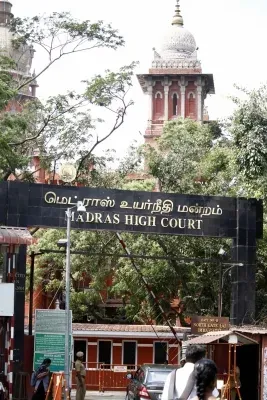
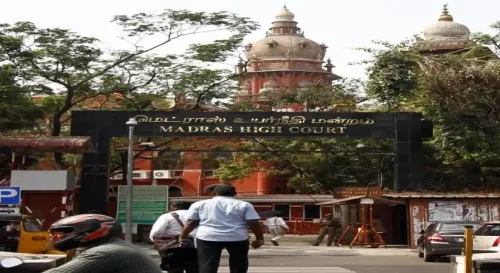
The Madras High Court on Wednesday, 2 September directed the Tamil Nadu government to constitute a special investigation team headed by a senior IPS officer to fast-track the probe into alleged large-scale corruption at Madurai Central Prison, with a firm directive to file a final report before the competent criminal court within four months.
What the Court Ordered
A Division Bench comprising Justice S.M. Subramaniam and Justice M. Jothiraman issued the directive and warned that it may consider transferring the investigation to another agency if the state government and the Directorate of Vigilance and Anti-Corruption (DVAC) failed to comply. The Bench also directed the state to simultaneously pursue departmental disciplinary proceedings against the officials concerned, clarifying that pending criminal proceedings would not bar disciplinary action under applicable service rules.
The Alleged Irregularities
The corruption allegations centre on the supply of stationery manufactured at Madurai Central Prison to district courts and other government offices during the period between 1 June 2019 and 30 June 2021. According to the petition filed by P. Pugalenthi, information obtained under the Right to Information Act revealed serious discrepancies between the quantities of stationery billed and those actually delivered. He alleged that prison officials prepared inflated bills, resulting in the misappropriation of several crores of rupees in public funds.
The court, however, found that Pugalenthi's petition was not maintainable as sufficient supporting material had not been produced. It granted him liberty to file a fresh petition with corroborating documents, following which his counsel withdrew the plea.
How the Issue Resurfaced
The matter came back before the Bench during the hearing of a separate petition filed by M. Gokila, whose husband Murugaiyan — a convict lodged at Puzhal Central Prison — is allegedly owed four months of wage arrears. Gokila had sought 60 days' remission for her husband alongside the wage payment. Her counsel urged the court to direct authorities to accelerate the Madurai prison corruption probe, warning that further delay could allow those implicated to evade prosecution.
The Additional Public Prosecutor submitted on behalf of the state that the DVAC required additional time to complete its detailed inquiry — a submission the court acknowledged but did not accept as grounds for an open-ended extension.
Parallel Disciplinary Action Mandated
Beyond the criminal investigation, the Bench directed the state government to collect all relevant records, frame charges under applicable service rules, and conclude departmental proceedings expeditiously. The court made clear that the two tracks — criminal and departmental — must proceed concurrently, not sequentially. This is a notable departure from the common administrative practice of staying disciplinary action pending criminal outcomes.
What Happens Next
The Tamil Nadu government is now required to notify the composition of the special IPS-led team and begin structured investigation within the court's timeline. Failure to comply risks the court ordering a transfer of the probe to a central or independent agency. The case will be closely watched as a test of the state's commitment to accountability within its prison administration — an institution that critics argue has historically operated with limited external scrutiny.
Point of View
Effectively shielding officials from timely consequences. By closing that loophole explicitly, the Bench signals impatience with administrative foot-dragging. The four-month deadline and the threat of a probe transfer are pressure tools, but their credibility depends entirely on follow-through. If the DVAC delivers another extension request, the real question is whether the court will act on its own warning — or let the deadline become a formality, as has happened in comparable prison-administration cases elsewhere in India.
NationPress
18 Oct 2026
Frequently Asked Questions
What is the Madurai Central Prison corruption case about?
The case involves alleged inflation of stationery supply bills at Madurai Central Prison between June 2019 and June 2021. Prison officials allegedly showed that large quantities of stationery were supplied to district courts and government offices, while actual deliveries were considerably lower, reportedly resulting in misappropriation of several crores in public funds.
What has the Madras High Court ordered in this case?
The Madras High Court directed the Tamil Nadu government to constitute a special investigation team headed by a senior IPS officer and file a final report before the competent criminal court within four months. It also ordered simultaneous departmental disciplinary proceedings against the officials involved.
What happens if Tamil Nadu fails to comply with the court's directive?
The Division Bench warned it may consider transferring the investigation to another agency if the state government and the DVAC fail to comply. This threat of probe transfer is designed to prevent the inquiry from stalling indefinitely.
Who brought this matter to the Madras High Court?
The issue was first raised by petitioner P. Pugalenthi, who used RTI data to allege bill manipulation at Madurai Central Prison. His petition was found not maintainable for lack of supporting documents. The matter resurfaced during a separate petition by M. Gokila, seeking remission and wage arrears for her convict husband at Puzhal Central Prison.
Can disciplinary action proceed alongside the criminal investigation?
Yes. The Madras High Court explicitly clarified that the pendency of criminal proceedings will not prevent departmental disciplinary action against the officials concerned. The state has been directed to frame charges under applicable service rules and conclude proceedings expeditiously.