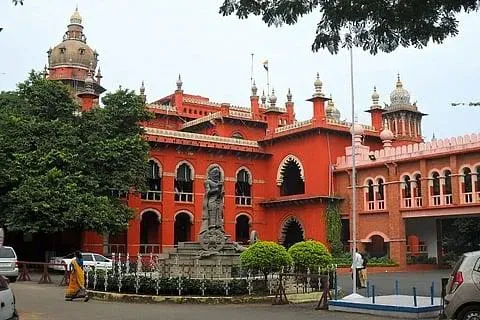
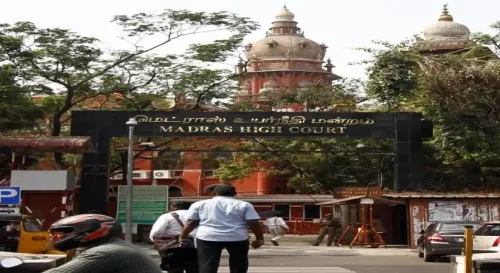
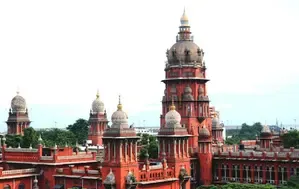
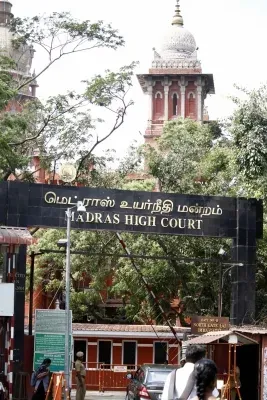
Madras HC stays DVAC inspector's suspension, cites 'motivated action'
Synopsis
A DVAC inspector who registered a ₹5.42 crore disproportionate assets case against a Chennai police colleague was subsequently suspended — and the Madras High Court has now stayed that suspension, finding prima facie signs of motivated disciplinary action. The case raises pointed questions about institutional retaliation against anti-corruption officers within the police establishment.
Key Takeaways
The Madras High Court on 29 June stayed the suspension of DVAC Inspector G.
Vimala , citing prima facie signs of motivated action.
Vimala had registered an FIR against Inspector K.
Rajalakshmi of the Chennai Police Anti-Vice Squad for allegedly amassing assets worth ₹5.42 crore , disproportionate to known income by 372 per cent .
The High Court had on 3 June dismissed Rajalakshmi's petition to quash the same FIR, making Vimala's suspension shortly after particularly notable.
Asha directed the DVAC Director and Deputy Director to file their responses before the next hearing.
Vimala contends her suspension was arbitrary, vague, and a direct consequence of registering the corruption case against her colleague.
The Madras High Court has granted interim relief to Directorate of Vigilance and Anti-Corruption (DVAC) Inspector G. Vimala, staying her suspension order after observing a prima facie indication that the disciplinary action appeared to have been motivated. The ruling came on 29 June while the court heard a writ petition filed by Vimala challenging her suspension on charges of 'grave misconduct'.
Background: The Corruption Case That Triggered the Dispute
In December 2025, Inspector Vimala submitted a vigilance report to the DVAC Director after gathering information against Inspector K. Rajalakshmi of the Chennai Police's Anti-Vice Squad, who had served in Chennai since 2010. Based on the collected material, Vimala was directed by her superiors to prepare a draft First Information Report (FIR) alleging that Rajalakshmi had accumulated movable and immovable assets worth ₹5.42 crore — in her own name and in the names of family members — disproportionate to her known income sources by 372 per cent.
After securing the necessary approvals, Vimala registered the FIR under the Prevention of Corruption Act and subsequently handed over the investigation to another inspector. She has maintained that she acted strictly in accordance with the Vigilance Manual and directions from her superior officers, without personal motive or malice.
What the Court Found
Justice P.T. Asha of the Madras High Court passed the interim stay order, recording a prima facie view that the suspension appeared motivated. The court directed the DVAC Director and Deputy Director to file their official responses before the matter is taken up for further hearing.
Notably, the High Court had on 3 June already dismissed a petition filed by Inspector Rajalakshmi seeking to quash the very FIR that Vimala had registered — making Vimala's subsequent suspension all the more conspicuous in the court's assessment.
Vimala's Contentions
In her petition, Vimala argued that the suspension order was arbitrary, vague, and legally unsustainable. She contended that the action against her was a direct consequence of her role in registering the corruption case against Rajalakshmi, amounting to institutional retaliation.
She also flagged that media reports had linked her suspension to separate allegations of demanding a bribe from a Revenue Officer. However, Vimala argued these allegations were unrelated to the grounds cited in the suspension order and surfaced only after disciplinary action was initiated against her — a sequence she described as suspicious.
What Happens Next
The interim stay remains in effect while the DVAC Director and Deputy Director prepare their responses. The case will be taken up for further hearing once those responses are filed. The outcome could have broader implications for anti-corruption officers who initiate cases against colleagues within the law enforcement establishment.
Point of View
And Vimala's suspension followed. If the DVAC — an agency whose mandate is to hold public servants accountable — is seen to penalise its own officers for registering corruption cases, it undermines the credibility of the entire vigilance architecture. The court's intervention is timely, but the deeper question is whether the DVAC's leadership will be held to account for what the court has already characterised as a prima facie motivated act.
NationPress
28 Sept 2026
Frequently Asked Questions
Why did the Madras High Court stay DVAC Inspector G. Vimala's suspension?
The Madras High Court stayed the suspension because Justice P.T. Asha found a prima facie indication that the disciplinary action appeared to have been motivated. The court directed the DVAC Director and Deputy Director to file their responses before the next hearing.
What corruption case did Inspector Vimala register?
In December 2025, Inspector Vimala registered an FIR under the Prevention of Corruption Act against Chennai Police Inspector K. Rajalakshmi, alleging she had amassed assets worth ₹5.42 crore — disproportionate to her known income sources by 372 per cent.
What were the grounds for Vimala's suspension?
Vimala was suspended on charges of 'grave misconduct'. She has contested these charges as arbitrary and vague, arguing the suspension was retaliation for registering the case against her colleague. Media reports also linked the suspension to separate bribery allegations, which Vimala says are unrelated to the stated grounds and emerged only after disciplinary action began.
What had the Madras High Court ruled about Inspector Rajalakshmi earlier?
On 3 June, the Madras High Court dismissed a petition filed by Inspector Rajalakshmi seeking to quash the FIR that Vimala had registered against her. Vimala's suspension came after this ruling, which the court noted made the disciplinary action against her all the more surprising.
What happens next in this case?
The interim stay on Vimala's suspension remains in force. The DVAC Director and Deputy Director are required to file their official responses, after which the Madras High Court will take up the matter for further hearing.