Gujarat school entry circular sparks row: AAP, Congress allege bid to hide education gaps
Synopsis
Gujarat's government has issued a circular banning unauthorised entry and photography in schools — framed as a student safety measure, but contested by the Opposition as a pre-election shield against scrutiny of 40,000 vacant teacher posts, 42,000 dilapidated rooms, and nearly 3,000 single-teacher schools. The invocation of POCSO as a potential enforcement tool has drawn particular alarm from critics.
Key Takeaways
Gujarat's Education Department issued a circular on 21 October 2026 requiring prior written permission for outsiders to enter school premises and banning unauthorised photography and videography.
AAP state president Isudan Gadhvi alleged the move is designed to prevent public scrutiny of government schools ahead of the 2027 Assembly elections .
Congress spokesperson Dr Manish Doshi cited approximately 40,000 vacant teacher posts, 42,000 dilapidated rooms, and nearly 3,000 single-teacher schools in the state.
Violators may face action under the POCSO Act , the Bharatiya Nyaya Sanhita , the Juvenile Justice Act , and the IT Act .
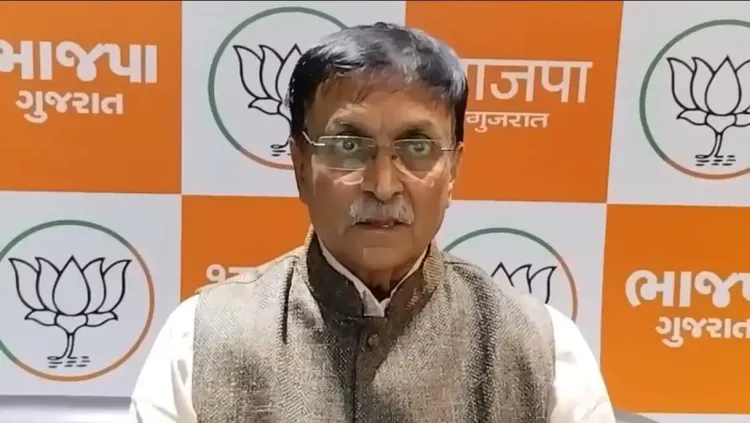
BJP spokesperson Dr Anil Patel defended the circular as essential to student safety, privacy, and a peaceful school environment.
Congress demanded an immediate review and clearer, transparent rules for parents, journalists, and citizens.
The Gujarat government's Education Department on 21 October 2026 issued a circular requiring prior written permission for outsiders to enter school premises and restricting photography and videography in government schools — triggering a sharp political confrontation, with the Aam Aadmi Party (AAP) and Indian National Congress alleging the move is designed to shield the state's public education system from scrutiny ahead of the 2027 Assembly elections. The Bharatiya Janata Party (BJP) has defended the restrictions as essential to protecting student safety, privacy, and a peaceful learning environment.
What the Circular Says
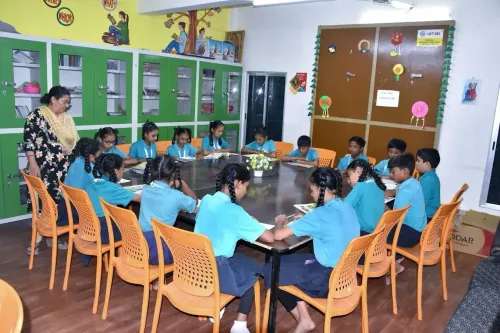
The nine-point circular issued by Gujarat's Education Department covers primary, secondary, and higher secondary institutions across the state. Under its terms, external visitors must obtain prior written permission from the principal or head of the institution, record their details in a visitors' register, and — when entering areas where students are present — be accompanied by the principal, a teacher, or an authorised school official.
The circular further bans photography, videography, interviews, audio recording, and live streaming involving students, teachers, or school activities without the principal's prior written consent. It limits such activities to lawful purposes only and directs school authorities to prevent the collection or circulation of students' photographs, videos, and personal information in ways that could compromise their privacy, dignity, or safety.
Government officials carrying out official duties are exempt from the prior-permission requirement. The circular also provides for informing the police and relevant education authorities if someone enters a school without permission, refuses to leave, attempts unauthorised recording, or obstructs school functioning. Legal action may be initiated under the Bharatiya Nyaya Sanhita, 2023, the Protection of Children from Sexual Offences (POCSO) Act, 2012, the Juvenile Justice Act, 2015, and the Information Technology Act, 2000.
AAP Alleges Pre-Election Cover-Up
AAP state president Isudan Gadhvi on Thursday accused the BJP government of deploying the circular to prevent public scrutiny of government schools ahead of the 2027 Assembly elections. He alleged that the condition of school buildings and widespread teacher shortages could face greater public exposure as citizens and young voters began visiting campuses.
'The notification is an insult to children studying in government schools across Gujarat and their parents,' Gadhvi said, alleging that the government had allowed public schools to deteriorate over three decades while BJP leaders established private schools. He also alleged that invoking POCSO provisions amounted to using a child protection law as a threat against parents and young people who sought to raise legitimate questions about school conditions.
Congress Cites Figures, Demands Review
Congress party spokesperson and media convenor Dr Manish Doshi questioned whether child protection was being used to shield the government from accountability over the state of public education. 'The safety of children is essential, but nobody has given the government the right to hide administrative failures in government schools in the name of child protection,' Doshi said.
Citing figures he said reflected the scale of the problem, Doshi claimed: 'Gujarat has around 40,000 vacant teacher posts and approximately 42,000 dilapidated rooms. Nearly 3,000 schools are functioning with a single teacher, with more than 80,000 children enrolled in them, while students in 14,562 schools are being taught across multiple grades together.' He further questioned whether the same privacy and safety standards are applied when students appear at government programmes, school enrolment drives, and political events.
The Congress demanded an immediate review of the circular, clearer provisions for parents and school management committees, and transparent rules for journalists and citizens that would protect children's privacy without unnecessarily restricting public scrutiny.
BJP Defends the Restrictions
BJP state chief spokesperson Dr Anil Patel rejected the Opposition's objections, saying the party's strategy is to create obstacles and controversy around the government's work. 'The authorities have a responsibility to ensure the safety and security of children and maintain a peaceful school environment. Entry without permission from school authorities or the principal is not permissible. Unauthorised entry and photography or videography are prohibited,' he said. Patel further argued that allowing people to enter schools without authorisation could create disorder and an atmosphere of fear among students.
Why This Matters
The controversy places a spotlight on the condition of government-run schools in Gujarat — a state the BJP has governed for over three decades and which it frequently cites as a development model. Critics argue that restricting access to public institutions funded by taxpayers inverts the accountability relationship between the state and its citizens. Notably, the circular arrives less than two years before a state election, lending political colour to what the government frames as a student-welfare measure. How the state responds to the Opposition's demand for a review will be closely watched by education advocates, parents' groups, and press freedom organisations.
Point of View
On its face, unremarkable — most democracies regulate access to campuses where children are present. What makes it politically combustible is the timing: two years before a state election, in a state where the ruling party's education record is contested on concrete metrics — teacher vacancies, dilapidated classrooms, and multi-grade single-teacher schools. The invocation of POCSO as an enforcement option is the real flashpoint: a law designed to protect children from abuse should not function as a deterrent to legitimate public-interest journalism or parental oversight. The BJP's failure to address the Opposition's specific infrastructure figures — rather than reframe the debate around child safety — suggests it has no easy answer to the underlying accountability question.
NationPress
22 Oct 2026
Frequently Asked Questions
What does Gujarat's new school entry circular say?
Issued on 21 October 2026, the circular requires external visitors to obtain prior written permission from the school principal, record their details in a visitors' register, and be accompanied by a school official when in areas where students are present. It also bans photography, videography, audio recording, and live streaming involving students or teachers without the principal's prior written consent.
Why are AAP and Congress opposing the circular?
Both parties allege the circular is intended to prevent public and media scrutiny of the poor condition of government schools ahead of the 2027 Gujarat Assembly elections. AAP's Isudan Gadhvi claims it shields the BJP from accountability over teacher shortages and dilapidated buildings, while Congress's Dr Manish Doshi argues it protects administrative failures rather than children.
What legal action can be taken under the circular?
The circular provides for police complaints and action under the Bharatiya Nyaya Sanhita 2023, the POCSO Act 2012, the Juvenile Justice Act 2015, and the IT Act 2000 against those who enter without permission, refuse to leave, attempt unauthorised recording, or obstruct school functioning.
What does the Congress say about the state of Gujarat's government schools?
Congress spokesperson Dr Manish Doshi claimed Gujarat has around 40,000 vacant teacher posts, approximately 42,000 dilapidated rooms, nearly 3,000 single-teacher schools with over 80,000 enrolled children, and 14,562 schools running multi-grade classes. He argued that restricting cameras would not resolve any of these issues.
How has the BJP responded to the controversy?
BJP state chief spokesperson Dr Anil Patel defended the circular as a necessary measure to ensure student safety, security, and a peaceful school environment. He argued that allowing unauthorised entry could create disorder and fear, and characterised the Opposition's objections as an attempt to manufacture controversy.