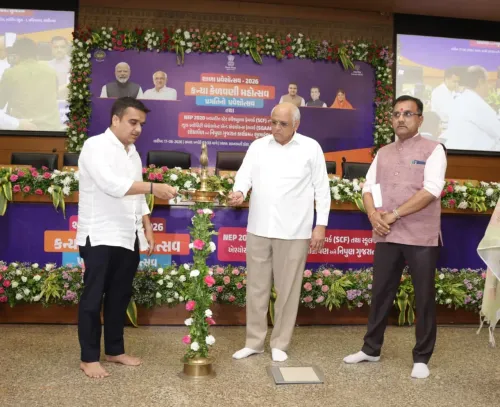
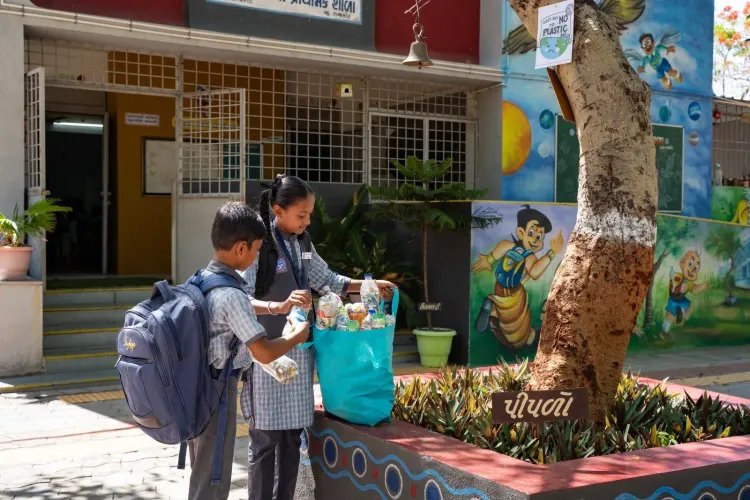
Gujarat's 15 schools win national SHVR 2025-26 green campus certification
Synopsis
More than 44,000 Gujarat schools entered the race — only 15 made it to the national stage. Under the Centre's SHVR 2025-26 programme, those schools now earn a Central government certificate and ₹1 lakh each to cement green practices, marking Gujarat's strongest showing yet in India's clean and sustainable campus drive.
Key Takeaways
Gujarat secured national recognition for 15 schools under the SHVR 2025-26 programme on 18 June 2025 .
Each selected school receives a Central government certificate and a grant of ₹1 lakh for sustainability initiatives.
Rajkot leads with 3 nationally recognised schools; Vadodara , Navsari , and Porbandar each have 2 .
Over 44,000 schools across Gujarat registered and completed self-assessments for the programme.
A multi-tier process shortlisted 262 schools at the district level and 20 at the state level before the final 15 were chosen nationally.
The programme is linked to the fifth anniversary of NEP 2020 and assesses schools on cleanliness, safety, inclusivity, and Mission LiFE activities.
Gujarat has secured national recognition for 15 schools under the Centre's Swachh Evam Harit Vidyalaya Rating (SHVR) 2025-26 programme, with each selected institution set to receive a certificate and a grant of ₹1 lakh to sustain environmental and sustainability initiatives, government officials confirmed on Thursday, 18 June. The achievement places Gujarat among the top-performing states in a nationwide green campus drive tied to the fifth anniversary of the National Education Policy (NEP) 2020.
Districts That Made the Cut
The final list of 15 nationally certified schools spans several districts across the state. Rajkot leads with three schools, while Vadodara, Navsari, and Porbandar each contribute two. One school each from Ahmedabad, Anand, Aravalli, Banaskantha, Valsad, and Mehsana rounds out the national list.
What the Programme Assesses
Launched by the Ministry of Education, the SHVR programme evaluates schools on parameters covering cleanliness, environmental sustainability, safety, and inclusivity. Specific criteria include access to water, sanitation facilities, handwashing with soap, operation and maintenance systems, behaviour change programmes, and capacity-building measures. Schools were also assessed on activities under Mission LiFE, including energy conservation, recycling, and the functioning of eco-clubs.
State Project Director J. Ranjit Kumar said the selected schools would receive special certificates from the Central government along with financial assistance to sustain green practices. 'The main objective of this programme is to provide schools with a clean, green, inclusive, safe and sustainable educational environment. Under NEP-2020, the assessment was carried out with the objective of bringing behavioural change, environmental sustainability and climate resilience among students and schools,' he said.
How the Selection Process Worked
More than 44,000 government, grant-in-aid, and private schools across Gujarat registered for the programme and completed self-assessments. The evaluation followed a multi-tier verification mechanism. At the district level, committees of nine members — chaired by the District Collector — reviewed applications. A state-level committee of 16 members, led by the State Project Director, then conducted detailed cross-verification.
From the initial pool, 262 schools were shortlisted at the district level. Twenty schools from Ahmedabad, Anand, Aravalli, Banaskantha, Mehsana, Navsari, Patan, Porbandar, Rajkot, Surat, Surendranagar, Vadodara, and Valsad districts advanced to the state level. Of those, 15 were ultimately chosen for national-level certification.
Political Acknowledgement and Broader Goals
Officials attributed the scale of participation to efforts undertaken under the guidance of Chief Minister Bhupendra Patel and the leadership of Education Minister Pradyuman Vaja and Minister of State for Education Rivaba Jadeja. The initiative is intended to encourage schools to adopt long-term sustainable practices while improving sanitation, environmental awareness, and climate resilience within educational institutions. With over 44,000 schools having participated, Gujarat's engagement with the programme is among the broadest in the country.
Point of View
000-plus registrations signal genuine institutional buy-in, not just a compliance exercise — but the real measure is whether the ₹1 lakh grant translates into durable infrastructure change or a one-cycle photo opportunity. The SHVR programme's multi-tier verification is more rigorous than most state-level awards, which adds credibility to the selections. Yet with only 15 schools nationally recognised from a state of this size, the programme's reach remains narrow. Scaling the green-campus model to even 5% of Gujarat's schools would require a funding commitment far beyond the current grant structure.
NationPress
19 Sept 2026
Frequently Asked Questions
What is the SHVR 2025-26 programme?
The Swachh Evam Harit Vidyalaya Rating (SHVR) 2025-26 is a national programme launched by the Ministry of Education to assess and certify schools on cleanliness, environmental sustainability, safety, and inclusivity. It was introduced as part of the fifth anniversary celebrations of the National Education Policy 2020.
How many Gujarat schools were recognised under SHVR 2025-26?
Fifteen Gujarat schools received national-level certification under the SHVR 2025-26 programme. They were selected from a pool of over 44,000 schools that registered across the state, following district and state-level verification rounds.
What do the selected schools receive?
Each of the 15 nationally recognised schools will receive a certificate from the Central government and a grant of ₹1 lakh to continue and expand their green and sustainability initiatives.
Which districts have the most schools on the national list?
Rajkot leads with three nationally recognised schools. Vadodara, Navsari, and Porbandar each have two schools on the list, with one school each from Ahmedabad, Anand, Aravalli, Banaskantha, Valsad, and Mehsana.
How were the schools selected?
The selection followed a multi-tier process: over 44,000 schools completed self-assessments, district-level committees shortlisted 262 schools, a 16-member state-level committee narrowed that to 20, and the Centre then finalised 15 for national certification.