Gujarat's ₹50 crore bio-manufacturing push to cut fertiliser import risks

Synopsis
With global fertiliser supply chains rattled by the West Asia crisis, Gujarat is betting ₹50 crore on a homegrown biological alternative — a five-year plan to build bio-manufacturing capacity through AAU, cooperatives like AMUL and KRIBHCO, and a network of startups and MSMEs. The MoU signing on Friday in Bhavnagar is the first concrete step.
Key Takeaways
Gujarat plans to invest ₹50 crore over five years in an integrated bio-manufacturing ecosystem for biofertilisers and biopesticides.
An MoU between GSBTM and Anand Agricultural University (AAU) will be signed in Bhavnagar on 10 October 2025 .
AAU has produced and sold around 42 lakh litres of biofertiliser products covering nearly 42 lakh hectares up to 2024-25 .
The programme includes ₹13 crore for startups and MSMEs and ₹9 crore for field validation across agro-climatic regions.
Large-scale manufacturing partners include AMUL , Banas , SUMUL , and KRIBHCO under a cooperative model.
The initiative aims to conserve over 5,000 native microbial strains and develop more than 10 new bio-formulations .
Gujarat has announced a ₹50 crore investment over five years to build an integrated bio-manufacturing ecosystem focused on the domestic production of biofertilisers and biopesticides. The initiative, driven by the Gujarat State Biotechnology Mission (GSBTM) under the state's Department of Science and Technology, comes as geopolitical tensions linked to the West Asia crisis expose deep vulnerabilities in global agricultural-input supply chains.
The MoU That Sets Things in Motion
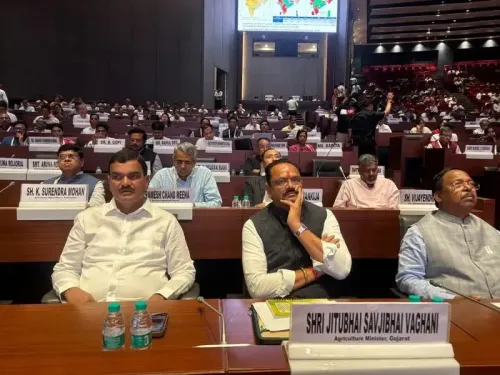
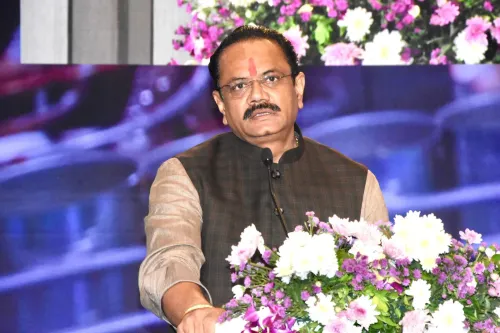
A formal Memorandum of Understanding between GSBTM and Anand Agricultural University (AAU) is scheduled to be signed in Bhavnagar on Friday, 10 October 2025, marking the programme's official launch. The signing ceremony will be attended by Science and Technology Minister Arjun Modhwadia and Agriculture and Farmers Welfare, Cooperation and Animal Husbandry Minister Jitu Vaghani.
The MoU will establish biomanufacturing facilities for biofertilisers and biopesticides, leveraging AAU's existing research base. The university has, according to state government data, produced and sold around 42 lakh litres of biofertiliser products up to the 2024-25 financial year, covering close to 42 lakh hectares of farmland.
Why Global Supply Chains Are the Trigger
Natural gas — a critical raw material for nitrogen fertiliser production — and mineral sources for phosphate and potash are concentrated in specific geographies, making India's farm-input supply susceptible to geopolitical shocks. The ongoing West Asia crisis has disrupted energy markets, shipping routes, and the movement of agricultural inputs, prompting Gujarat to seek domestic biological alternatives. Notably, fertiliser application is time-sensitive, tied to specific stages of crop growth, making disruptions especially damaging for farmers.
The programme aims to diversify input sources through biofertilisers, biostimulants, microbial consortia and other biological technologies, while acknowledging that conventional fertilisers will continue to play a significant role.
Four-Component Structure and Budget Breakdown
The proposed ecosystem is structured around four components. The first centres on establishing a central bio-strain repository and pilot facility at AAU — comprising a biorepository of 528.96 square metres and a 1,054-square-metre pilot-scale facility. This component aims to conserve more than 5,000 native microbial strains, carry out genomic sequencing of over 500 strains, develop a digital Gujarat Bio-Strain Database, and create more than 10 new bio-formulations.
The second component allocates ₹13 crore to support startups, micro, small and medium enterprises (MSMEs), cooperatives, non-governmental organisations and Farmer Producer Organisations in building pilot-scale manufacturing capabilities. A further ₹9 crore is earmarked for scientific field validation of biological products across different agro-climatic regions and farmer demonstrations through Gujarat's agricultural university network.
The fourth component focuses on large-scale cooperative manufacturing, with automated fermentation, formulation and packaging facilities to be developed through partners including AMUL, Banas, SUMUL, and KRIBHCO.
AAU's Scientific Foundation
AAU brings a substantial research base to the partnership. The university has developed and commercialised biofertiliser technologies using microorganisms including Azotobacter, Azospirillum, Rhizobium, phosphate-solubilising bacteria, and potassium-mobilising bacteria. It has also produced microbial consortia such as Bio-NP and Bio-NPK, and maintains a repository of more than 1,000 microbial cultures relevant to biofertilisers, biopesticides and biodecomposers. DNA sequence data for 148 microbial strains have been deposited with the National Center for Biotechnology Information (NCBI).
What Happens Next
Under the proposed framework, research institutions will drive microbial discovery and product development, agricultural universities will handle field validation, and startups, MSMEs and cooperatives will scale up production. The long-term objective is to develop commercially viable agricultural products from indigenous biological resources and manufacture them entirely within India. The programme's actual outcomes, however, will depend on the timely establishment of facilities, successful product validation, and farmer adoption — all of which remain ahead.
Point of View
Phosphate and potash availability can be disrupted overnight. The real question is whether ₹50 crore over five years is sufficient to move the needle, or whether this remains a well-intentioned pilot that struggles to scale without central government support and a credible farmer-adoption mechanism. AAU's existing commercialisation track record is a genuine differentiator, but cooperative manufacturing at the AMUL-KRIBHCO level will require regulatory clarity and consistent demand incentives that the plan does not yet spell out.
NationPress
9 Oct 2026
Frequently Asked Questions
What is Gujarat's ₹50 crore bio-manufacturing initiative?
It is a five-year, ₹50 crore plan by the Gujarat State Biotechnology Mission (GSBTM) to build an integrated ecosystem for producing biofertilisers and biopesticides domestically. The programme involves Anand Agricultural University, startups, MSMEs, cooperatives, and Farmer Producer Organisations.
Why is Gujarat launching this initiative now?
The programme is a direct response to supply chain vulnerabilities exposed by the West Asia crisis, which has disrupted energy markets, shipping routes, and the movement of key agricultural inputs such as natural gas for nitrogen fertilisers and mineral sources of phosphate and potash. Timely fertiliser access is critical for farmers because it is tied to specific crop growth stages.
What role will Anand Agricultural University play?
AAU will serve as the scientific anchor of the programme through the bio-strain repository and pilot facility established under the MoU with GSBTM. The university already has a repository of over 1,000 microbial cultures and has sold around 42 lakh litres of biofertiliser products covering nearly 42 lakh hectares up to 2024-25.
Which cooperatives and organisations are involved in large-scale manufacturing?
The fourth component of the programme proposes large-scale cooperative manufacturing facilities through AMUL, Banas, SUMUL, and KRIBHCO, with automated fermentation, formulation and packaging capabilities.
When will the programme formally begin?
The formal launch is marked by the MoU signing between GSBTM and AAU in Bhavnagar on 10 October 2025, to be attended by Science and Technology Minister Arjun Modhwadia and Agriculture Minister Jitu Vaghani. Facility establishment, product validation, and farmer adoption will follow in subsequent phases.