How is Organic and Natural Farming Transforming Guna Farmers' Income?

Synopsis
Discover how Guna farmers in Madhya Pradesh are revolutionizing their income through organic and natural farming. This article explores the shift towards sustainable agriculture, the establishment of weekly organic markets, and the stories of farmers whose lives have been transformed. Join us as we delve into the impact of these practices on both the community and the environment.
Key Takeaways
Organic farming leads to higher incomes for farmers.
Weekly organic markets enhance community access to fresh produce.
Farmers report significant demand for chemical-free products.
Technology is integral to improving organic farming practices.
Collaboration between government and farmers is key to success.
Bhopal, Nov 2 (NationPress) The shift to organic and natural farming among farmers in Guna, Madhya Pradesh has emerged as a remarkable advantage for them.
By adopting organic farming, agricultural ventures are becoming lucrative and significantly boosting farmers' income, aligning with the vision set forth by the Prime Minister.
As farmers realize their aspirations, there is a growing trend of embracing this contemporary approach to organic agriculture.
In a collaborative effort, the Guna district administration and the Horticulture and Agriculture Department have initiated a weekly organic market every Sunday at Shastri Park in the city. This market serves as a valuable platform for those practicing organic and natural farming, while also providing the community with fresh, indigenous organic produce.
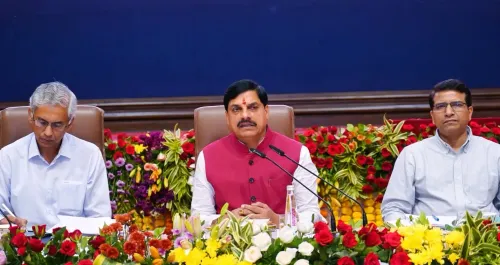
The program was inaugurated by Guna Collector Kishore Kumar Kanyal.
At the organic market, farmers showcased their produce and reported not only higher earnings but also an increased demand for chemical-free fruits and vegetables.
Farmers from Bamori, Raghogarh, Guna, and the surrounding areas brought along an array of products, including Thai guava, spinach, bhatti, bottle gourd, lemon, chili, tomato, wheat, moong dal, gram, organic fertilizers, and various other crops and vegetables. They set up stalls, supported the market, and made substantial purchases of organic produce.
Those engaged in organic and natural farming reported a boost in income thanks to technological advancements. They believe this model is a step towards achieving the Prime Minister's dream of doubling farmers' income while enhancing the availability of fresh and pure produce.
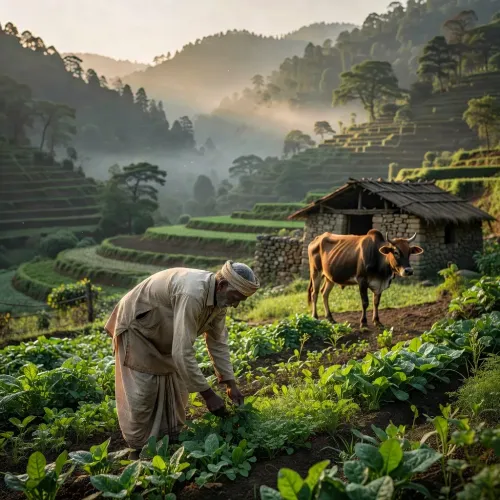
Nathu Ram Lodha, a farmer, mentioned, "With the right agricultural knowledge and guidance, we have cultivated on one and a half acres of land, yielding at least 10 kilograms per unit consistently. Our production continues to grow."
Udayam Singh Lodha shared his experience with IANS, stating, "Interactions with the Horticulture Department and the Atma Project's Agriculture Division have helped us enhance our farming practices through natural methods."
Mohan Singh, another farmer, expressed, "We cultivate wheat, mung beans, sugarcane, tomatoes, and peas on our farm. Over the past 10-12 years, this practice has proven to be very profitable. For instance, wheat that previously sold for less now fetches ₹6,000 per quintal, mung beans at ₹12,000 per quintal, and sugarcane at ₹10,000 per quintal. This brings significant profits for farmers."
According to KPS Kirar, Deputy Director of the Horticulture Department, "It is Prime Minister Narendra Modi's vision to enhance farmers' income—whether by doubling or even quadrupling it—and to ensure public access to nutritious food. To support this vision, the district administration, guided by the Collector, has established a weekly organic market."
Point of View
It is evident that organic farming is not just a trend but a sustainable solution to enhance farmers' livelihoods. The collaboration between local authorities and farmers showcases a promising future for agriculture in India, aligning with the national goal of food security and economic stability. NationPress remains committed to highlighting such progressive initiatives that benefit farmers and communities alike.
NationPress
24 Sept 2026
Frequently Asked Questions
What is the main benefit of organic farming for Guna farmers?
The primary benefit of organic farming for Guna farmers is the significant increase in their income and the demand for chemical-free produce.
What initiatives have been taken to promote organic farming in Guna?
The Guna district administration, in collaboration with the Horticulture and Agriculture Department, has organized a weekly organic market every Sunday to support farmers and provide fresh produce to the public.
How has technology influenced organic farming practices?
Technology has played a crucial role in enhancing farming practices, leading to better yields and profitability for those engaged in organic farming.
What crops are being grown by Guna farmers through organic methods?
Guna farmers are cultivating a variety of crops, including wheat, mung beans, sugarcane, tomatoes, and several other fruits and vegetables.
How does this movement align with national goals?
This movement aligns with the national goals of increasing farmers' income and ensuring access to nutritious food, as envisioned by Prime Minister Narendra Modi.