H-1B fee hike of $103,265 may push US tech jobs overseas, warns FIIDS
Synopsis
A proposed $103,265 H-1B fee — stacked on top of a potential $100,000 OPT charge — could price American universities out of the global talent market entirely. With international student enrolment already down 17% and FIIDS projecting a $3.4 billion economic loss, the policy risks accelerating the very offshoring it claims to prevent.
Key Takeaways
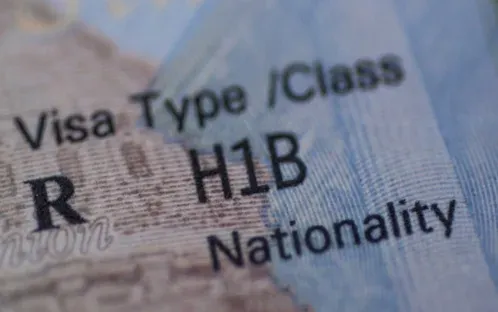
FIIDS has urged DHS and USCIS to reconsider a proposed $103,265 additional fee for cap-subject H-1B petitions.
Large tech companies sponsoring thousands of workers could face up to a billion dollars in cumulative additional costs.
A separately proposed $100,000 OPT fee could push the combined student-to-employment burden to $203,265 .
New international student enrolment in the US fell 17 per cent in autumn 2025 , according to the Institute of International Education .
NAFSA's 2026 outlook projects up to 111,000 fewer international students, representing an economic loss of up to $3.4 billion .
USCIS already funds around 96 per cent of its operations through applicant fees, FIIDS noted.
An Indian-American policy organisation has formally urged the US Department of Homeland Security (DHS) and US Citizenship and Immigration Services (USCIS) to withdraw a proposed additional fee of $103,265 for cap-subject H-1B petitions, cautioning that the measure could cripple startups, erode America's technological competitiveness, and drive high-value employment overseas. The warning came from the Foundation for India and Indian Diaspora Studies (FIIDS) on 25 August.
What FIIDS Is Asking For
FIIDS called on DHS and USCIS to adopt a more proportionate funding model — one that protects American workers without restricting access to global talent. The organisation said it supported legal and merit-based immigration, fair compensation, and strong anti-fraud measures, but argued that the proposed fee crosses a threshold that makes legitimate recruitment economically impractical.
The group also acknowledged the genuine costs involved in processing applications, preventing fraud, conducting national security checks, and administering the legal immigration system — but maintained that the burden should not fall disproportionately on a single visa category.
The Financial Burden on Startups and Large Firms
For cash-strapped startups, a $103,265 charge to hire a single skilled worker could fundamentally alter recruitment decisions, FIIDS warned. At the other end of the scale, large technology companies sponsoring thousands of employees could face hundreds of millions of dollars in cumulative costs — and, in some cases, close to a billion dollars in additional expenditure.
Khanderao Kand, chief of policy and strategy at FIIDS, put it directly: 'A $103,265 H-1B fee could choke cash-strapped startups, while companies hiring thousands of H-1B workers could face hundreds of millions of dollars — and potentially close to a billion dollars — in additional costs.'
'If employing critical talent in the United States becomes substantially more expensive than hiring workers abroad, companies could move jobs and investments out of the country,' the organisation added.
The OPT Compounding Effect
FIIDS also flagged the combined financial impact of the proposed H-1B fee alongside a separately proposed $100,000 fee affecting Optional Practical Training (OPT). If both charges applied to the student-to-employment pathway, the total burden on a single individual transitioning from an American university to skilled work could reach $203,265.
Kand warned: 'Combined with a potential $100,000 OPT fee, totaling $203,265, the policy risks making the student-to-work pathway effectively unaffordable.' Such a cost, the group argued, could undermine OPT as a bridge between US higher education and the domestic labour market.
International Student Pipeline Already Under Pressure
The proposal arrives at a particularly sensitive moment. Citing data from the Institute of International Education, FIIDS noted that new international student enrolment in the United States fell by 17 per cent in autumn 2025. A 2026 outlook from NAFSA projected as many as 111,000 fewer international students — a possible 9.5 per cent decline — representing an economic loss of up to $3.4 billion.
This is the backdrop against which the new fee is being proposed, making the timing, critics argue, particularly ill-judged.
Funding and the Path Forward
USCIS already receives around 96 per cent of its funding through fees paid by applicants and petitioners, according to FIIDS. The organisation called on Congress to consider funding immigration administration through existing revenue, appropriations, and reasonable fees rather than placing an exceptional burden on one legal immigration category.
'We urge DHS and USCIS to find a more proportionate funding approach, Congress to ensure adequate agency funding, and industry to make America's talent needs clear,' Kand said. 'Protecting American workers and maintaining America's technological leadership must go hand in hand.'
Indian nationals have historically formed the largest group of H-1B beneficiaries, particularly in technology, engineering, and other skilled sectors. With the international student pipeline weakening and fee proposals stacking up, the next policy decision from DHS will be closely watched by employers, universities, and the Indian diaspora alike.
Point of View
265 H-1B fee is being framed as a worker-protection measure, but the arithmetic points the other way: if hiring a single skilled worker in America costs over $100,000 more than hiring one abroad, the rational corporate response is offshoring — precisely the outcome the fee is meant to prevent. What is missing from the debate is a credible model showing how fee revenue offsets the economic drag of talent displacement. With international student numbers already in retreat and the OPT pipeline potentially facing a $100,000 surcharge of its own, the US risks dismantling the university-to-workforce bridge that has underpinned its technology sector for decades. The question is not whether USCIS needs adequate funding — it clearly does — but whether concentrating that burden on one visa category is either equitable or strategically coherent.
NationPress
25 Aug 2026
Frequently Asked Questions
What is the proposed H-1B fee that FIIDS is opposing?
The proposed fee is an additional charge of $103,265 for cap-subject H-1B petitions, put forward by DHS and USCIS. FIIDS argues it would make legitimate skilled-worker recruitment economically impractical, particularly for startups and mid-sized firms.
How could the fee affect US technology companies?
Large technology companies sponsoring thousands of H-1B employees could face hundreds of millions of dollars — and potentially close to a billion dollars — in cumulative additional costs, according to FIIDS. The group warns this could incentivise companies to move jobs and investments out of the United States.
What is the combined impact of the H-1B and OPT fee proposals?
If both the $103,265 H-1B fee and a separately proposed $100,000 OPT fee are enacted, the total cost burden on the student-to-employment pathway could reach $203,265. FIIDS says this would make the route from American universities to skilled US employment effectively unaffordable.
What does the data say about international student trends in the US?
New international student enrolment in the US fell 17 per cent in autumn 2025, according to data cited by FIIDS from the Institute of International Education. A 2026 NAFSA outlook projects up to 111,000 fewer international students, representing an economic loss of up to $3.4 billion.
What is FIIDS asking Congress and US agencies to do?
FIIDS is urging DHS and USCIS to adopt a more proportionate fee structure, and calling on Congress to fund immigration administration through existing revenue and appropriations rather than concentrating the burden on H-1B petitioners. It noted that USCIS already derives around 96 per cent of its funding from applicant fees.