Kamal Haasan fires back at Elon Musk over Starlink India licence delay
Synopsis
Actor-politician Kamal Haasan took on Elon Musk directly on X after Musk demanded to know why Starlink — licensed in 165 countries — still has no India clearance after five years. Haasan's response was a pointed mix of sovereignty assertion, affordability concern, and a BharatNet accountability check — telling Musk that spectrum is strategic infrastructure, not a commercial commodity, and that 'no billionaire' gets to dictate India's policy.
Key Takeaways
Elon Musk posted on X questioning why Starlink — licensed in over 165 countries after five years of compliance — still has no operating licence in India .
Rajya Sabha MP and MNM founder Kamal Haasan responded on 9 October 2026 , calling India's national security safeguards 'non-negotiable'.
Haasan warned that Starlink's high subscription and equipment costs could widen the digital divide rather than bridge it.
He drew parallels with US tariffs on Chinese EVs and joint India-US restrictions on Huawei to counter the free-market argument.
Haasan cited the CAG 2026 audit , which found only 33.2% of service-ready Gram Panchayats operational under BharatNet despite ₹ 39,888 crore spent.
He ended with an assertion of digital sovereignty: India 'will decide our own future — not Western vested interests or any billionaire'.
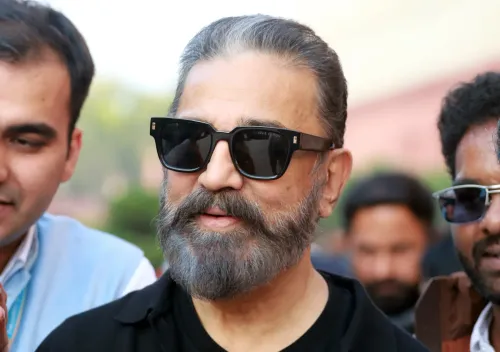
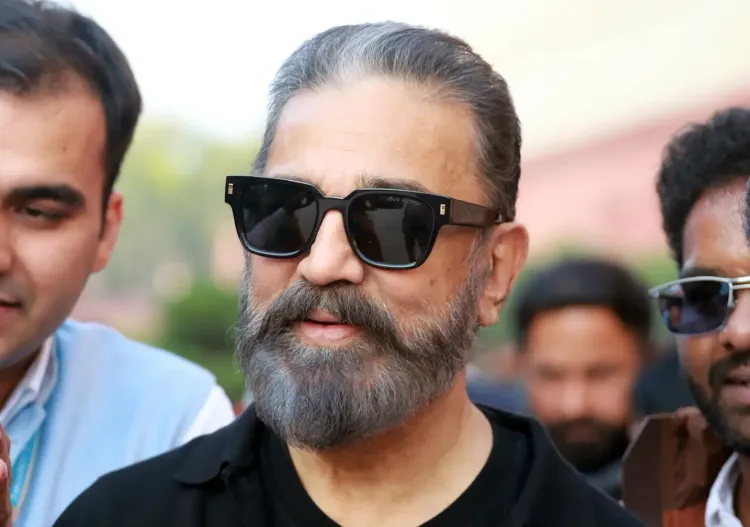
Rajya Sabha MP and actor-politician Kamal Haasan on Friday, 9 October 2026, hit back at American billionaire Elon Musk over Musk's pointed question about why his satellite internet company Starlink still has no operating licence in India, asserting that national security safeguards are 'non-negotiable' and that no billionaire — 'Indian or American' — should dictate a nation's policy.
What Musk Said
On Thursday, Musk posted on social media platform X — which he owns — writing: 'Starlink is licensed in over 165 countries and has spent five years complying with every single law and requirement of the Government of India, so why still no license?' The post reignited the long-running debate over spectrum allocation, security vetting, and market access for foreign satellite broadband operators seeking entry into India.
Haasan's Rebuttal: Security, Affordability and Sovereignty
Kamal Haasan, founder of the Makkal Needhi Maiam (MNM) party in Tamil Nadu, responded directly on the same platform. While acknowledging that satellite internet could serve as 'the most practical and affordable last-mile solution for those in remote regions,' he cautioned that high subscription fees and equipment costs risk placing it beyond the reach of ordinary Indian households. 'Connectivity must bridge the digital divide, not create a new one,' he wrote.
Haasan was categorical that India's strategic assets are not up for negotiation. 'India knows our networks and spectrum are strategic infrastructure, not merely commercial assets. India's national security safeguards are non-negotiable,' he asserted.
The Protectionism Parallel
Haasan drew a sharp parallel between US and Indian trade practices, arguing that nations routinely protect their own interests. He pointed to America's 100% tariffs on Chinese electric vehicles as evidence that the West 'practises protectionism at home' while preaching free markets abroad. He further noted that both India and the United States have restricted Huawei over security concerns — suggesting consistency, not hypocrisy, in India's approach. 'One cannot demand a level playing field from others only when it suits its own agenda,' he added.
BharatNet and India's Broadband Record
Haasan also invoked BharatNet, the government programme launched in 2011 to provide high-speed broadband to all 2.5 lakh Gram Panchayats via optical fibre — billed as the world's largest rural broadband initiative. At the same time, he did not shy away from accountability, citing the Comptroller and Auditor General's (CAG) 2026 audit report, which found the programme struggling to meet its original objectives. According to the audit, only 33.2% of service-ready Gram Panchayats were operational despite a spend of ₹39,888 crore. He balanced this critique by acknowledging that India's telecom regulations have made internet data among the world's most affordable.
India Is 'Not a Colony'
Haasan concluded his post with a pointed declaration of digital sovereignty: 'We welcome the world, but we, the Indian people, will decide our own future — not Western vested interests, their double standards or any billionaire — Indian or American.' This comes amid ongoing regulatory scrutiny of foreign satellite broadband entrants, with Starlink and rivals awaiting spectrum and security clearances from Indian authorities. The episode underscores the increasingly geopolitical dimension of the global satellite internet race.
Point of View
Yet cites the CAG's damning 2026 audit of BharatNet's own failures in the same breath. That intellectual honesty sets it apart from reflexive nationalism. The deeper issue mainstream coverage underplays is that India's satellite broadband policy remains caught between spectrum protectionism for domestic telcos, legitimate security vetting, and a genuine connectivity gap that no incumbent has solved. Musk's frustration is commercially understandable, but his framing — five years of compliance without a licence — also raises a legitimate due-process question that the government has not publicly answered.
NationPress
9 Oct 2026
Frequently Asked Questions
Why has Starlink not received an operating licence in India?
Starlink has reportedly spent five years complying with Indian government laws and requirements but has not yet received a licence, according to Elon Musk's post on X. Indian authorities have not publicly stated the specific outstanding conditions, with security vetting and spectrum allocation remaining key regulatory considerations.
What did Kamal Haasan say in response to Elon Musk?
Kamal Haasan, Rajya Sabha MP and MNM founder, posted on X on 9 October 2026 asserting that India's networks and spectrum are strategic infrastructure and that national security safeguards are 'non-negotiable'. He also cautioned that Starlink's cost structure could widen the digital divide and argued that no billionaire should dictate a nation's policy.
What is BharatNet and why did Haasan mention it?
BharatNet is a government project launched in 2011 to provide high-speed broadband to all 2.5 lakh Gram Panchayats via optical fibre, described as the world's largest rural broadband initiative. Haasan cited a CAG 2026 audit finding that only 33.2% of service-ready Gram Panchayats were operational despite ₹39,888 crore in expenditure, using it to show India is willing to hold its own programmes accountable.
How did Haasan counter the free-market argument made by Musk?
Haasan pointed to the United States imposing 100% tariffs on Chinese electric vehicles and both the US and India restricting Huawei over security concerns as examples of Western nations practising protectionism. He argued that demanding a level playing field is selective when applied only to markets that suit one's own agenda.
In how many countries is Starlink currently licensed?
According to Elon Musk's post on X, Starlink is licensed in over 165 countries. India is notably absent from that list despite the company's claims of five years of regulatory compliance efforts.