Haryana CM Office: 12 Years of Sports Push, 2,000 Nurseries
Synopsis
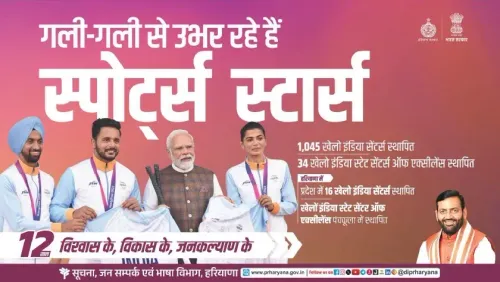
The Chief Minister's Office of Haryana on 18 October 2026 outlined a 12-year sports development arc anchored in cash awards, government jobs for medalists, and a stated rollout of 2,000 sports nurseries aimed at building the next generation of world-class athletes.
Key Takeaways
The Chief Minister's Office of Haryana posted on 18 October 2026 highlighting the state's sports development record over 12 years .
Three core incentives drive the model: cash prizes , government jobs for achieving athletes, and 2,000 sports nurseries for grassroots talent.
Haryana consistently punches above its weight in Indian sports, especially in wrestling, boxing, and athletics.
The nursery programme is designed to widen the talent pipeline at the base while elite incentives reward top performers.
The 2028 Los Angeles Olympic cycle is the next major benchmark for Haryana's sporting investments.
The CMO frames current efforts as entering the second year of a set of 'new resolutions', signalling continued policy momentum.
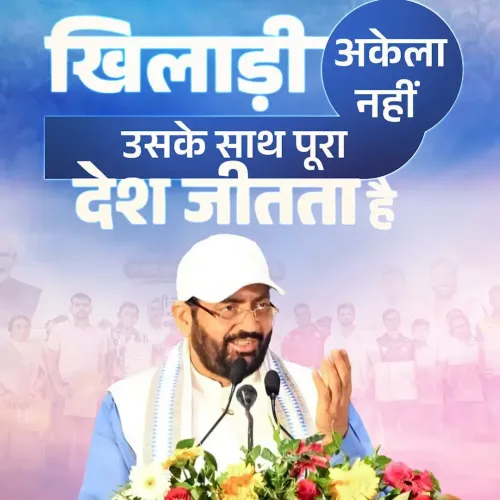
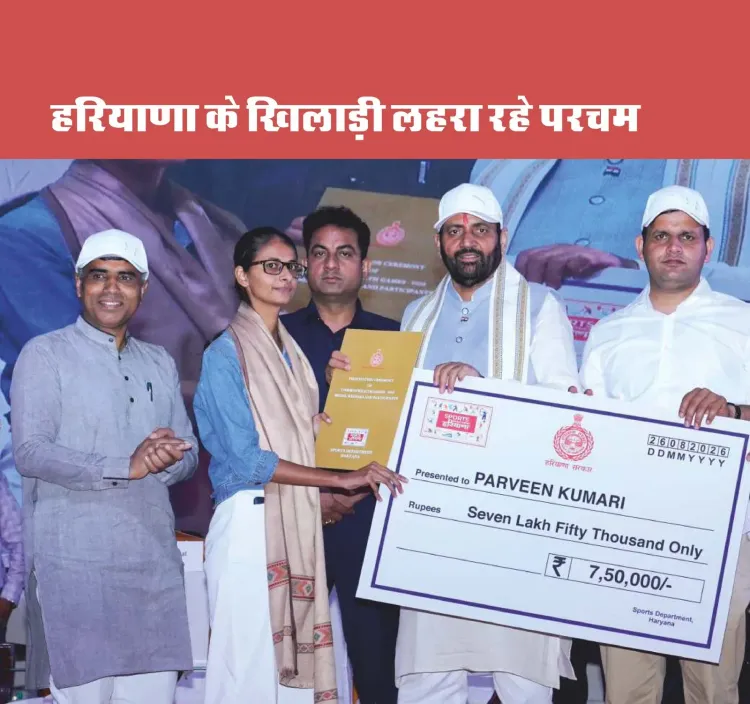
Haryana's athletes are planting their flags on world podiums — and the state government says it knows exactly why. On Sunday, 18 October 2026, the Chief Minister's Office of Haryana posted a sweeping account of the state's sports development journey, framing it as '12 varshon ki vikas yatra' ('12 years of a development journey') and two years of fresh commitments that are now producing visible results on the global stage.
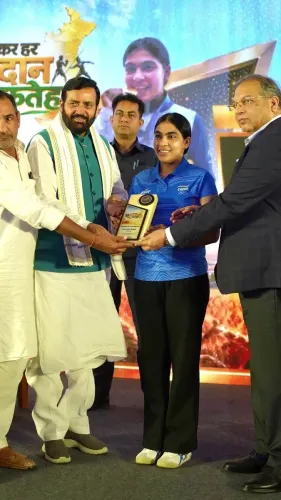
The post, shared on a day typically reserved for weekly policy communication, spotlights three levers the Haryana government says are driving athlete performance: cash prizes for medal-winners, guaranteed government jobs for sporting achievers, and the rollout of what it describes as 2,000 sports nurseries across the state — grassroots training hubs designed to catch talent before it slips away.
Why Haryana Punches Above Its Weight
With a population of roughly 28 million, Haryana has long contributed a wildly disproportionate share of India's Olympic and Commonwealth Games medals, particularly in wrestling, boxing, and athletics. The state's sporting DNA is not accidental — successive governments have backed it with structured incentive architectures. The current framework, according to the CMO post, deepens that tradition: direct cash awards reward success at the top end while sports nurseries are designed to widen the talent pipeline at the bottom. This twin-track approach — elite incentivisation paired with mass grassroots infrastructure — mirrors a model increasingly adopted across high-performing sporting states in northern India. The logic is straightforward: reward those who reach the top so young athletes can see a tangible future in sport, then build the structures that give more of them a realistic shot at getting there.The 2,000 Nurseries Bet
The centrepiece of the government's current commitment is the sports-nursery programme. If delivered at scale, 2,000 nurseries would represent one of the largest state-level grassroots sports infrastructure pushes in India. These are intended to serve as the first rung — coaching, equipment access, and competitive exposure for children who would otherwise have no structured pathway. Whether enrolment figures and coach quality match the ambition will determine whether the scheme translates into medals or remains a headline number. The government jobs guarantee carries its own weight in a state where a secure posting still represents a life-changing prize for a young athlete's family — turning a sporting career from a financial gamble into a calculated bet worth taking.Eyes on the 2028 Olympic Cycle
The CMO's framing of 'new resolutions' entering their second year places this post squarely in a forward-looking register. With the 2028 Los Angeles Olympics now in preparation phase for Indian athletics, Haryana's investment in this cycle will face its most rigorous test. The nurseries entering operation today produce the athletes who walk into qualification rounds the day after tomorrow. For a state that sees sporting success as both cultural identity and governance credential, the next two years of results will be the real scoreboard.Point of View
Particularly as the 2028 Olympic cycle intensifies pressure to deliver podium results. By anchoring the narrative in a 12-year continuum, the CMO is also making a governance argument: that durable sports policy outlasts election cycles. The 2,000-nursery claim is the number that will face the hardest scrutiny — operational delivery at that scale demands sustained administrative attention that political messaging alone cannot guarantee. If enrolments and coach quality hold up, Haryana's model could become a national reference point; if the gap between announcement and ground reality widens, it hands critics a ready-made counter-narrative ahead of 2027 state politics.
NationPress
18 Oct 2026
Frequently Asked Questions
What is the Haryana government's sports nursery programme?
The Haryana government describes a network of sports nurseries — targeted at 2,000 locations — designed to provide structured coaching, equipment, and competitive exposure to young athletes at the grassroots level, giving them a formal pathway into competitive sport.
What incentives does Haryana offer to medal-winning athletes?
Haryana offers cash prize awards and guaranteed government jobs to sportspersons who win medals at national and international competitions, making a sporting career financially viable for athletes and their families.
Why does Haryana produce so many top Indian athletes?
Haryana has a deep-rooted culture of sport, particularly in wrestling, boxing, and athletics. Decades of government incentives including cash rewards, employment guarantees, and recently grassroots nurseries have reinforced this culture and produced a disproportionate share of India's Olympic and Commonwealth Games medals.
What is Haryana's 12-year sports development journey?
The Chief Minister's Office of Haryana frames the state's sports policies since roughly 2014 as a continuous development journey — layering cash incentives, job guarantees, and infrastructure investments to build both elite performance and a wide talent base.
How will Haryana's sports investment be tested next?
The 2028 Los Angeles Olympics represent the next major benchmark. Athletes currently entering the sports nursery system and the incentive pipeline are expected to be in peak competitive years by the 2027-2028 qualification cycle.