Haryana CMO Announces Key Decisions to Boost Industry, MSMEs, Startups
Synopsis
The Chief Minister's Office of Haryana announced several key decisions on 22 July 2026 to boost industry, MSMEs, and startups under Haryana Vision 2047, the state's long-term roadmap aligned with India's Viksit Bharat goal by 2047.
Key Takeaways
The Chief Minister's Office of Haryana announced multiple important decisions on 22 July 2026 targeting industry, MSMEs, and startups.
The decisions fall under Haryana Vision 2047 , the state's long-term economic transformation roadmap aligned with India's Viksit Bharat goal.
MSME owners, startup founders, and industrial investors are the primary beneficiaries identified.
Haryana's policy builds on earlier frameworks including the Haryana Enterprise Promotion Policy 2015 and the national Startup India initiative of 2016 .
Gurugram and the broader NCR industrial belt are key geographic anchors for implementation.
Detailed policy notifications and budget allocations are awaited as the next concrete step.
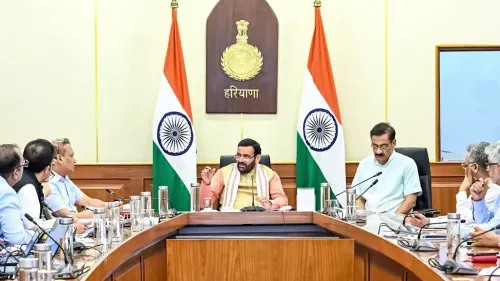
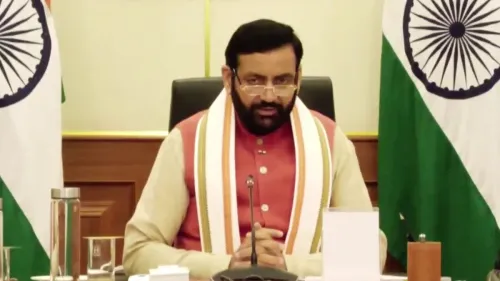
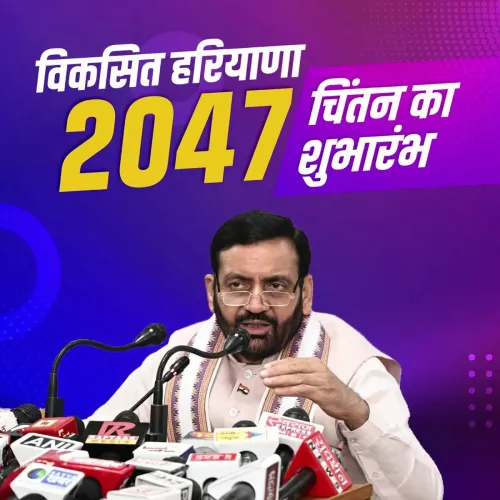
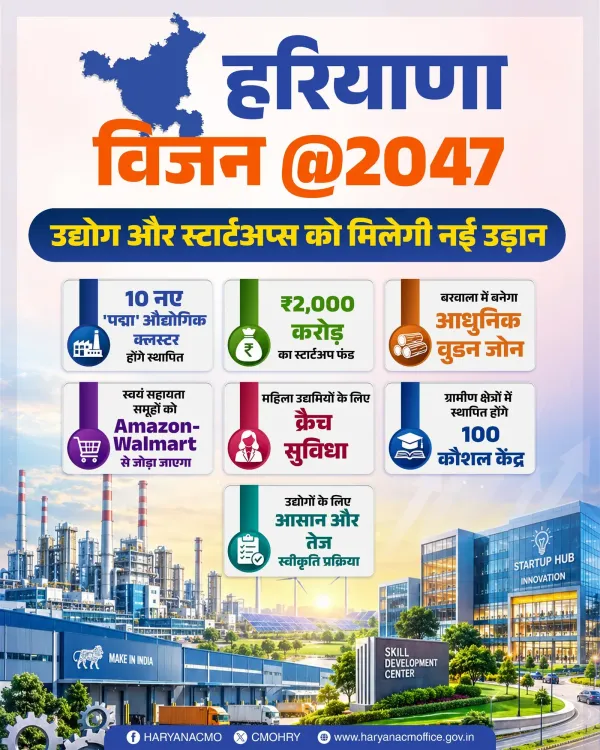
The Chief Minister's Office of Haryana announced on Wednesday, 22 July 2026 that several important decisions have been taken to accelerate growth for industry, MSMEs, and startups under the state's flagship long-term roadmap, Haryana Vision 2047.
The official post stated — 'हरियाणा विजन 2047 के तहत उद्योग, MSME और स्टार्टअप्स को नई गति देने की दिशा में कई महत्वपूर्ण निर्णय' — ('Several important decisions taken to give new momentum to industry, MSMEs and startups under Haryana Vision 2047.').
Context
Haryana Vision 2047 is the state government's long-term development roadmap, aligned with India's national ambition of achieving developed-nation status — Viksit Bharat — by 2047, the centenary of independence. The framework sets out economic transformation as a central pillar, with industry expansion, MSME formalisation, and startup incubation identified as primary levers. Wednesday's announcement signals a fresh round of policy decisions within this overarching blueprint.
The decisions are aimed at providing 'new momentum' (nai gati) to three distinct segments: large and medium industry, micro and small enterprises, and the emerging startup ecosystem. While the government has not yet released granular details of each decision, the framing under Vision 2047 places them within a multi-year structural agenda rather than a standalone measure.
Policy Backdrop
Haryana has historically built its industrial credentials on proximity to New Delhi and the presence of Gurugram, one of India's foremost IT and corporate hubs located in the National Capital Region. The state's Haryana Enterprise Promotion Policy 2015 laid an earlier foundation by offering incentives for industrial investment and MSME growth, and the national Startup India initiative launched in 2016 extended further support mechanisms to the state's startup ecosystem.
Across India, multiple state governments have released Vision 2047 documents to synchronise with central government targets. These plans consistently prioritise manufacturing expansion, MSME formalisation, and startup incubation as job-creation and GDP-growth engines. Haryana's latest round of decisions follows this broader national pattern, with the added advantage of leveraging industrial corridors linked to the capital.
Stakeholders and Impact
MSME owners, startup founders, and industrial investors are the primary stakeholders expected to benefit from the decisions announced. MSMEs form the backbone of Haryana's non-agricultural economy, providing employment across manufacturing, textiles, auto-components, and services sectors. Startups, particularly those based in Gurugram and Faridabad, stand to gain from any policy easing or incentive enhancement directed at early-stage enterprises.
Industrial investors eyeing Haryana as a destination — especially those linked to the Delhi-Mumbai Industrial Corridor and Kundli-Manesar-Palwal Expressway belt — will watch the detailed policy notifications closely. The decisions, once formalised, could influence investment commitments ahead of the state's next major investor summit.
What's Next
The immediate next step will be the release of detailed policy notifications or gazette amendments that translate Wednesday's decisions into actionable frameworks. Analysts and industry bodies will look for specifics on incentive structures, eligibility criteria, and budget allocations, which are expected to be reflected in the state's next fiscal plan.
The broader implication is that Haryana is positioning itself as a proactive industrial state ahead of 2047, using Vision 2047 as a consistent policy anchor. If the announced decisions are backed by adequate budgetary support and implementation timelines, they could strengthen the state's competitiveness in attracting both domestic and foreign investment in the years ahead.
Point of View
MSME, and startup decisions under a single long-horizon brand, the state government is attempting to project coherence and strategic continuity — a contrast to ad hoc policy announcements. The move also reflects a competitive dynamic among Indian states, particularly in the NCR belt, where Haryana, Uttar Pradesh, and Rajasthan are all vying for industrial investment by aligning with central government priorities. The real test will come when detailed notifications emerge: whether the decisions represent structural reform or incremental incentive tweaks will determine their actual economic impact.
NationPress
21 Oct 2026
Frequently Asked Questions
What is Haryana Vision 2047?
Haryana Vision 2047 is the state government's long-term development roadmap designed to align with India's national goal of becoming a developed nation — Viksit Bharat — by 2047, the centenary of Indian independence. It focuses on economic transformation through industry growth, MSME formalisation, and startup support.
What decisions were announced for MSMEs and startups in Haryana on 22 July 2026?
The Chief Minister's Office of Haryana announced several important decisions aimed at giving new momentum to industry, MSMEs, and startups under Haryana Vision 2047. Detailed policy notifications specifying the exact measures are awaited.
How does Haryana Vision 2047 relate to Viksit Bharat?
Haryana Vision 2047 is a state-level roadmap explicitly aligned with the central government's Viksit Bharat target, which aims to make India a fully developed economy by 2047. Multiple Indian states have released similar Vision 2047 documents to synchronise with this national goal.
Which industries and areas in Haryana benefit most from these decisions?
MSME owners, startup founders, and industrial investors are the primary beneficiaries. Gurugram and the broader NCR industrial belt — including corridors linked to Faridabad and Manesar — are the key geographic areas expected to see the most direct impact.
What is the Haryana Enterprise Promotion Policy?
The Haryana Enterprise Promotion Policy 2015 was an earlier state framework that provided incentives for industrial investment and MSME growth across Haryana. It forms part of the policy lineage that underpins the current Vision 2047 decisions.