CM Haryana Office Marks 12 Years of Modi Govt Development
Synopsis
The Chief Minister's Office of Haryana marked 12 years of the Modi government on 22 June 2026, crediting DBT, record expressway and rail construction, metro expansion and green energy growth for transforming citizens' lives, with Haryana cited as a continuous beneficiary of these national initiatives.
Key Takeaways
The Chief Minister's Office of Haryana posted on 22 June 2026 marking 12 years of the Narendra Modi-led central government .
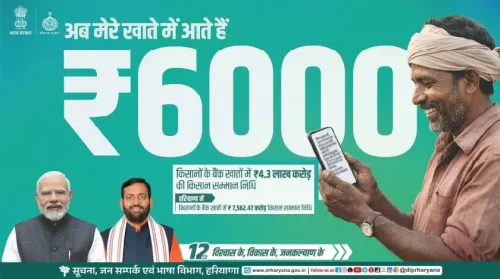
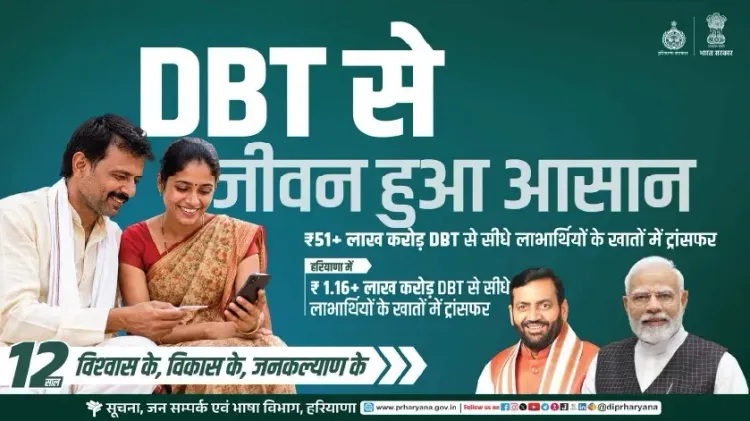
The post highlighted Direct Benefit Transfer (DBT) as a key tool for transparently reaching crores of welfare beneficiaries.
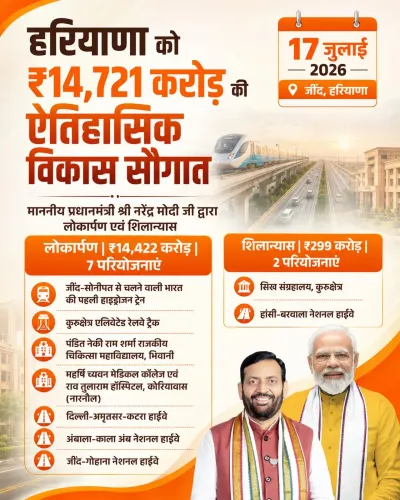
Record-level construction of expressways, railways and bridges under schemes like Bharatmala and the National Infrastructure Pipeline (targeting Rs 111 lakh crore ) was cited.
Unprecedented growth in green energy capacity and rapid metro network expansion were highlighted as transformative achievements.
Haryana was specifically named as a continuous beneficiary of these national development efforts.
The CMO emphasised joint effort by the central and state governments toward good governance, transparency and public welfare.
The Chief Minister's Office of Haryana on Monday, 22 June 2026, posted a tribute marking 12 years of the Narendra Modi-led central government, highlighting achievements in welfare delivery, infrastructure, green energy, and urban transport, and underscoring Haryana's continuous benefit from these national initiatives.
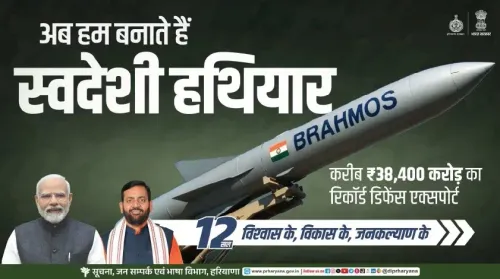
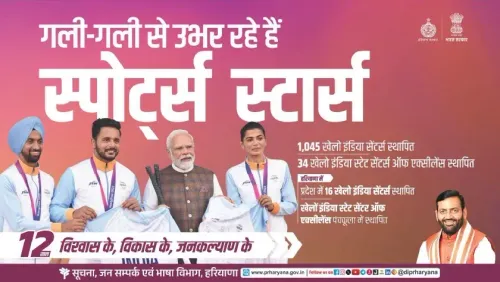
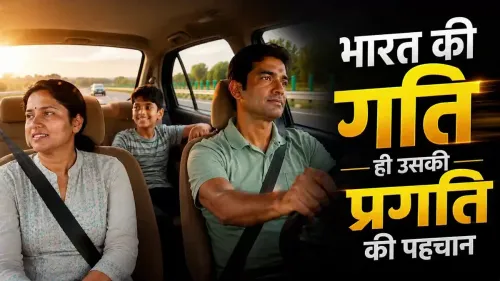
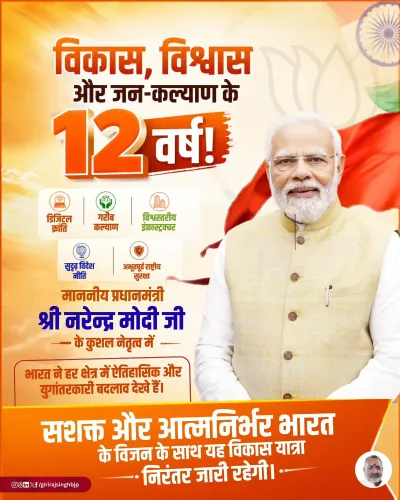
The post, shared in Hindi, declared: '12 वर्षों में विश्वास, विकास और जनकल्याण की नई गाथा' — translated as 'a new story of trust, development and public welfare written over 12 years' — asserting that India has reached new heights of progress. It specifically cited the Direct Benefit Transfer (DBT) mechanism for reaching crores of beneficiaries transparently, record-level construction of expressways, railways, bridges and modern infrastructure, unprecedented growth in green energy capacity, and rapid metro network expansion that has given fresh momentum to urban transport across the country.
Context
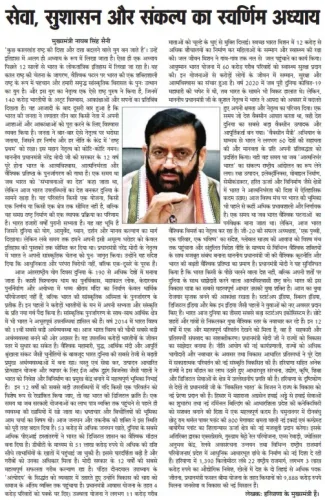
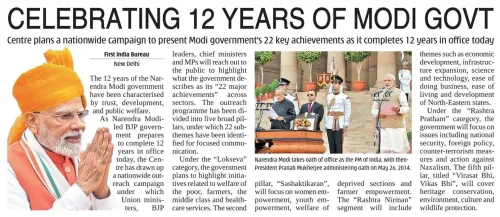
The post marks the completion of 12 years of the Modi government at the Centre, which took office in May 2014. The Chief Minister's Office of Haryana framed this anniversary as a moment to acknowledge the combined impact of central and state governance, stating that 'the central and state governments together have worked to make citizens' lives simpler, more empowered and more prosperous' through commitments to good governance, transparency and public welfare. The message was accompanied by four images, underscoring the visual communication strategy typically used by state government accounts to amplify central government milestones.Policy Backdrop
The DBT architecture was piloted in 2013 and scaled significantly from 2014 onward, covering LPG subsidies, MGNREGA wages, pensions and fertiliser payments — all routed directly into beneficiaries' bank accounts to reduce leakages. The scheme has been credited with eliminating ghost beneficiaries and improving last-mile delivery of welfare funds to crores of households. On the infrastructure front, the Bharatmala Pariyojana, approved in 2017, set the template for large-scale expressway and highway construction. The National Infrastructure Pipeline, launched in 2019, targeted Rs 111 lakh crore in investment across roads, rail, urban transport and energy. Indian Railways reported record track-laying, bridge construction and electrification activity in the decade following 2014. Renewable energy capacity targets were also revised upward, with solar parks and wind projects forming the core of India's green energy push aligned with its international climate commitments.Stakeholders and Impact
Haryana, as a state that shares its borders and economic corridors with the National Capital Region, has been a direct recipient of several central infrastructure investments, including metro connectivity extensions toward Delhi, expressway projects, and renewable energy initiatives executed through state distribution companies. Welfare beneficiaries across the state have accessed central DBT-linked schemes for pensions, agricultural inputs and cooking gas subsidies. Urban commuters in Haryana have benefited from metro network expansion, a point the CMO post specifically highlighted as giving 'new momentum to the country's urban transport.' The coordination between the state government and central agencies on land acquisition and project execution has been cited as a key enabler of faster infrastructure delivery in the region.What's Next
The anniversary messaging from the Chief Minister's Office signals continued political alignment between the Haryana state government and the Centre on development narratives heading into future budget cycles. Observers will watch the next Union Budget for fresh allocations toward metro projects in Haryana and any new DBT linkages announced for state-specific welfare schemes. The emphasis on green energy in the CMO post also suggests the state may seek expanded central support for solar and wind capacity addition under national climate targets.Point of View
Infrastructure and green energy, the post tracks closely with the central government's own communication pillars, suggesting a deliberate effort to associate Haryana's governance brand with national achievements. The emphasis on 'transparency' and 'good governance' also serves a dual purpose: validating central welfare architecture while positioning the state administration as an effective implementer. This pattern of state-Centre narrative synchronisation has become increasingly common among states governed by the same party, and its frequency tends to rise in the run-up to budget seasons and election calendars.
NationPress
21 Sept 2026
Frequently Asked Questions
What is the Chief Minister's Office of Haryana's post about?
The CMO Haryana post marks 12 years of the Narendra Modi-led central government, highlighting achievements in DBT welfare delivery, expressway and rail infrastructure, green energy and metro expansion, and noting Haryana's continuous benefit from these initiatives.
What is Direct Benefit Transfer (DBT) and why is it mentioned?
DBT is a central government mechanism that transfers subsidies and welfare payments directly into beneficiaries' bank accounts, reducing leakages. It was piloted in 2013 and expanded after 2014 to cover LPG, pensions, MGNREGA wages and fertiliser subsidies, reaching crores of households.
How has Haryana benefited from central government infrastructure schemes?
Haryana has benefited through metro connectivity extensions toward Delhi, expressway projects under Bharatmala, renewable energy initiatives via state distribution companies, and DBT-linked welfare schemes for pensions, agricultural inputs and cooking gas subsidies.
What is the Bharatmala Pariyojana mentioned in the context of this post?
Bharatmala Pariyojana is a central government programme approved in 2017 to construct expressways and highways at scale across India, forming a key part of the National Infrastructure Pipeline that targeted Rs 111 lakh crore in investment.
What should we watch for following this Haryana CMO announcement?
Key things to watch include the next Union Budget's allocations for metro projects in Haryana, any new DBT linkages for state-specific schemes, and expanded central support for solar and wind energy capacity in the state.