Haryana CM Office Marks 12 Years of Road, Rail and Green Transport Push
Synopsis
The Chief Minister's Office of Haryana marked 12 years of governance on 18 October 2026, highlighting expressways, a hydrogen train, new electric buses, and the Happy Card scheme as milestones in the state's road and rail transformation.
Key Takeaways
12-year development arc: The Haryana government framed its infrastructure push as a continuous 12-year journey, with the last two years described as a period of fresh resolve.
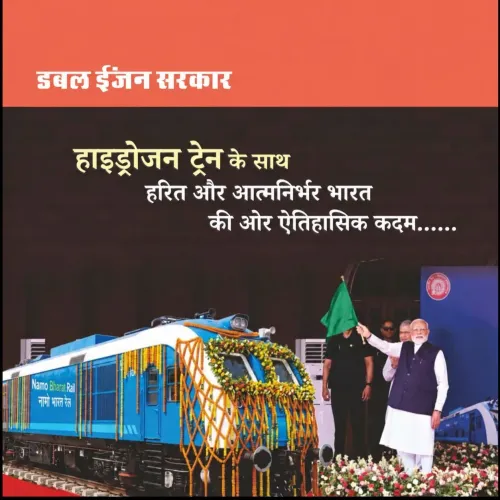
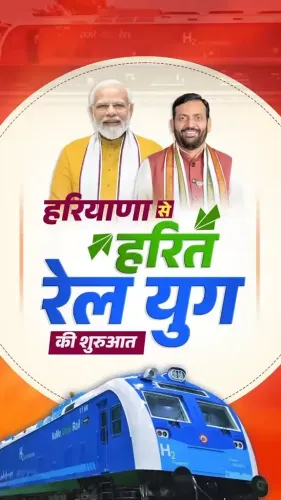
Hydrogen train: A hydrogen-powered train is cited as part of Haryana's green mobility agenda, aligning with Indian Railways' national hydrogen-traction programme.
Expressway expansion: Haryana's highway network feeds into the Bharatmala Pariyojana , a national corridor programme launched in 2015 .
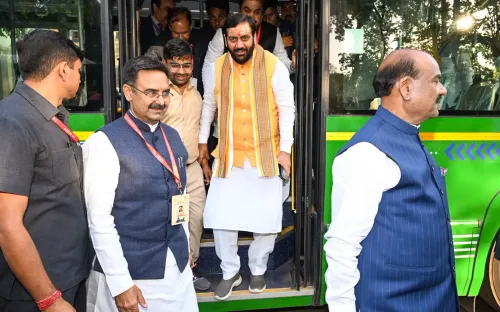
Electric public transport: New electric buses are being added to make daily commutes cleaner and more affordable for state residents.
Happy Card: A travel-subsidy card is positioned as the citizen-facing tool to lower the cost of everyday public transport in Haryana.
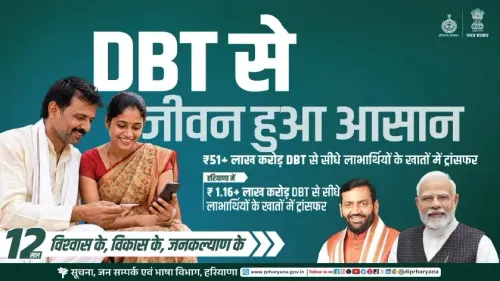
Twelve years of infrastructure building and two years of fresh resolve — the Chief Minister's Office of Haryana laid out that arc in a single post on Sunday, 18 October 2026, spotlighting expressways, hydrogen trains, electric buses, and a subsidised travel card as the twin engines of the state's mobility transformation.
The post, shared in Hindi, declared: 'एक्सप्रेस-वे, बेहतर सड़कों और हाइड्रोजन ट्रेन से विकास को रफ्तार' — 'Development is gaining speed through expressways, better roads, and a hydrogen train.' It framed the Happy Card and expanding electric transport as the citizen-facing payoff of that agenda: a daily commute that is both smoother and cheaper for ordinary Haryana residents.
Expressways and the National Infra Backbone
Haryana sits at the heart of India's highway grid, and its expressway push draws directly from the Bharatmala Pariyojana, the national programme launched in 2015 to expand and modernise highway corridors across the country. Several key alignments pass through or originate in Haryana, giving the state an outsized role in the broader inter-city connectivity story. Better roads here do not just move Haryanvis — they accelerate freight and passenger flow across the Delhi-NCR region and beyond.
Hydrogen Train: Green Rail Comes to Haryana
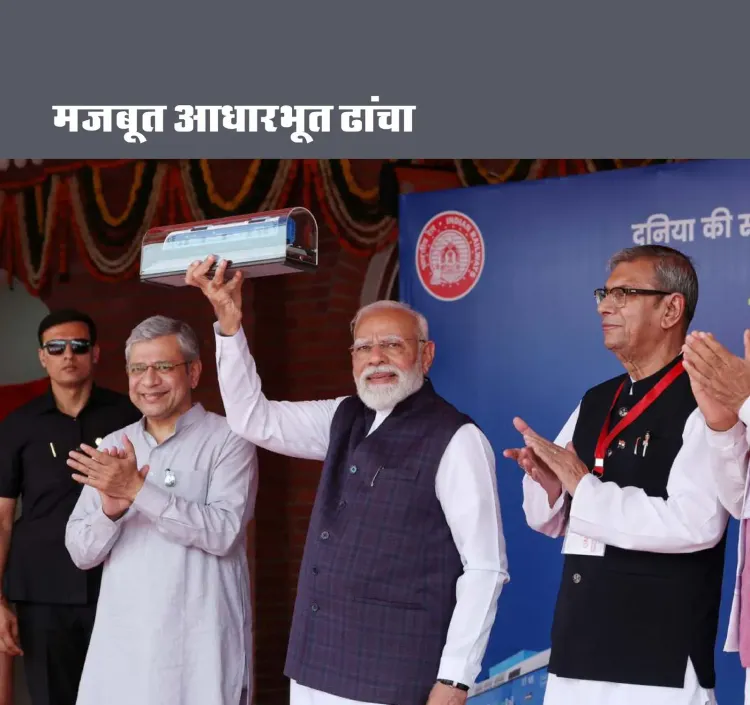
The reference to a hydrogen train is the most forward-looking signal in the post. Indian Railways has been developing hydrogen-powered train technology as part of a wider green-mobility strategy, positioning hydrogen traction as a zero-emission alternative on non-electrified and semi-electrified routes. Haryana's inclusion in that rollout — if confirmed — would mark one of the earliest state-level deployments of the technology. The full schedule and operational routes are still awaited.
Electric Buses and the Happy Card: The Last-Mile Promise
New buses and electric vehicles are the everyday, ground-level translation of infrastructure investment. The Happy Card, cited as making travel 'sugam va kifayati' — 'easy and affordable' — points to a fare-subsidy or travel-wallet mechanism aimed at price-sensitive daily commuters. Electric public transport also feeds directly into India's national clean-energy targets, reducing both urban air pollution and the state's fossil-fuel import bill. Together, these moves signal that Haryana is trying to close the gap between showcase infrastructure and the bus stop nearest you.
The bigger question now is delivery velocity: with hydrogen rail still emerging and electric-bus fleets requiring charging infrastructure that takes years to build, Haryana's ability to match the ambition of this post with boots-on-ground execution will define whether the next two years live up to the twelve that came before.
Point of View
Hydrogen trains) with citizen-welfare optics (Happy Card, electric buses) to project competence on both fronts simultaneously. It arrives at a moment when state governments across India are competing to demonstrate green-mobility credentials ahead of tightening central climate commitments. The hydrogen-train mention is politically significant: it lets the state piggyback on a national Indian Railways initiative while claiming local ownership. Whether the post translates into verifiable milestones or remains aspirational framing will depend on how quickly hydrogen and electric services reach Haryana's tier-2 and tier-3 commuters.
NationPress
18 Oct 2026
Frequently Asked Questions
What is the Happy Card scheme in Haryana?
The Happy Card is a Haryana government initiative designed to make public bus travel more affordable for daily commuters, functioning as a subsidised travel card. Specific fare caps and eligibility criteria are determined by the state transport department.
Will Haryana get a hydrogen train?
The Haryana government has cited a hydrogen train as part of its green mobility push, in line with Indian Railways' national hydrogen-traction programme. Specific routes and timelines for Haryana have not yet been officially confirmed.
What is Bharatmala Pariyojana and does it cover Haryana?
Bharatmala Pariyojana is a national highway expansion programme launched in 2015 . Several key expressway corridors under the scheme pass through or originate in Haryana, boosting the state's road connectivity.
How many years has the Haryana government been in power?
The Haryana CMO's post references a '12-year development journey,' suggesting the current political dispensation is marking over a decade of governance in the state.
What is Haryana doing for electric public transport?
Haryana is expanding its fleet of electric buses and growing electric transport infrastructure to reduce pollution and lower commuting costs for residents, as highlighted in the government's recent communications.