Haryana CM Nayab Saini Marks Hydrogen Train Push Under Double-Engine Govt
Synopsis
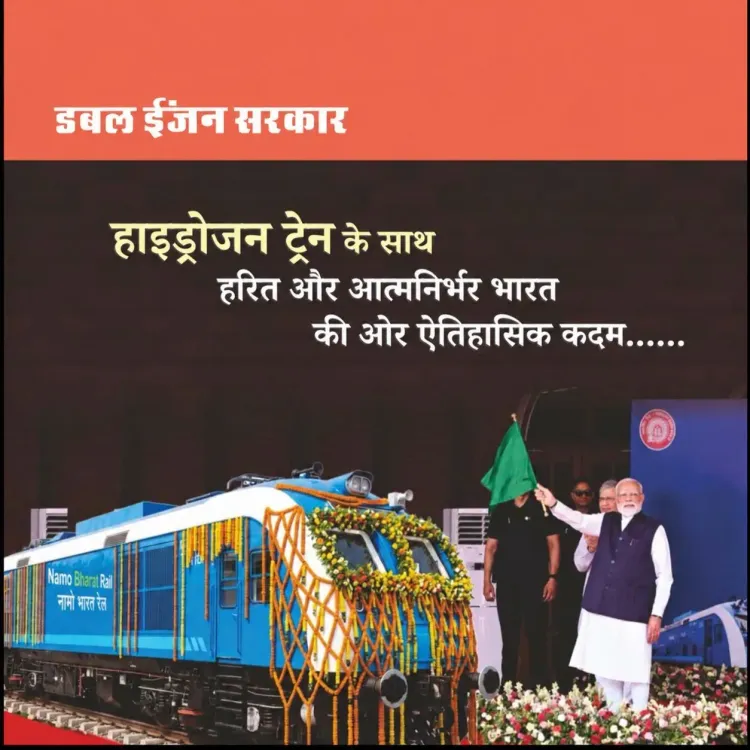
The Chief Minister's Office of Haryana marked the state government's 12-year development record and CM Nayab Saini's two-year tenure by highlighting a hydrogen train push as a flagship step toward a green, self-reliant India under PM Modi's national vision.
Key Takeaways
The CMO Haryana announced a hydrogen train initiative as part of a review of 12 years of development and 2 years of CM Nayab Saini's governance .
PM Narendra Modi's guidance and CM Nayab Saini's leadership were cited as driving forces under the 'double-engine government' model.
The push aligns with India's National Green Hydrogen Mission , launched in January 2023 , targeting clean hydrogen in sectors including railways.
Indian Railways has set a net-zero by 2030 target, making hydrogen traction a strategic priority for non-electrified corridors.
Specific route details, funding figures, and operational timelines for a Haryana-specific hydrogen train project have not yet been publicly detailed.
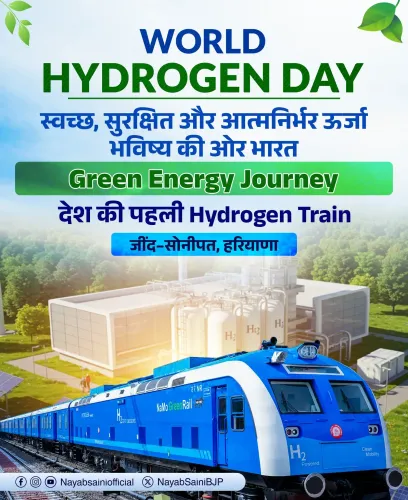
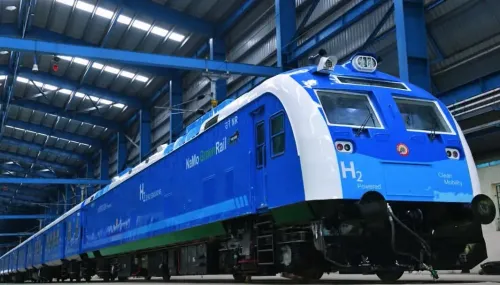
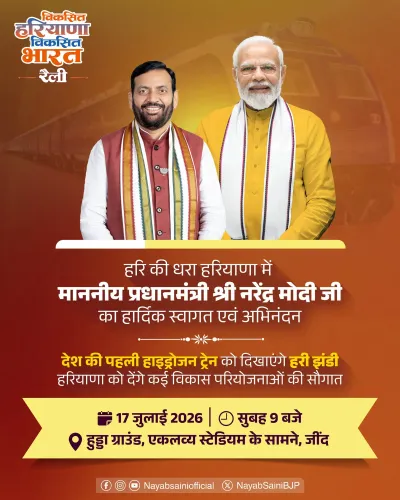
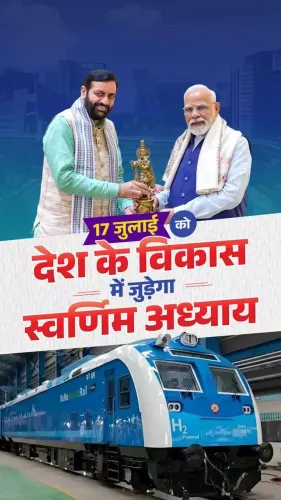
A state on rails toward a greener future — the Chief Minister's Office of Haryana marked the occasion of the government's 12-year development journey and two years of new resolve on Saturday, 17 October 2026, declaring a hydrogen train initiative as a historic step toward a green and self-reliant India.
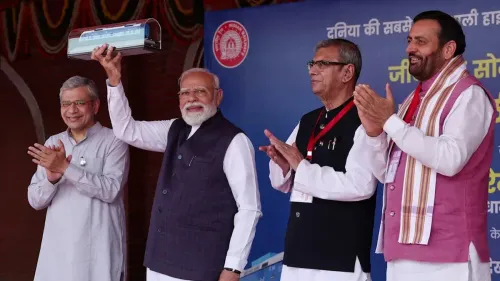
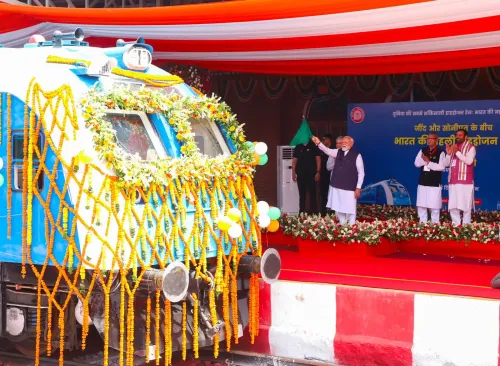
The post, shared on X by the official CMO handle, cited the dual leadership of Prime Minister Narendra Modi at the Centre and Chief Minister Nayab Saini in Chandigarh as the driving force — describing the initiative as a defining achievement of the 'double-engine government' model. In its words: 'hariyal aur atmanirbhar Bharat ki or aitihasik kadam' ('a historic step toward a green and self-reliant India') through a hydrogen train effort launched under state-led initiatives.
What the Hydrogen Train Ambition Means for Haryana
India's national railways have been advancing hydrogen fuel cell train trials as part of the country's broader push to decarbonise one of the world's largest rail networks. The National Green Hydrogen Mission, launched in January 2023, laid the policy foundation — targeting clean hydrogen production and deployment across sectors, including mobility. Haryana's positioning within this arc signals the state's intent to anchor itself as a node in that national green mobility grid.
The 'double-engine government' framing — where a BJP state government and a BJP-led Centre operate in alignment — has been a signature governance narrative since 2014, designed to accelerate central scheme execution at the state level. With Nayab Saini having taken charge as Chief Minister in March 2024, the two-year milestone referenced in the post marks his administration's first major symbolic checkpoint.
The Bigger Green Rail Picture
India has committed to net-zero carbon emissions by 2070, with Indian Railways targeting net zero by 2030 — one of the most ambitious decarbonisation pledges among the world's major rail operators. Hydrogen trains, which emit only water vapour, represent the frontier technology in that mission. While electrification has driven most of the short-term progress, hydrogen-powered traction is positioned as the solution for non-electrified corridors where overhead wires are not economically viable.
The specific operational or funding details of any Haryana-led hydrogen train project — exact routes, timelines, or budget allocations — have not been detailed in the announcement. What the post firmly establishes is the political intent: the state government claiming a stake in the green hydrogen mobility story as it frames its own governance legacy at the 12-year mark.
Whether pilot trains roll before the next budget cycle will be the real test of this ambition — and Haryana's rail corridors are now squarely in the frame.
Point of View
Consistent with how the double-engine model often works — Centre sets the national mission, states signal alignment before concrete execution follows. The broader pattern is significant: as India's net-zero deadlines draw closer, state governments are increasingly competing to be associated with landmark green infrastructure projects.
NationPress
17 Oct 2026
Frequently Asked Questions
What is the hydrogen train initiative announced by the Haryana government?
The Haryana government has signalled a move toward hydrogen-powered trains as a step in the state's green development journey, framed under PM Modi's national green hydrogen vision and CM Nayab Saini's leadership. Specific project details such as routes and timelines have not yet been publicly announced.
What is the National Green Hydrogen Mission?
The National Green Hydrogen Mission was launched by the Government of India in January 2023 to scale up production and use of green hydrogen across sectors including transport, industry, and energy, with the goal of making India a global hub for clean hydrogen.
Who is Nayab Saini and when did he become CM of Haryana?
Nayab Saini became the Chief Minister of Haryana in March 2024 , succeeding Manohar Lal Khattar. He leads the BJP government in the state and has aligned state policy closely with central government schemes.
What is the 'double-engine government' model mentioned in Haryana's post?
The 'double-engine government' refers to the political alignment between a BJP-governed state and the BJP-led Central government under PM Modi, the idea being that this coordination accelerates development by ensuring state and central resources and policies work in tandem.
Is India running hydrogen trains already?
Indian Railways has been advancing hydrogen fuel cell train trials as part of its commitment to achieve net-zero emissions by 2030. These trains emit only water vapour and are seen as a solution for rail corridors where electric overhead wiring is not feasible.