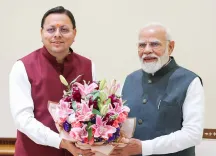
CM Saini Thanks Modi, Sitharaman as Haryana Gets ₹1,484 Cr in Tax Devolution
Synopsis
The Union government released ₹1,09,019 crore in tax devolution to states on 1 August 2026, with Haryana receiving ₹1,484 crore. CM Nayab Singh Saini publicly credited PM Modi and Finance Minister Sitharaman, highlighting the constitutional transfer mechanism that funds state budgets.
Key Takeaways
The Union government released ₹1,09,019 crore in tax devolution to all states on 1 August 2026 .
Haryana's share from this tranche is ₹1,484 crore .
Tax devolution is mandated under Article 280 of the Constitution and distributed via the Finance Commission formula.
The 15th Finance Commission fixed the states' share at 41 percent of central taxes for 2021–26 .
CM Nayab Singh Saini publicly credited PM Narendra Modi and Finance Minister Nirmala Sitharaman for the release.
The 15th Finance Commission's term ends in 2025–26 , making the next devolution formula a key fiscal policy watch point.
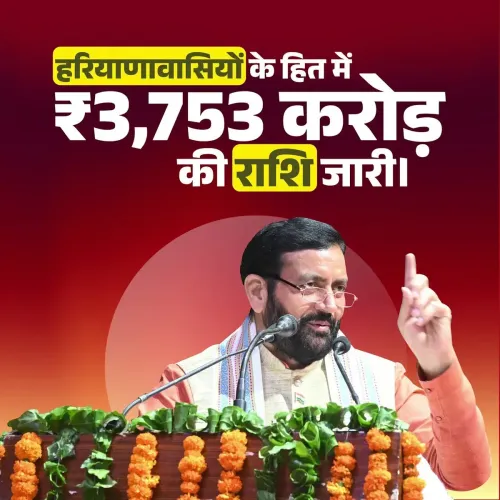
A fresh tranche of central tax funds is flowing to state treasuries — and Haryana Chief Minister Nayab Singh Saini has moved quickly to acknowledge it. On Saturday, 1 August 2026, Saini posted his gratitude after the Union government released ₹1,09,019 crore in tax devolution to states, of which Haryana's share stands at ₹1,484 crore.
In his post, Saini credited Prime Minister Narendra Modi's 'kushul evam doordarshi netritva' (skilled and visionary leadership) and Union Finance Minister Nirmala Sitharaman for authorising the release, calling it a product of their stewardship of the national economy.
What Tax Devolution Actually Means for State Budgets
Tax devolution is not a grant or a scheme benefit — it is a constitutional obligation. Under Article 280 of the Constitution, the Union government periodically transfers a mandated share of central tax collections to states. The 15th Finance Commission, which submitted its report in 2020, fixed that share at 41 percent of central taxes for the period 2021–26, distributed among states through a formula that weighs population, area, income distance, and demographic performance.
For state governments, these tranches are lifeblood — they underwrite salaries, infrastructure spending, and welfare programmes that states cannot fully fund from their own revenues. The vertical fiscal imbalance between the Union, which collects the bulk of taxes, and states, which carry the bulk of expenditure responsibilities, makes devolution the single largest source of untied revenue for most state budgets.
Haryana's ₹1,484 Crore Slice of a ₹1.09 Lakh Crore Release
Haryana, a mid-sized northern state, receives its share under the Finance Commission formula alongside all other states in each release cycle. A nationwide release of over ₹1.09 lakh crore in a single tranche signals robust central tax collection — a figure that reflects the aggregate health of GST, income tax, and corporate tax receipts at the Union level before sharing.
For the state government, ₹1,484 crore in untied funds gives the administration flexibility to direct resources where the budget is under pressure — whether capital works, rural development, or debt servicing — without waiting for project-specific central grants.
Monthly devolution releases of this scale are a standard feature of India's fiscal federalism, but their political salience spikes when states are managing tight finances or ahead of budget cycles. Chief Ministers routinely acknowledge such releases as a signal of Centre-state cooperation — and Saini's post follows that established pattern precisely.
With the 15th Finance Commission's mandate running through 2025–26, attention will soon shift to what the 16th Finance Commission recommends for the next devolution cycle — a decision that will reshape state revenues for years to come.
Point of View
Particularly useful in a state the party governs. The scale of the ₹1.09 lakh crore release reflects strong central tax buoyancy, which gives the Finance Ministry political capital to showcase ahead of any pre-budget commentary. More structurally, with the 15th Finance Commission's cycle ending in 2025–26, the 16th Commission's recommendations will reset devolution shares for the next five years — making every current tranche a baseline against which future allocations will be measured. States like Haryana, which depend heavily on central transfers to bridge their own revenue gaps, have a direct stake in how that next formula is drawn.
NationPress
16 Sept 2026
Frequently Asked Questions
What is tax devolution in India?
Tax devolution is the constitutionally mandated transfer of a share of central tax revenues to state governments, governed by Article 280 and implemented through Finance Commission recommendations. It is the largest source of untied funds for most states.
How much did Haryana receive in the August 2026 tax devolution?
Haryana received ₹1,484 crore from the central government's tax devolution release of ₹1,09,019 crore announced on 1 August 2026.
What is the 15th Finance Commission and what share did it recommend for states?
The 15th Finance Commission, which submitted its report in 2020, recommended that states receive 41 percent of central taxes for the period 2021–26, distributed through a formula based on population, area, income distance, and demographic performance.
Why did CM Nayab Singh Saini thank PM Modi and Nirmala Sitharaman for the tax release?
Saini credited PM Modi's leadership and Finance Minister Sitharaman's stewardship for the release, a common political acknowledgement by state Chief Ministers when the Centre disburses large constitutional transfers to state treasuries.
How often does the Centre release tax devolution to states?
The Union government releases tax devolution to states on a monthly basis, with the amounts tied to actual central tax collections and the Finance Commission's devolution formula.