Shambhu border sealed: Haryana Police halt hundreds of Punjab farmers marching to Delhi
Synopsis
Hundreds of Punjab farmers heading to Delhi's Kisan Mahapanchayat against the India-US trade deal were stopped cold at the Shambhu border on 21 July, with Haryana Police sealing all four entry points and detaining BKU (Charuni) chief Gurnam Singh Charuni. Farmers are now threatening an indefinite sit-in — a flashback to the 2020-21 agitation that paralysed the same border corridors for months.
Key Takeaways
Haryana Police sealed the Shambhu border on 21 July , halting hundreds of Punjab farmers marching to Delhi.
Gurnam Singh Charuni , chief of BKU (Charuni) , was detained by Haryana Police.
The rally, organised under 'Desh Bachao Morcha' , opposes the proposed India-US trade deal , which farmers say will allow cheaper agricultural imports.
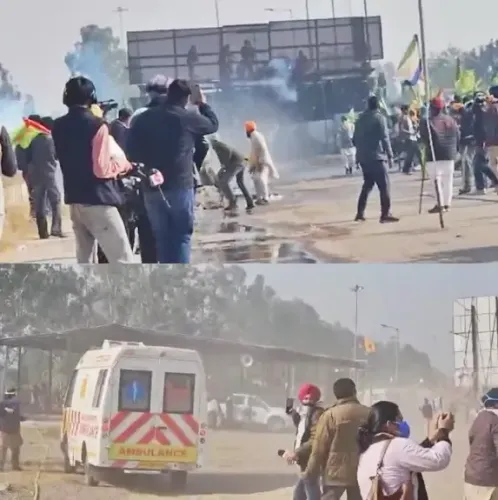
All four entry points from Punjab into Haryana were sealed with barricades, boulders, sand tippers, barbed wire, and iron spikes; paramilitary forces were deployed.
Security was also tightened at Singhu , Ghazipur , and Tikri borders around Delhi.
Farmers have threatened an indefinite sit-in protest at Shambhu if the blockade continues.
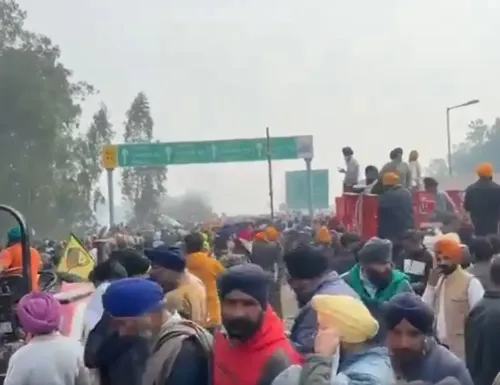
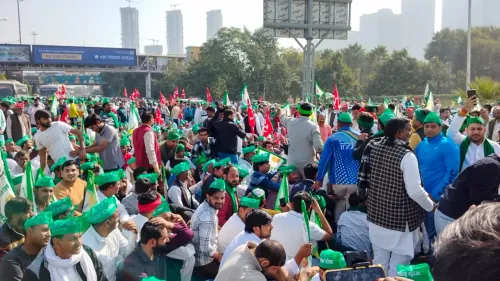
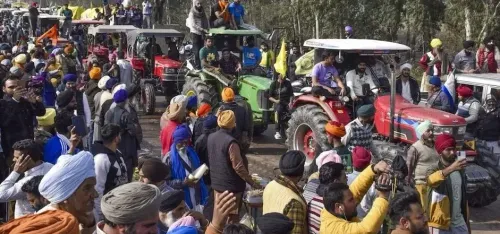
Haryana Police on Tuesday, 21 July sealed the Shambhu border — the key Punjab-Haryana entry point — stopping hundreds of farmers who had set out from Punjab to attend the Kisan Mahapanchayat in New Delhi against the proposed India-US trade deal. The crackdown has triggered a standoff, with farmers vowing an indefinite sit-in protest at the border if the blockade holds.
What Happened at Shambhu
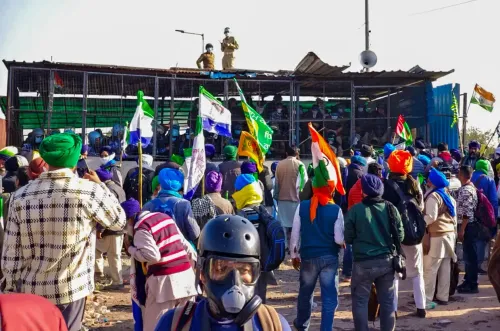
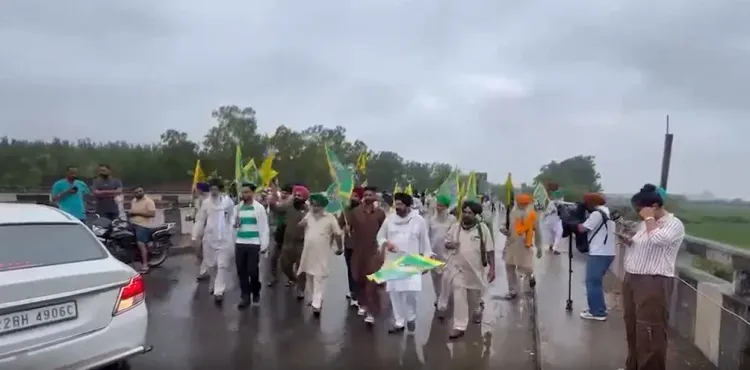
The farmers, travelling by buses and private vehicles rather than tractor-trailers, were halted at the Shambhu border in Patiala district, roughly 12 km from Ambala city in Haryana. Authorities erected barricades, placed boulders, deployed sand-filled tippers, strung barbed wire, and laid iron spikes across all four entry points from Punjab into Haryana. Paramilitary forces have also been deployed alongside state police to prevent any breach.
Farmer leader Sarwan Singh Pandher sharply criticised the Haryana government for sealing the border and blocking what he described as a legitimate, peaceful march to the national capital.
Gurnam Singh Charuni Detained
Haryana Police detained Gurnam Singh Charuni, chief of the Bharatiya Kisan Union (Charuni), as part of the pre-emptive security measures. His detention is likely to intensify farmer anger and may draw wider political attention to the protest. This comes amid heightened sensitivity around any large-scale farmer mobilisation, given the memory of the prolonged agitation of 2020-21 that ended only after the Centre withdrew three contentious farm laws.
The Protest and Its Core Demand
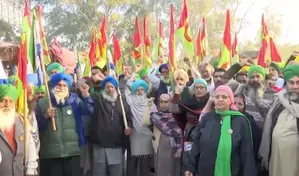
The rally is being organised under the banner of 'Desh Bachao Morcha'. Farmer leaders argue that the proposed India-US trade deal would allow cheaper agricultural imports into India, directly undercutting domestic farm prices and hurting farmers, farm labourers, and the broader agricultural economy. The Kisan Mahapanchayat in New Delhi was intended as a mass show of opposition to the deal.
One protester at the Shambhu border captured the mood bluntly: 'We are carrying the flag of our farmers' organisation and a stick. Why is the government feeling fearful of us? We are not carrying any weapons. Why were we stopped from moving forward? If the government stops us here, we will sit here for an indefinite sit-in protest.'
Traffic and Civilian Disruption
The heavy police deployment across nearly all national highways and major roads linking Punjab to Haryana forced commuters to divert through village routes. Massive traffic snarls have been reported at multiple points along the Punjab-Haryana corridor. Security has additionally been tightened at the Singhu, Ghazipur, and Tikri border points around Delhi to prevent any parallel mobilisation reaching the capital.
A senior Haryana Police official confirmed that sufficient security arrangements had been put in place to prevent any untoward incident. With the standoff showing no signs of resolution, attention now shifts to whether farmer unions escalate the agitation or seek a dialogue with state and central authorities.
Point of View
Bus-borne march. That asymmetry risks inflaming rather than containing the protest. The India-US trade deal has received almost no public consultation with farming communities, yet it touches the livelihoods of hundreds of millions; the Centre's silence on farmer concerns about cheaper imports is the real political gap this agitation is exposing. If the sit-in hardens, the optics of barbed wire and iron spikes at Shambhu will inevitably recall 2020-21 — a comparison no government wants heading into election season.
NationPress
21 Jul 2026
Frequently Asked Questions
Why were Punjab farmers marching to Delhi on 21 July 2025?
Hundreds of farmers from Punjab were marching to New Delhi to attend the Kisan Mahapanchayat organised by the 'Desh Bachao Morcha' against the proposed India-US trade deal. Farmer leaders argue the deal would allow cheaper agricultural imports into India, hurting farm incomes and the broader agricultural economy.
What happened at the Shambhu border on 21 July?
Haryana Police sealed the Shambhu border — located in Patiala district, about 12 km from Ambala — blocking all four Punjab-Haryana entry points with barricades, boulders, sand-filled tippers, barbed wire, and iron spikes. Paramilitary forces were also deployed, and BKU (Charuni) chief Gurnam Singh Charuni was detained.
Who is Gurnam Singh Charuni and why was he detained?
Gurnam Singh Charuni is the chief of Bharatiya Kisan Union (Charuni), a prominent Punjab-based farmer union. He was detained by Haryana Police as part of pre-emptive measures to prevent the farmers' march from reaching Delhi.
What is the 'Desh Bachao Morcha'?
'Desh Bachao Morcha' is the umbrella banner under which the Kisan Mahapanchayat was organised. The platform brings together farmer groups opposed to the proposed India-US trade deal, which they say will damage Indian agriculture by opening the market to cheaper foreign farm produce.
What is the impact on commuters and traffic?
The heavy police deployment on national highways and major roads between Punjab and Haryana forced commuters to use village routes, causing significant traffic snarls across the corridor. Security was additionally tightened at the Singhu, Ghazipur, and Tikri borders around Delhi.