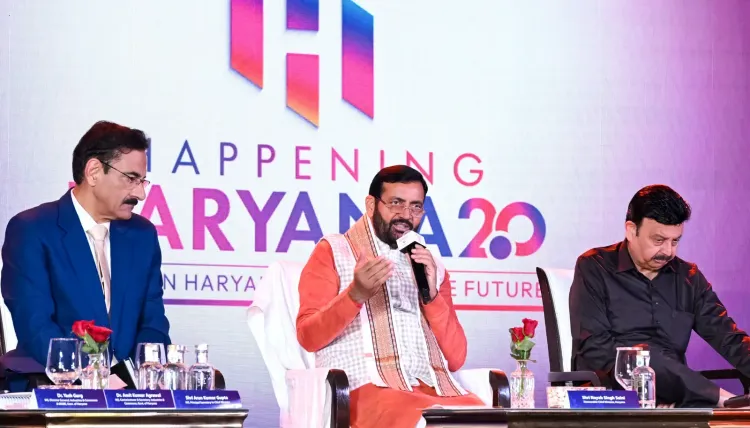
Haryana signs ₹66,000 crore MoUs at Happening Haryana 2.0 in Mumbai
Synopsis
Haryana secured over ₹66,000 crore in MoUs on day two of its Happening Haryana 2.0 roadshow in Mumbai — and with ₹1.10 lakh crore already signed at Gurugram and 108 of 123 companies already allotted land, the state is making a credible case that its investment pitch has moved beyond ceremony into execution.
Key Takeaways
₹66,000 crore in MoUs signed on day two of Happening Haryana 2.0 in Mumbai on 24 August .
Chief Minister Nayab Singh Saini and Industries Minister Rao Narbir Singh presided over the MoU exchange.
Earlier Gurugram event yielded ₹1.10 lakh crore in MoUs; 108 of 123 companies have already been allotted land.
Haryana contributes 3.6% to the national economy despite covering only 1.3% of India's land area.
State has unveiled a zone-wise industrial blueprint covering North, Central, South, and Western Haryana.
Government announced five investor guarantees including policy stability, time-bound approvals, and employment linkage.
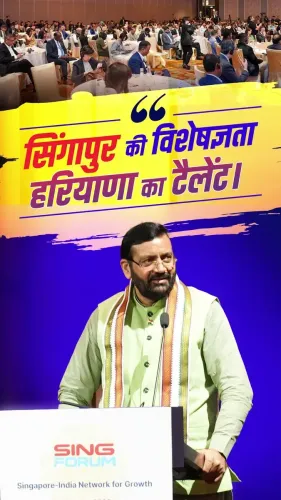
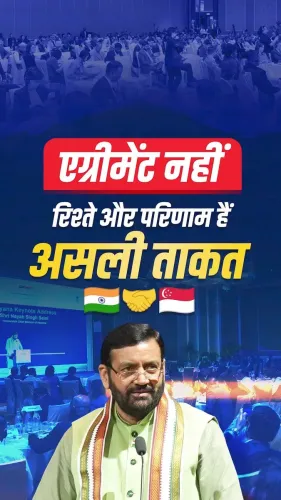
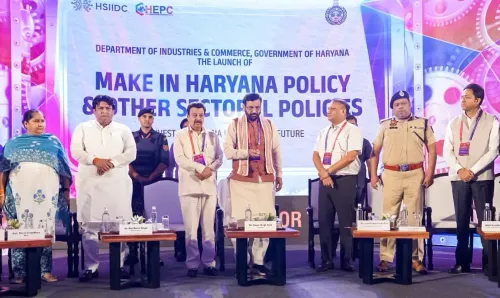
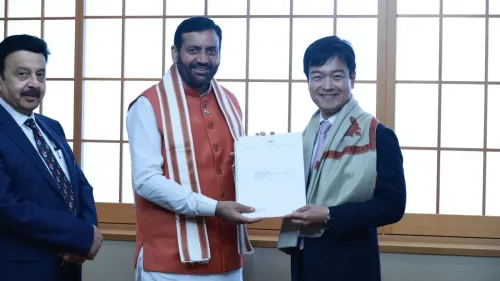
Memoranda of Understanding (MoUs) worth more than ₹66,000 crore were signed on the second day of the 'Happening Haryana 2.0' international outreach campaign in Mumbai on 24 August, marking a significant push by the Haryana government to attract large-scale industrial investment. The agreements were exchanged in the presence of Chief Minister Nayab Singh Saini and Industries and Commerce Minister Rao Narbir Singh.
What Was Signed and Who Was Present
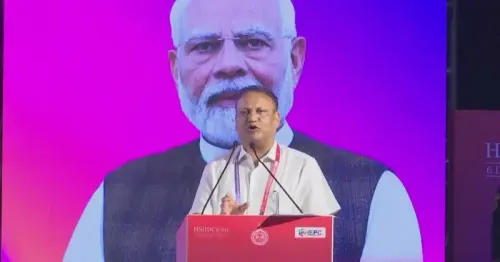
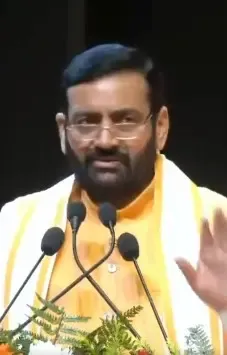
Officers and company representatives formally exchanged the MoUs at the event, which was attended by Consuls General of various countries, industry leaders, investors, and representatives from Mumbai's financial and corporate sector. Chief Minister Saini used the occasion to pitch Haryana as a destination offering more than just land and approvals — framing it as a 'strategic partnership built around scale, speed, policy certainty and shared prosperity.'
Saini also highlighted the formation of an Industry-Worker Friendship Council, set up to address disputes relating to the rights of industries and workers, signalling an intent to reduce friction in industrial relations.
Haryana's Industrial Footprint
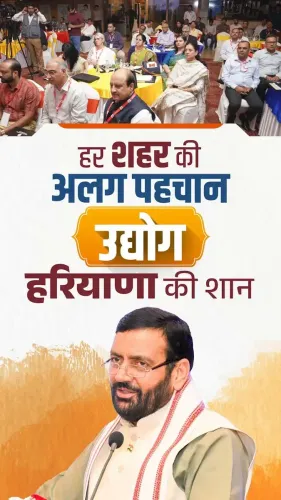
Despite accounting for just 1.3 per cent of India's geographical area, Haryana contributes approximately 3.6 per cent to the national economy — a ratio that CM Saini cited as evidence of the state's outsized economic productivity. The state has established distinct industrial identities across its cities: Gurugram as a global services and technology hub, Faridabad as an engineering and manufacturing centre, and Manesar as an automobile and auto-component cluster. Districts such as Panipat, Yamunanagar, Ambala, Karnal, and Sonipat also contribute through specialised industrial and agri-based strengths.
Building on Earlier Momentum
The Mumbai event follows an earlier Industry Policy launch in Gurugram, at which MoUs worth ₹1.10 lakh crore were signed. Of the 123 companies that signed those agreements, 108 have already been allotted land — a conversion rate the Chief Minister cited as proof that 'an MoU is not merely a signing ceremony but a symbol of commitment.'
Saini stated that the government 'believes in project movement, not file movement,' underscoring a stated policy of time-bound approvals and proactive project hand-holding.
Zone-Wise Growth Strategy
The state government has outlined a region-specific industrial blueprint. North Haryana will focus on food processing, pharmaceuticals, scientific instruments, and logistics; Central Haryana on engineering, textiles, automobiles, and warehousing; South Haryana on IT, electronics, e-mobility, global capability centres, and advanced manufacturing; and Western Haryana on agro-industry, renewable energy, textiles, and export-oriented units.
Five Guarantees to Investors
CM Saini outlined five formal commitments to investors: policy stability; time-bound decisions and approvals; proactive project hand-holding; skills and connectivity aligned with industry needs; and linking investment to local employment, MSMEs, innovation, and regional development. The guarantees are intended to address investor concerns about policy continuity and bureaucratic delays that have historically slowed project execution in several Indian states.
With the Centre's broader push to position India as the world's third-largest economy gaining pace, Haryana is positioning itself as a frontline state in that ambition — and the pace at which MoU signatories are being allotted land will be the clearest measure of whether that positioning holds.
Point of View
000 crore figure from a single-day roadshow is headline-worthy, but the more telling number is the land-allotment rate: 108 of 123 companies from the earlier Gurugram round have already received plots. That conversion metric — rarely cited in investment summits — suggests Haryana is tracking MoUs to outcomes more rigorously than most states. The real stress test will be whether the zone-wise blueprint, which is ambitious in scope, translates into differentiated infrastructure investment or remains a policy document. India's experience with state investment summits is littered with aggregate MoU totals that overstated eventual capital formation by a wide margin.
NationPress
8 Oct 2026
Frequently Asked Questions
What is Happening Haryana 2.0?
Happening Haryana 2.0 is an international investment outreach campaign organised by the Haryana state government. The Mumbai leg of the campaign, held on 24 August, saw MoUs worth over ₹66,000 crore signed in the presence of Chief Minister Nayab Singh Saini and senior state officials.
How much investment did Haryana secure at Happening Haryana 2.0 in Mumbai?
MoUs involving investment of more than ₹66,000 crore were signed on the second day of the event in Mumbai. This follows an earlier round in Gurugram where ₹1.10 lakh crore in MoUs were signed.
What are the five guarantees Haryana has offered to investors?
Chief Minister Nayab Singh Saini outlined five commitments: policy stability; time-bound decisions and approvals; proactive hand-holding of projects; skills and connectivity aligned with industry needs; and linking investment with local employment, MSMEs, innovation, and regional development.
Which industries and zones is Haryana targeting for growth?
Haryana has outlined a zone-wise strategy: North Haryana targets food processing, pharmaceuticals, and logistics; Central Haryana focuses on engineering, textiles, and automobiles; South Haryana on IT, electronics, and e-mobility; and Western Haryana on agro-industry, renewable energy, and export-oriented units.
How much has Haryana converted earlier MoUs into actual land allotments?
Of the 123 companies that signed MoUs at the earlier Industry Policy launch in Gurugram, 108 have already been allotted land, according to Chief Minister Saini. The government cited this as evidence of its commitment to moving from agreement to execution.