BJP slams Akhilesh Yadav over UCC remarks, calls him 'Mulla Akhilesh' with reason
Synopsis
The BJP's coordinated attack on Akhilesh Yadav over his UCC 'Underground Communal Conspiracy' jibe reveals how thoroughly the Uniform Civil Code has become a full-spectrum political battleground ahead of 2029 — with the BJP reframing it as Muslim women's rights legislation and the SP framing it as communal deflection.
Key Takeaways
BJP leaders on 16 September fired back at SP chief Akhilesh Yadav after he branded the UCC the BJP's 'Underground Communal Conspiracy.' BJP leader Pratul Shahdeo referred to Yadav as 'Mulla Akhilesh Yadav,' saying the label reflected his consistent stance on Muslim issues.
Home Minister Amit Shah has announced the UCC will be implemented across 21 BJP-governed states by 2029 .
The UCC has cleared both Lok Sabha and Rajya Sabha , according to UP Minister O.P.
UP Deputy CM Brajesh Pathak called Yadav's statements 'baseless,' accusing the SP of lacking any policy agenda.
The BJP frames the UCC as a gender-justice measure benefiting Muslim women, while the opposition argues it targets Muslim personal law selectively.
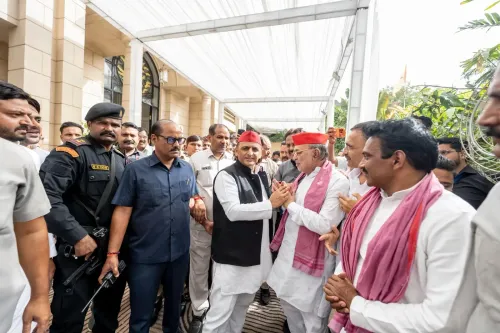
Bharatiya Janata Party (BJP) leaders on Wednesday, 16 September sharply rebuked Samajwadi Party (SP) chief Akhilesh Yadav over his criticism of the Uniform Civil Code (UCC), accusing him of routinely championing Muslim interests and asserting that the nickname 'Mulla Akhilesh Yadav' was not without basis. The BJP's pushback followed Yadav's remarks a day earlier in which he reinterpreted the UCC acronym as standing for the BJP's 'Underground Communal Conspiracy.'
What Akhilesh Yadav Said
On Tuesday, 15 September, Akhilesh Yadav claimed that the UCC — which Union Home Minister Amit Shah has announced will be implemented across 21 BJP-governed states by 2029 — was, in his words, a vehicle for 'Underground Communal Conspiracy' designed to deflect public attention from pre-election promises that remained unfulfilled. The remark drew an immediate and coordinated response from BJP leaders across the political spectrum.
BJP's Counterattack
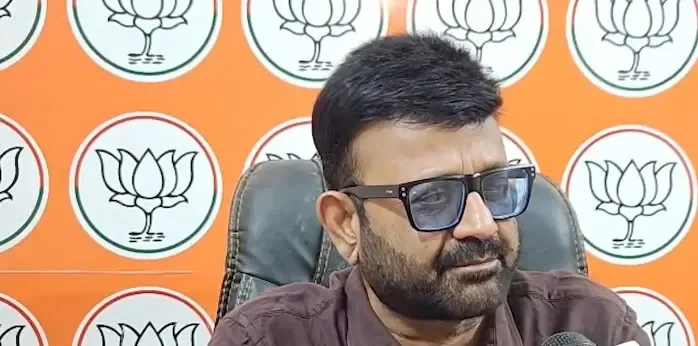
BJP leader Pratul Shahdeo said, 'He is called 'Mulla Akhilesh Yadav' for a reason, as he always comes out in support of Muslims.' Shahdeo further alleged that the SP had a long record of adopting positions he described as detrimental to national interest, citing the alleged firing on kar sevaks during the party's tenure in Uttar Pradesh. 'They want to incite riots in the country again,' he charged.
Shahdeo argued that the UCC was, in fact, a measure in the interest of Muslim women. 'Why should any Muslim man be allowed to have four marriages? What is the fault of the daughters? Why should only men have the right to pronounce divorce? Should women not have this right? These discrepancies will be removed,' he said. He added that the UCC would be implemented regardless of opposition from Yadav or Congress leader Rahul Gandhi.
Other BJP Leaders Weigh In
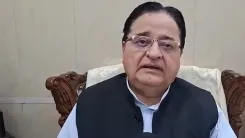
Uttar Pradesh Deputy Chief Minister Brajesh Pathak described Yadav's statements as 'baseless,' saying the SP had 'no agenda and no policy' and relied solely on misleading the public. 'The people will no longer accept the Samajwadi Party and will never forgive them,' Pathak said.
BJP MP Gulam Ali Khatana made a broader constitutional argument, contending that a uniform law was a democratic imperative. 'India is a democracy, and governments take decisions based on the people's wishes. The law should be uniform for every citizen. If everyone makes equal sacrifices for the country, there should also be uniformity in the law,' he said.
BJP MLA Ram Kadam took a sardonic tone, suggesting Yadav was 'trying to create his own new dictionary.' 'This country was earlier run on the politics of appeasement. Can one law for one person and another law for another person in the same country be accepted under the Constitution?' Kadam said.
Legislative Status of the UCC
Uttar Pradesh Minister O.P. Rajbhar clarified that the UCC had already cleared major legislative hurdles. 'It has received approval from the Cabinet and has been passed by the Lok Sabha and Rajya Sabha, taking the form of law. They are now talking about implementing it,' Rajbhar said. This positions the current dispute less as a debate over whether the UCC will exist, and more over how it will be rolled out and whether opposition states will comply.
Broader Political Context
The UCC has been a central promise of the BJP since the 2024 Lok Sabha elections, and the party's stated target of implementation in 21 states by 2029 puts the issue squarely in the frame ahead of the next general election cycle. Critics, including the SP and several opposition-ruled states, argue the legislation is selectively aimed at Muslim personal law. The BJP, for its part, frames it as a gender-justice measure applying equally to all citizens. How this political battle plays out in Uttar Pradesh — India's most electorally significant state — will likely shape the national narrative on the UCC in the months ahead.
Point of View
Not merely a rejoinder — it simultaneously pressures the SP on identity politics and repositions the UCC as a Muslim women's rights issue, making it harder to oppose without appearing to defend polygamy and triple talaq. What mainstream coverage underplays is that the UCC has already cleared Parliament; the fight is now about implementation sequencing in 21 states and which party 'owns' the outcome by 2029. For the SP, opposing the UCC risks alienating women voters even within its core Muslim support base — a contradiction Akhilesh Yadav has yet to resolve.
NationPress
16 Sept 2026
Frequently Asked Questions
Why is Akhilesh Yadav being called 'Mulla Akhilesh Yadav' by the BJP?
BJP leader Pratul Shahdeo used the label on 16 September 2026, arguing that Akhilesh Yadav consistently speaks in support of Muslim interests and that the nickname therefore reflects his political pattern. The remark was made in the context of Yadav's criticism of the Uniform Civil Code.
What did Akhilesh Yadav say about the UCC?
Akhilesh Yadav claimed on 15 September that the UCC — slated for implementation in 21 BJP-governed states by 2029 — actually stood for the BJP's 'Underground Communal Conspiracy' aimed at diverting attention from unfulfilled pre-election promises. The BJP called the characterisation baseless and politically motivated.
What is the current legislative status of the UCC?
According to Uttar Pradesh Minister O.P. Rajbhar, the Uniform Civil Code has been approved by the Cabinet and passed by both the Lok Sabha and Rajya Sabha, making it law. The debate now centres on its implementation across states, with the BJP targeting 21 states by 2029.
How does the BJP justify the UCC against opposition claims of communal intent?
The BJP argues the UCC is a gender-justice measure that would end practices such as polygamy and unilateral divorce — benefiting Muslim women specifically. BJP leader Pratul Shahdeo said the party was 'bringing the UCC in the interests of Muslims,' challenging the SP's framing of the law as anti-minority.
Who are the key BJP leaders who criticised Akhilesh Yadav over the UCC?
BJP leader Pratul Shahdeo, Uttar Pradesh Deputy Chief Minister Brajesh Pathak, BJP MP Gulam Ali Khatana, BJP MLA Ram Kadam, and UP Minister O.P. Rajbhar all criticised Yadav on 16 September, each offering different angles of attack ranging from personal labels to constitutional arguments.