DGFT waives RCMC requirement for export consignments up to ₹3 lakh
Synopsis
India's DGFT has quietly removed a key compliance hurdle for small exporters: the mandatory RCMC registration is no longer required for consignments up to ₹3 lakh. With low-value shipments making up 43% of all shipping bills, the move could meaningfully widen the base of active exporters — especially MSMEs, artisans, and first-time sellers on e-commerce platforms.
Key Takeaways
DGFT has exempted exporters from the RCMC requirement for consignments with an FOB value up to ₹3 lakh , effective 16 September 2026 .
The amendment updates Para 2.57 of the Foreign Trade Policy, 2023 .
Consignments valued at up to $3,000 account for 43% of shipping bills but only 0.86% of India's total merchandise export value.
The measure benefits MSMEs , artisans, small businesses, and first-time exporters, particularly those using e-commerce, postal, and courier channels.
Exporters whose consignments exceed ₹3 lakh must still obtain a valid RCMC or Certificate of Registration as required under the Foreign Trade Policy.
The Directorate General of Foreign Trade (DGFT) has exempted small exporters from the mandatory Registration-cum-Membership Certificate (RCMC) or Certificate of Registration requirement for export consignments with a free-on-board (FOB) value of up to ₹3 lakh, the Commerce Ministry announced on 16 September 2026. The move, effected through an amendment to Para 2.57 of the Foreign Trade Policy, 2023, is aimed at reducing compliance barriers for new and small exporters operating through postal, courier, e-commerce, and other emerging channels.
What Has Changed
Under the revised rules, exporters shipping consignments valued at or below ₹3 lakh will no longer need to obtain an RCMC or Certificate of Registration from the relevant Export Promotion Council (EPC) or Commodity Board before undertaking exports. Consignments exceeding the ₹3 lakh threshold will continue to require a valid certificate wherever mandated under the Foreign Trade Policy.
Previously, even first-time or occasional exporters handling small shipments had to identify the appropriate registering authority, submit prescribed documents, and complete the registration process — an additional compliance step that could delay or deter entry into international markets.
The Data Behind the Decision
Historical data covering the five-year period from 2021-22 to 2025-26 underpins the policy shift. According to the Commerce Ministry statement, consignments valued at up to $3,000 account for 43% of all shipping bills but represent only 0.86% of India's total merchandise export value. The exemption is, therefore, designed to cover a substantial volume of transactions while having a marginal impact on overall export value.
This data-driven framing signals a deliberate calibration — the government is widening participation in exports without meaningfully altering the revenue composition of the sector.
Who Benefits
The measure is particularly targeted at MSMEs, artisans, small manufacturers, entrepreneurs, and first-time exporters. By removing the upfront RCMC requirement for eligible consignments, these groups gain a simpler entry point into international markets, allowing them to test overseas demand and establish an export track record before committing to formal registration.
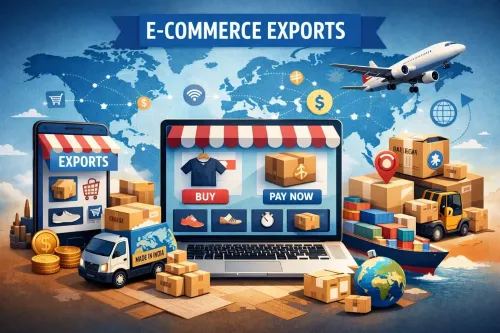
The policy is also expected to accelerate low-value exports through e-commerce, postal, and courier channels — segments that have grown rapidly as cross-border direct-to-consumer trade expands globally.
Compliance Pathway as Exporters Scale
The exemption is structured as an on-ramp rather than a permanent bypass. As exporter operations grow and consignment values cross the ₹3 lakh threshold, they will be required to obtain RCMC membership and engage with the relevant Export Promotion Councils or Commodity Boards. At that stage, they can access export promotion activities, market access initiatives, and other institutional support services.
The Commerce Ministry noted that the measure is also expected to broaden the membership base of Export Promotion Councils by encouraging greater MSME participation over time.
Broader Context
This comes amid sustained government efforts to diversify India's exporter base and deepen participation in global value chains. India has been pushing to expand merchandise exports through policy simplification, and the e-commerce export segment — where low-value, high-frequency shipments are the norm — has been a recurring focus. Notably, this is one of the more targeted interventions under the Foreign Trade Policy, 2023, directly addressing the friction that discourages micro and small enterprises from attempting international trade for the first time.
The amendment takes effect immediately, and small exporters across sectors can begin utilising the exemption for eligible consignments without awaiting further procedural steps.
Point of View
If overdue, calibration — the compliance cost of registration was always disproportionate for exporters sending a ₹50,000 handicraft parcel via courier. What the policy gets right is the on-ramp design: exemption below ₹3 lakh, mandatory registration above it, nudging small exporters into the formal EPC ecosystem as they grow. The harder question is whether India's Export Promotion Councils are equipped to absorb and meaningfully serve a larger, more fragmented MSME membership — historically, EPCs have been more responsive to large organised players. If that institutional gap is not addressed, the exemption risks becoming a permanent workaround rather than a genuine launchpad.
NationPress
16 Sept 2026
Frequently Asked Questions
What is the RCMC exemption for small exporters announced by DGFT?
The DGFT has amended the Foreign Trade Policy, 2023 to exempt exporters from the mandatory Registration-cum-Membership Certificate (RCMC) or Certificate of Registration for export consignments with a free-on-board (FOB) value of up to ₹3 lakh. The change, announced on 16 September 2026, is aimed at reducing compliance barriers for MSMEs, artisans, and first-time exporters.
Who benefits from the RCMC exemption?
The exemption primarily benefits MSMEs, small manufacturers, artisans, entrepreneurs, and first-time or occasional exporters who ship small-value consignments. It is also expected to facilitate low-value exports through e-commerce platforms, postal services, and courier channels.
Do exporters above the ₹3 lakh threshold still need an RCMC?
Yes. Export consignments exceeding ₹3 lakh in FOB value continue to require a valid RCMC or Certificate of Registration from the relevant Export Promotion Council or Commodity Board, wherever applicable under the Foreign Trade Policy.
Why did the government introduce this exemption?
Government data from 2021-22 to 2025-26 shows that consignments valued up to $3,000 account for 43% of all shipping bills but only 0.86% of India's total merchandise export value. The exemption removes a disproportionate compliance step for a large number of low-value transactions while having minimal impact on overall export value.
What happens as a small exporter's business grows beyond ₹3 lakh per consignment?
Once consignment values cross the ₹3 lakh threshold, exporters will need to obtain RCMC membership from the relevant Export Promotion Council or Commodity Board. This unlocks access to export promotion activities, market access initiatives, and other institutional support services offered by these bodies.