Hemant Soren Govt Keeps Up Recruitment Drive in Jharkhand
Synopsis
The Jharkhand Chief Minister's Office declared on 24 June 2026 that the 'caravan of appointments' under CM Hemant Soren continues, signalling sustained momentum in state government hiring as the JMM-led administration pushes to fill long-pending public-sector vacancies.
Key Takeaways
The Jharkhand CMO posted on 24 June 2026 that government appointments under CM Hemant Soren are continuing at a sustained pace.
The Hindi phrase used — niyuktiyon ka karawaan — translates as 'the caravan of appointments,' framing hiring as an ongoing process rather than a single event.
The JMM -led government has been conducting recruitment drives since 2019 , targeting vacancies in teaching, police, and other state services.
The post does not specify exact posts or departments; formal notifications with specifics are anticipated.
Key stakeholders include Jharkhand's tribal youth and government-job aspirants, who closely monitor compliance with Scheduled Tribe reservation norms.
Litigation over reservation and eligibility criteria has been a recurring feature of past Jharkhand recruitment cycles and may arise again.
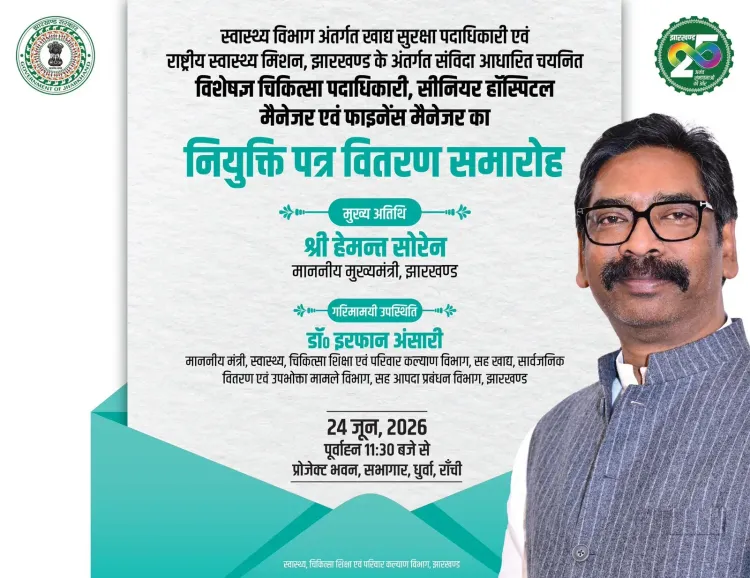
The Chief Minister's Office of Jharkhand on Wednesday, 24 June 2026 highlighted the continued pace of government appointments under the Hemant Soren-led administration, posting on X that the 'caravan of appointments in the Hemant government continues unabated.'
Context
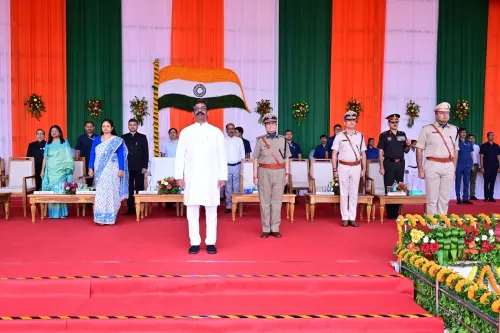
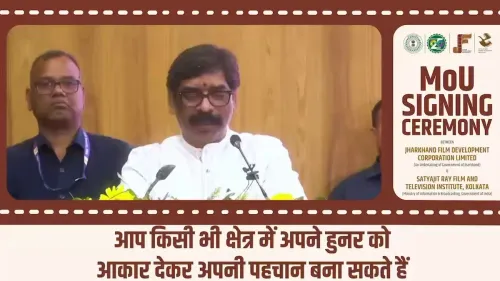
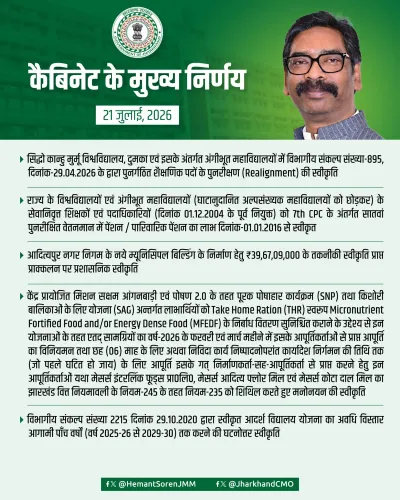
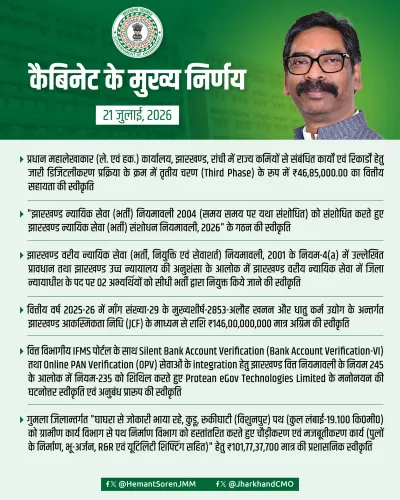
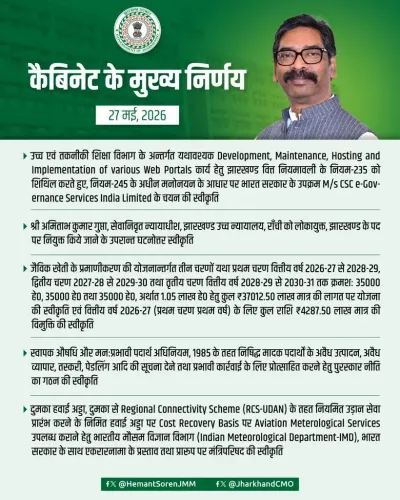
The post, attributed to the official Jharkhand CMO account and tagging Chief Minister @HemantSorenJMM, used the Hindi phrase 'नियुक्तियों का कारवां...लगातार...' ('the caravan of appointments... continuously...') to signal ongoing momentum in state hiring. While the post does not specify which posts or departments are involved, it is accompanied by an image that the government has shared as visual evidence of the drive.
The framing is deliberate: the word karawaan (caravan) evokes a sustained, moving process rather than a one-time event, underscoring the government's intent to present recruitment as a defining feature of its tenure.
Policy Backdrop
Since Hemant Soren first assumed office in 2019, the Jharkhand Mukti Morcha-led government has periodically launched recruitment drives targeting long-pending vacancies across departments — including teachers, police constables, and other state-service posts. Filling public-sector jobs has been a recurring electoral commitment in Jharkhand, a state with a large tribal youth population and historically high unemployment in the organised sector.
State governments across India use recruitment announcements as both a governance signal and a political tool, demonstrating delivery on promises made to youth voters. Jharkhand's focus on appointments sits within this broader national pattern, though the state's tribal demography and reservation framework add layers of complexity to each hiring cycle.
Stakeholders and Impact
The primary beneficiaries of any sustained recruitment push are Jharkhand's government-job aspirants — a constituency that spans urban educated youth and rural tribal communities alike. For many families in the state, a government post represents economic security that private-sector employment in the region has not reliably provided.
Trade unions, teachers' associations, and aspirant groups have historically monitored the pace and fairness of these drives, with litigation over reservation quotas and eligibility criteria a recurring feature of Jharkhand's recruitment landscape. Any acceleration in appointments will be watched closely by these stakeholders for compliance with Scheduled Tribe and Other Backward Class reservation norms.
What's Next
The government is expected to follow up with formal notifications detailing the specific posts, departments, and selection timelines involved in the current round of appointments. Observers will watch for the release of merit lists, joining orders, and any judicial challenges that may arise over eligibility or reservation implementation.
As Jharkhand moves further into its current legislative term, the pace of appointment completions — not just announcements — will be the metric by which aspirants and opposition parties alike judge the administration's delivery record.
Point of View
Not a single event — is a studied political signal: it frames recruitment not as a discrete announcement but as an ongoing, unstoppable process, aimed squarely at youth voters and tribal communities who have long demanded government jobs. This messaging mirrors a broader pattern seen in opposition-governed states seeking to counter the Centre's employment narrative with visible state-level delivery. The absence of specific numbers in the post is notable: it prioritises sentiment and momentum over verifiable data, which leaves the claim open to scrutiny from opposition parties demanding concrete figures. How quickly the government publishes formal joining orders and merit lists will determine whether this 'caravan' narrative holds through the next electoral cycle.
NationPress
23 Sept 2026
Frequently Asked Questions
What appointments has the Hemant Soren government made in Jharkhand in 2026?
The Jharkhand CMO posted on 24 June 2026 that appointments are continuing under the Hemant Soren government, but the post does not specify the exact departments or number of posts filled. Formal notifications with details are expected to follow.
Which party governs Jharkhand and who is the Chief Minister?
Jharkhand is governed by the Jharkhand Mukti Morcha-led coalition. Hemant Soren of the JMM is the Chief Minister.
What is the Jharkhand government's recruitment policy for tribal communities?
Jharkhand's recruitment processes are governed by reservation norms that include quotas for Scheduled Tribes and Other Backward Classes, reflecting the state's large tribal population. Each hiring cycle is subject to these norms and is frequently monitored by courts and aspirant groups.
Has the Hemant Soren government previously conducted recruitment drives?
Yes. Since first taking office in 2019, the Hemant Soren administration has launched multiple recruitment drives for teachers, police constables, and other state posts to address long-pending vacancies.
What does 'niyuktiyon ka karawaan' mean in the Jharkhand CMO post?
'Niyuktiyon ka karawaan' translates from Hindi as 'the caravan of appointments' — a phrase the CMO used to convey that government hiring is an ongoing, continuous process under the Hemant Soren administration.