CM Hemant Soren Pays Tribute to Father Shibu Soren
Synopsis
Jharkhand CM Hemant Soren posted a tribute to his father and JMM founder Shibu Soren, honouring the tribal leader's lifelong struggle for Adivasi rights, while warning that the community must stay united or betray that legacy.
Key Takeaways
Hemant Soren posted a tribute on 5 November 2026 to his father Shibu Soren , calling him Dishom Guru .
Shibu Soren founded the Jharkhand Mukti Morcha in 1972 to fight for Adivasi land and autonomy rights.
The decades-long movement culminated in Jharkhand becoming a separate state on 15 November 2000 .
Soren acknowledged that tribal communities still lag behind socio-economically, calling it 'a matter of concern for all of us.' He called on the community to stay united and fight for rights, dignity, and identity as the truest tribute to Shibu Soren's legacy.
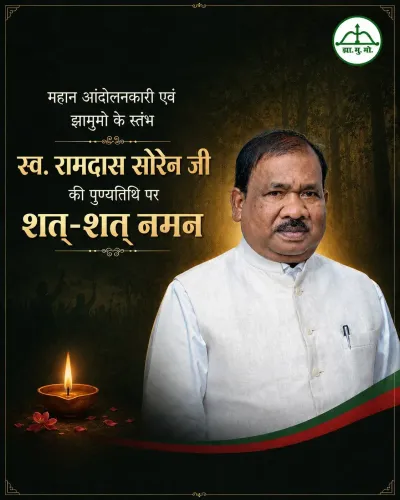
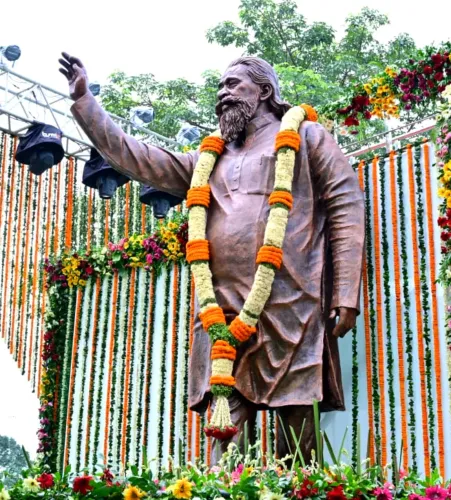
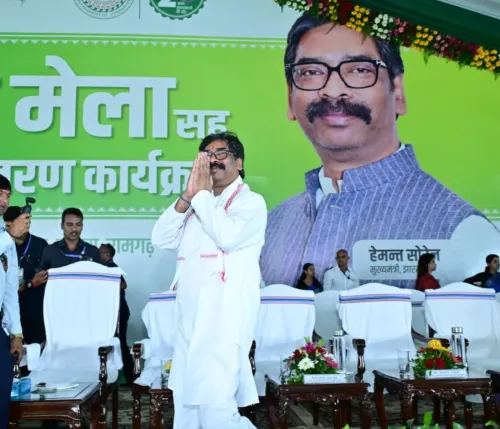
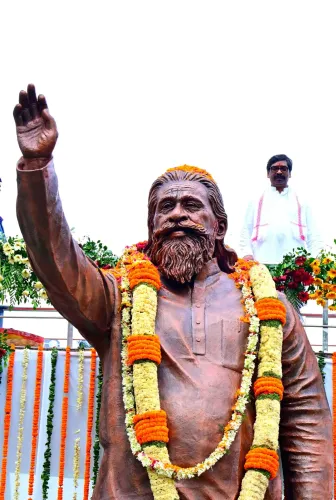
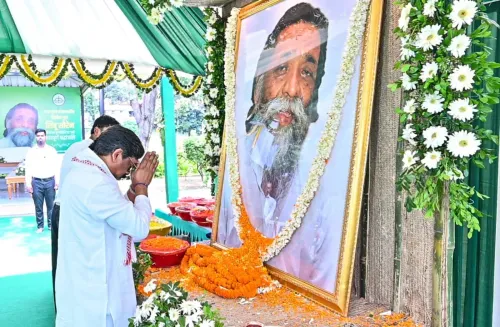
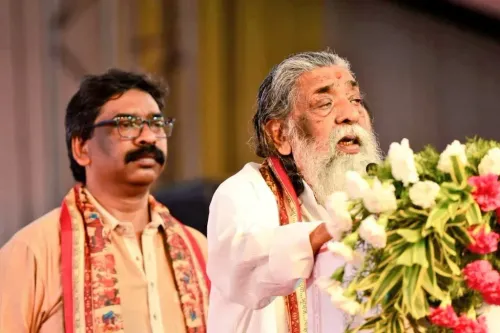
A son's grief, a movement's memory, and an unfinished mission — Jharkhand Chief Minister Hemant Soren on Thursday, 5 November 2026, posted a heartfelt tribute to his late father and Jharkhand Mukti Morcha founder Shibu Soren, honouring the man his followers called Dishom Guru — 'the teacher of the homeland.'
Writing in Hindi, the Chief Minister recalled how Shibu Soren spent his entire life uniting Adivasi and indigenous communities and fighting for their rights. 'He went village to village, awakening people. He turned ordinary members of society into soldiers of struggle and taught them to fight for their rights,' Soren wrote, using the reverential address Baba — father.
A lifetime spent building Jharkhand's tribal movement
Shibu Soren founded the Jharkhand Mukti Morcha in 1972 in the Chota Nagpur plateau region, then part of Bihar, with a singular purpose: to give the tribal communities of the area a political voice and secure their land rights. For nearly three decades he led marches, mobilised villages, and negotiated through some of the most hostile political terrain in independent India.
That struggle culminated on 15 November 2000, when the Bihar Reorganisation Act created Jharkhand as a separate state — a moment tribal activists had agitated for across generations. The date remains Jharkhand's foundation day, and Shibu Soren its defining architect.
The concern Hemant Soren raised — and why it matters now
The tribute was not merely elegiac. Hemant Soren pointed to a sharp irony: even years after the state born from his father's sacrifice was established, sections of Jharkhand's tribal society remain economically and socially behind. 'If our society is still left behind after so many years of this state built from his struggle, it is a matter of concern for all of us,' he wrote.
That candour is significant. Jharkhand is one of India's most mineral-rich states yet consistently ranks among the lower tiers on human development indicators — a tension the JMM has long foregrounded but now must own as the governing party.
Soren's call: carry the struggle forward, stay united
The Chief Minister's post ended not with mourning but with a directive. He called on the community not to fragment — 'Samaj ko bikharne nahin dena hai' (we must not let the community splinter) — and to stand united for rights, dignity, and identity. 'This will be our true tribute to the struggle of Dishom Guru,' he wrote.
The message lands at a moment when identity-based politics in Jharkhand remains central to electoral arithmetic, and when the JMM must simultaneously defend its governance record and its founding moral authority as champion of Adivasi rights. Hemant Soren is doing both — in a single post.
Point of View
But structurally a restatement of the JMM's founding mandate at a time when the party governs but must still position itself as an outsider fighting for the marginalised. By acknowledging that tribal communities remain behind despite statehood, Hemant Soren pre-empts opposition attacks on governance gaps while redirecting moral accountability onto the community's unity — keeping the movement's energy alive rather than declaring mission accomplished. The invocation of Dishom Guru also shores up the dynasty's legitimacy within the party at a moment when internal cohesion is always worth watching in regional outfits.
NationPress
6 Nov 2026
Frequently Asked Questions
Who is Shibu Soren and why is he called Dishom Guru?
Shibu Soren was the founder of the Jharkhand Mukti Morcha , established in 1972 . He is called Dishom Guru , meaning 'teacher of the homeland,' for leading the decades-long Adivasi movement that resulted in Jharkhand becoming a separate state in 2000 .
When was Jharkhand formed and who fought for it?
Jharkhand was carved out of Bihar on 15 November 2000 under the Bihar Reorganisation Act, following decades of tribal agitation led primarily by Shibu Soren and the Jharkhand Mukti Morcha for Adivasi self-governance and land rights.
What did Hemant Soren say in his tribute to his father?
Hemant Soren said Shibu Soren spent his entire life uniting tribal communities and teaching them to fight for their rights. He also warned that if the community remains socio-economically behind even after statehood, it is a matter of concern, and called for unity as the true tribute to his father's legacy.
What is the Jharkhand Mukti Morcha?
The Jharkhand Mukti Morcha is a regional political party founded in 1972 by Shibu Soren to represent Adivasi and indigenous communities in the Chota Nagpur region, advocate for their land rights, and push for a separate state — which became Jharkhand in 2000 .
Is Hemant Soren the son of Shibu Soren?
Yes. Hemant Soren is the son of Shibu Soren and is currently the Chief Minister of Jharkhand as well as the executive president of the Jharkhand Mukti Morcha .