How Have High-Speed Tracks of Indian Railways Increased from 40% to 80% in 11 Years?
Click to start listening
Synopsis
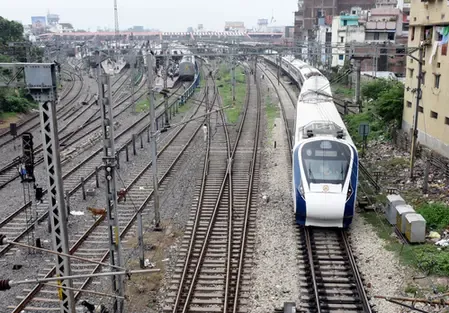
The Indian Railways has achieved a remarkable feat by doubling high-speed track lengths from 31,445 km to 84,244 km in 11 years, elevating the percentage of high-speed tracks from 40% to 80%. This transformation not only ensures faster trains but also enhances safety and reliability across the network.
Key Takeaways
- High-speed tracks have increased from 31,445 km to 84,244 km.
- Percentage of high-speed tracks jumped from 40% to 80%.
- Track renewal efforts are ongoing with 7,500 km planned for 2025–26.
- Safety measures include 15,000 km of fencing.
- Over 1,100 track machines have been added for maintenance.
New Delhi, Jan 18 (NationPress) The total length of tracks on the Indian Railways network that accommodate speeds of 110 km/h and above has seen a remarkable increase, surging from 31,445 kilometres in 2014 to 84,244 kilometres over the past 11 years. In terms of percentage, the proportion of high-speed tracks has escalated from 40 percent to 80 percent, facilitating quicker and more efficient train operations, as reported by the Ministry of Railways on Sunday.
The Indian Railways has made notable advancements in reinforcing its track infrastructure and improving safety measures through consistent investments and focused implementation in the past 11 years. These initiatives have led to safer, faster, and more dependable train services throughout the nation, according to the Ministry.
In the financial year 2024–25, Indian Railways completed track renewal over 6,851 kilometres. For the ongoing financial year 2025–26, over 7,500 kilometres of track renewal work is currently in progress. Additionally, a further 7,900 kilometres of track renewal is scheduled for 2026–27, underscoring the ongoing commitment to asset reliability and safety, as noted in the statement.
Prioritizing safety, fencing along railway tracks has also been implemented to reduce cattle run-over incidents and trespassing, which has significantly enhanced overall safety. To date, approximately 15,000 kilometres of fencing has been established, improving safety on segments where trains operate at speeds exceeding 110 km/h, according to the Ministry.
Substantial advancements have also been made in turnout renewal, crucial for ensuring smooth train operations. In 2024–25, 7,161 thick web switches and 1,704 weldable CMS (Cast Manganese Steel) crossings were installed. For 2025–26, plans include over 8,000 thick web switches and more than 3,000 weldable CMS crossings.
Mechanized deep screening of ballast, vital for maintaining track stability and enhancing ride quality, has been consistently performed. In 2024–25, 7,442 track kilometres underwent deep screening, while over 7,500 track kilometres are being screened in 2025–26, as per the statement.
To further mechanized maintenance and boost productivity, Indian Railways has expanded its track machine fleet considerably. Since 2014, more than 1,100 track machines have been acquired, allowing for quicker and more effective maintenance of the railway network, the statement concluded.
Point of View
I observe that the expansion of high-speed tracks by Indian Railways reflects a commitment to modernizing infrastructure. This significant enhancement not only boosts operational efficiency but also prioritizes safety, ensuring that the nation’s rail network remains a reliable mode of transportation.
NationPress
18/01/2026
Frequently Asked Questions
What is the current length of high-speed tracks in Indian Railways?
The current length of high-speed tracks in Indian Railways is 84,244 kilometres.
How has the percentage of high-speed tracks changed?
The percentage of high-speed tracks has increased from 40% to 80% over the past 11 years.
What measures are being taken for safety along railway tracks?
Safety fencing has been implemented along approximately 15,000 kilometres of railway tracks to reduce incidents involving cattle and trespassing.
How many track machines have been acquired since 2014?
More than 1,100 track machines have been procured since 2014 to enhance maintenance efficiency.
What is the plan for track renewal in the upcoming years?
Track renewal covering over 7,500 kilometres is planned for the financial year 2025–26, with an additional 7,900 kilometres scheduled for 2026–27.