What is India's First Open-Sea Marine Fish Farming Project in the Andaman?
Synopsis
India takes a significant stride in marine sustainability with the launch of its first open-sea fish farming project in the Andaman Sea. Led by Union Minister Dr. Jitendra Singh, this initiative aims to harness ocean resources for economic growth and improve local livelihoods while promoting environmental conservation.
Key Takeaways
Launch of India's first open-sea fish farming project Collaboration between government and local communities Focus on sustainable marine resource utilization Potential for economic growth through the Blue Economy Integration of scientific innovation with traditional practices
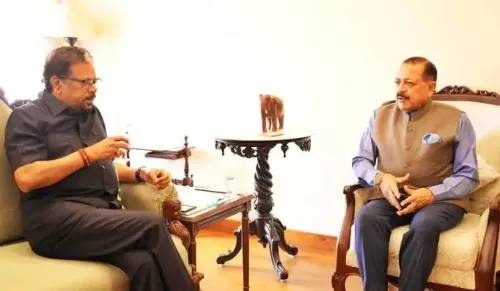
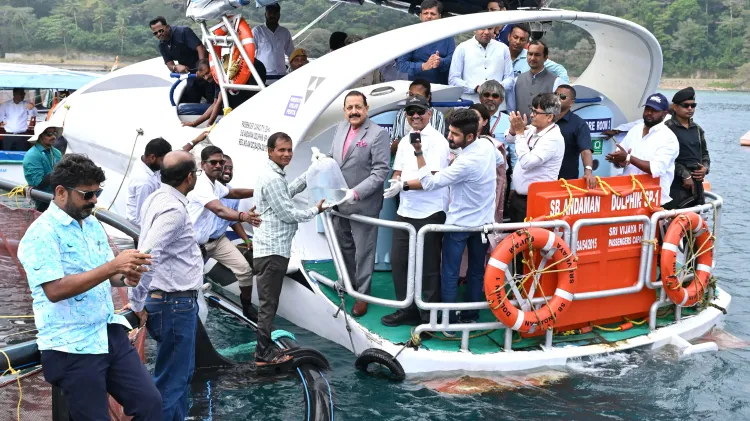
New Delhi, Jan 18 (NationPress) - In a groundbreaking initiative, Union Minister of State for Earth Sciences, Dr. Jitendra Singh, inaugurated India's inaugural open-sea marine fish farming project in the Andaman Sea on Sunday.
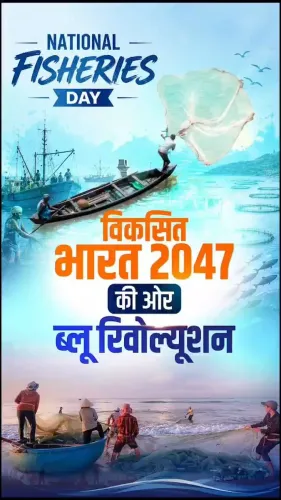
Dr. Singh characterized this venture as a pivotal move towards harnessing the Blue Economy by leveraging India's extensive ocean resources, a vision frequently articulated by Prime Minister Narendra Modi.
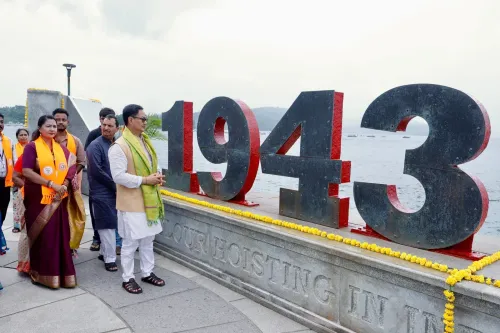
The project was officially launched at North Bay, Sri Vijaya Puram, during the minister’s exploration of the Andaman Sea.
This initiative is a collaborative effort involving the Ministry of Earth Sciences, the Government of India, its technical body, the National Institute of Ocean Technology (NIOT), and the Union Territory Administration of Andaman and Nicobar Islands. The pilot project aims at the open-sea cultivation of marine finfish and seaweed under natural oceanic conditions, merging scientific advancement with economic empowerment.
During his speech, Dr. Singh stated that this project signifies one of the first major efforts to unlock the vast economic potential of India's oceans.
He emphasized that, akin to India's Himalayan and terrestrial resources, the oceans harbor a wealth of untapped economic opportunities that have been overlooked for too long.
During the minister's inspection, two significant livelihood-driven initiatives were launched. Under the marine flora initiative, Dr. Singh distributed seaweed seeds to local fishing communities to encourage deep-water seaweed farming in the open sea.
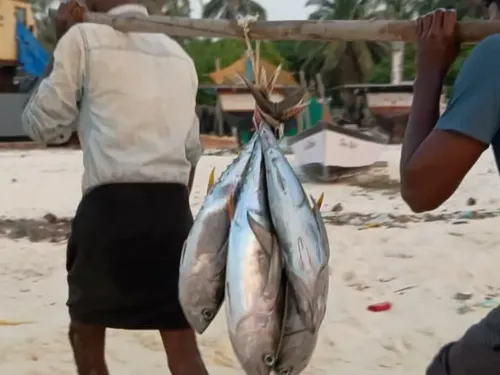
In terms of marine fauna, finfish seeds were provided for cage-based cultivation, utilizing NIOT-designed open-sea cages tailored for functioning within natural marine environments.
Dr. Singh mentioned that while the current projects are government-led, the insights gained and feasibility studies could pave the way for scaling up such initiatives through public-private partnerships in the future. This strategy, he noted, would facilitate rapid implementation, broaden livelihood opportunities, and reinforce India's Blue Economy framework.
The minister remarked that for nearly seven decades post-Independence, India's oceanic resources remained largely untapped.
He highlighted that since 2014, there has been a significant shift in national perspectives, recognizing that India's maritime domain holds equivalent wealth and prospects for economic advancement.
Additionally, he pointed out the unique and varied nature of India's oceans, noting that the western, southern, and eastern coasts each possess distinctive characteristics and contributions to the nation’s progress.
Later in his visit to the Andaman Islands, Dr. Singh toured the Mahatma Gandhi Marine National Park (MGMNP) in Wandoor, one of the pioneering marine parks established in India in 1983.
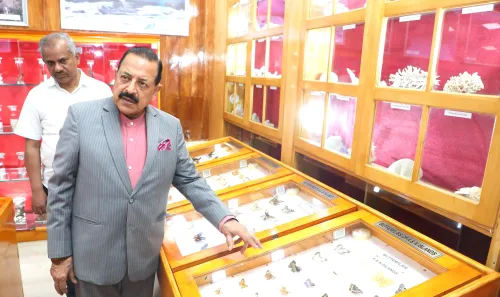
Covering 15 islands and accessible via Wandoor Jetty, the park is celebrated for its protected islands like Jolly Buoy and Red Skin. The minister observed the park’s vibrant and self-sustaining marine ecosystem, featuring colorful coral reefs, mangroves, and a diverse array of marine life, including turtles and numerous fish species.
Point of View
I believe that this initiative exemplifies India's commitment to exploring its oceanic resources responsibly. The recognition of our maritime domain's potential aligns with national interests, promoting sustainable practices while enhancing the livelihoods of local communities. This project not only signifies economic possibilities but also reinforces our responsibility towards environmental conservation and the Blue Economy.
NationPress
24 Sept 2026
Frequently Asked Questions
What is the significance of the open-sea marine fish farming project?
The project is a major step in realizing the Blue Economy, enhancing local livelihoods, and promoting sustainable fishing practices in India.
Who launched this marine initiative?
Union Minister of State for Earth Sciences, Dr. Jitendra Singh, launched the project.
Where is the project located?
The project is located in the Andaman Sea, specifically at North Bay, Sri Vijaya Puram.
What are the main components of the project?
The project focuses on the open-sea cultivation of marine finfish and seaweed, integrating scientific innovation with livelihood generation.
How will the project benefit local communities?
It aims to provide local fishing communities with resources and knowledge to cultivate marine species sustainably, boosting their economic opportunities.