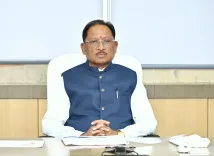
CM Himanta's Independence Day vision: The Assam Model

Synopsis
On Independence Day 2026, Assam CM Himanta Biswa Sarma unveiled the 'Assam Model' — a six-pillar governance vision centred on peace, infrastructure, industry, investment, reforms, and technology, framing the state as a development template for the region rather than a welfare recipient.
Key Takeaways
Himanta Biswa Sarma articulated the 'Assam Model' on Independence Day, 15 August 2026 , positioning Assam as a governance template for the region.
The model rests on six pillars: peace, infrastructure, industry, investment, reforms, and technology .
The framing explicitly moves beyond welfare schemes toward dignity, empowerment, and economic agency for citizens.
The Bodo Peace Accord (2020) and the Act East Policy form the structural foundation on which the model is built.
Five social benchmarks were set: dignity for every citizen, opportunity for youth, economic strength for women, connectivity for villages, and hope for families.
Investment summits, industrial estate rollouts, and the 2026-27 state budget will be the near-term tests of the model's credibility.
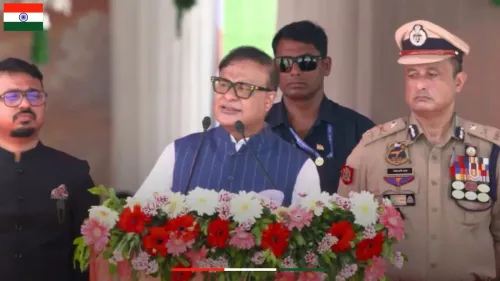
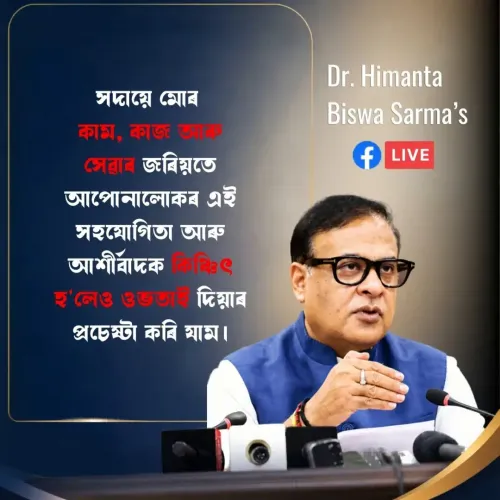
On Independence Day, 15 August 2026, Chief Minister Dr. Himanta Biswa Sarma delivered a declaration that reframes how his government measures progress — not by welfare disbursements, but by dignity, economic agency, and visible transformation on the ground.
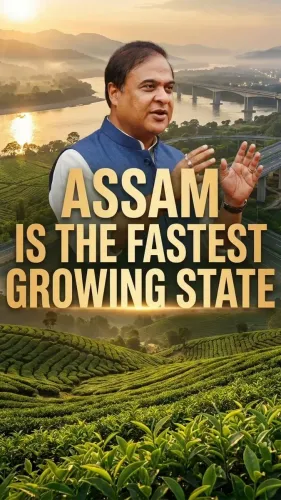
Speaking through the Chief Minister's Office of Assam, Dr. Sarma articulated what he called the 'Assam Model' — a governance philosophy built on six pillars: peace, infrastructure, industry, investment, reforms, and technology. 'Assam is no longer merely learning from others; it is showing the way,' he said, signalling a deliberate shift in the state's self-image from a conflict-affected periphery to a development template for the region.
From insurgency buffer to investment destination
The claim carries weight when set against recent history. For decades, Assam was defined by ethnic conflict, militant activity, and chronic underdevelopment. The Bodo Peace Accord of 2020 — which ended one of the Northeast's longest-running insurgencies and established the Bodoland Territorial Region with enhanced development funding — gave the state a political foundation that successive security-plus-development campaigns have tried to build on. The Act East Policy, pursued since 2014, layered road, rail, and waterway connectivity upgrades onto that foundation, positioning Assam as a land bridge to Southeast Asia rather than a dead end at the country's edge. Dr. Sarma, who has led the state since May 2021, has accelerated this pivot — pairing security operations with industrial policy and large-scale infrastructure to attract capital that once looked elsewhere.Dignity over doles: what the Assam Model actually claims
The Independence Day message is notable for what it deliberately avoids. There is no mention of subsidy counts, beneficiary numbers, or scheme targets — the usual currency of welfare-state announcements. Instead, Dr. Sarma frames success in terms of five concrete social outcomes: dignity for every citizen, opportunity for every young person, economic strength for every woman, connectivity for every village, and hope for every family. 'Development must not remain confined to files,' he said. 'People must see it, feel it and benefit from it.' It is a pointed rebuke of paperwork-heavy governance — and an implicit benchmark against which his own administration will now be measured.What to watch as the model is tested
The 'Assam Model' framing, if it sticks, will face its sharpest scrutiny in the months ahead. Follow-up investment summits, the rollout of new industrial estates, connectivity project timelines, and the 2026-27 state budget allocations will all serve as reality checks against the vision articulated today. The Northeast has heard ambitious Independence Day promises before; the difference this time, Sarma's government is betting, is that the infrastructure is already visible — in bridges, highways, and industrial corridors that residents can point to. If the model holds, Assam stops being a case study in managing instability and becomes something rarer: a blueprint other conflict-scarred states actually copy.Point of View
He stakes a claim to Northeast leadership at a moment when the BJP-led Centre is keen to showcase the region as a development success story. The shift from subsidy-counting to dignity-and-connectivity language tracks a broader BJP governance narrative that prioritises visible physical assets over transfer payments. The real test is whether the branding survives contact with ground-level data on youth employment and rural connectivity — metrics that tend to outlast the speech cycle. If the model gains traction beyond Assam's borders, it could elevate Sarma's profile in national BJP politics considerably.
NationPress
30 Sept 2026
Frequently Asked Questions
What is the Assam Model of development?
The 'Assam Model' is a governance framework articulated by CM Himanta Biswa Sarma on Independence Day 2026, built on six pillars — peace, infrastructure, industry, investment, reforms, and technology — with a focus on dignity and economic empowerment rather than traditional welfare schemes.
Who is Himanta Biswa Sarma?
Dr. Himanta Biswa Sarma is the Chief Minister of Assam, in office since May 2021. He is a senior BJP leader who previously served as the state's finance minister and is known for pushing infrastructure development and anti-insurgency measures.
What is the Bodo Peace Accord and how does it relate to Assam's development?
The Bodo Peace Accord, signed in 2020, ended decades of armed conflict in parts of Assam and created the Bodoland Territorial Region with enhanced development funding, providing a political foundation for the state's shift from conflict management to economic growth.
What is India's Act East Policy and its role in Assam?
The Act East Policy, pursued since 2014, prioritises road, rail, and waterway connectivity from Assam to Southeast Asia, transforming the state from a geographic dead end into a potential land bridge for regional trade.
What are the five social goals Himanta Biswa Sarma set for Assam?
CM Sarma outlined five goals: dignity for every citizen, opportunity for every young person, economic strength for every woman, connectivity for every village, and hope for every family.