Amit Shah backs RBI-UCB trust push, UCBs hold ₹6 lakh crore deposits
Synopsis
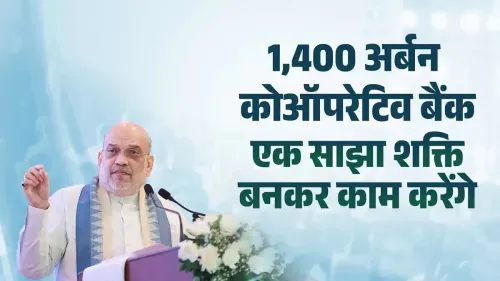
Home Minister Amit Shah used the NUCFDC inauguration in Mumbai to deliver a pointed message: the RBI has changed, and UCBs must change with it. With ₹6 lakh crore in deposits at stake, a pending on-tap licensing framework, and only half of India's 1,400 UCBs inside the NUCFDC fold, the cooperative banking sector is at a pivotal inflection point.
Key Takeaways
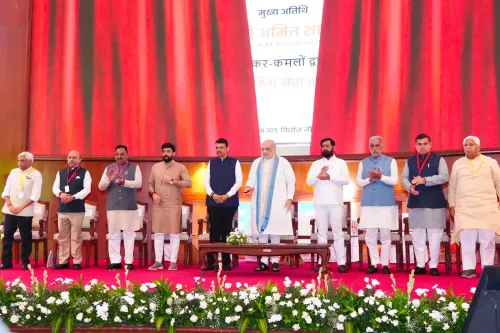
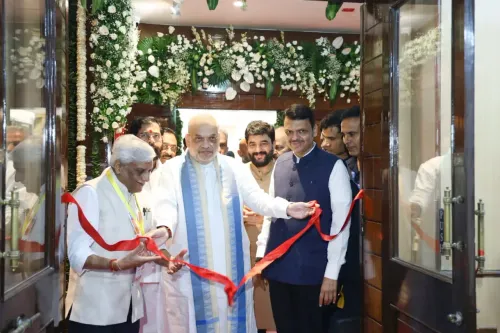
Amit Shah inaugurated NUCFDC's new office at the BSE, Mumbai on 8 August , calling for stronger RBI-UCB collaboration.
Urban cooperative banks collectively hold deposits of more than ₹6 lakh crore .
The RBI has eased norms for UCBs, including branch expansion, doorstep banking, demand drafts, life certificates, gold loan limits, and one-time settlement provisions.
Only about 690 of India's approximately 1,400 UCBs are NUCFDC members; Shah urged lower fees to widen participation.
NUCFDC's head office will move from New Delhi to Maharashtra , home to 449 UCBs.
Maharashtra , Gujarat , Goa , and Karnataka together account for about 70 per cent of all UCBs nationally.
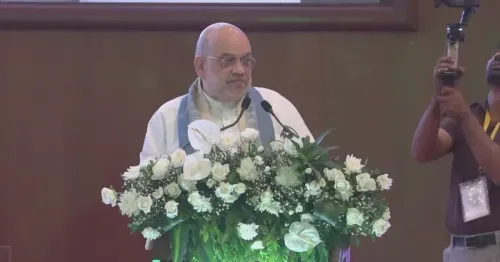
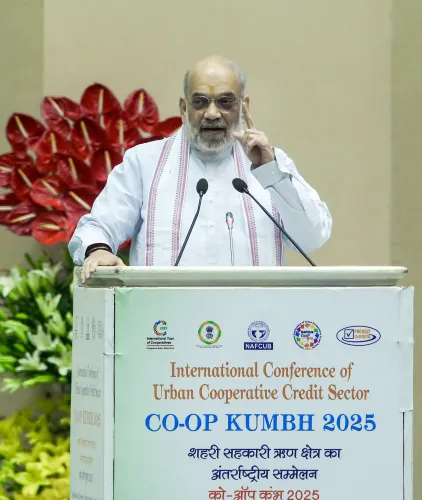
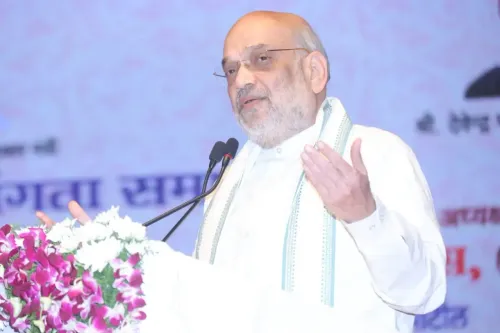
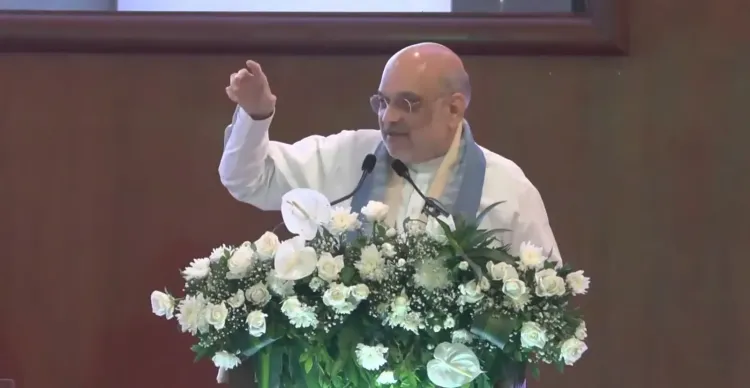
Union Home Minister and Minister of Cooperation Amit Shah on Saturday, 8 August called for deeper trust and collaboration between the Reserve Bank of India (RBI) and urban cooperative banks (UCBs), saying both sides must shed long-held perceptions of each other to unlock the sector's full potential. He was speaking at the inauguration of the National Urban Cooperative Finance and Development Corporation's (NUCFDC) new office building at the Bombay Stock Exchange (BSE) in Mumbai.
RBI's Supportive Shift
Shah noted that the RBI had adopted a markedly more constructive posture toward UCBs in recent years, responding positively whenever the government and the cooperative banking sector approached it with specific proposals. He cited a range of regulatory easing measures introduced by the central bank, including simplified branch expansion norms, permission for doorstep banking services, the ability for UCBs to issue demand drafts and life certificates, and the appointment of a dedicated nodal officer for the sector.
Shah also welcomed higher limits on gold loans and the introduction of one-time settlement provisions as further evidence of the RBI's evolving stance. His remarks came days after RBI Governor Sanjay Malhotra announced progress on an on-tap licensing framework for UCBs as part of the central bank's developmental and regulatory policy agenda.
Scale and Business Potential
Underlining the sector's significance, Shah pointed out that urban cooperative banks collectively hold deposits exceeding ₹6 lakh crore. He argued that small borrowers represent a relatively secure lending segment for these institutions, citing his own experience as chairman of a cooperative bank in Gujarat, where loans of up to ₹2.5 lakh were extended without collateral and repayment rates — including interest — exceeded 99 per cent.
NUCFDC Expansion and Membership Push
Shah called on UCBs to deepen their engagement with NUCFDC, the umbrella body for the sector. He noted that only around 690 of the approximately 1,400 UCBs across the country are currently members of NUCFDC, and suggested reducing membership fees to widen participation. In a significant administrative move, he announced that NUCFDC's head office will be relocated from New Delhi to Maharashtra.
Maharashtra's Dominant Role
Maharashtra is home to 449 urban cooperative banks. Along with Gujarat, Goa, and Karnataka, the state accounts for roughly 70 per cent of all UCBs in the country, according to Shah. The relocation of NUCFDC's headquarters to Maharashtra is seen as an acknowledgement of the state's central place in the cooperative banking ecosystem.
What Comes Next
The combination of regulatory easing by the RBI, the proposed on-tap licensing framework, and the Centre's push to consolidate UCBs under a stronger NUCFDC umbrella signals a coordinated effort to professionalise and scale the sector. Whether the remaining 710-odd UCBs outside NUCFDC's fold can be brought in through lower membership fees will be a key test of that ambition.
Point of View
And nudging both sides toward a more institutionalised relationship. But the real structural problem is fragmentation: with barely half of India's 1,400 UCBs inside NUCFDC, the umbrella body lacks the scale to negotiate effectively or deploy capital efficiently. Relocating NUCFDC's headquarters to Maharashtra is symbolically apt, but symbols do not fix governance gaps. The on-tap licensing framework Governor Malhotra referenced could be transformative — or it could add more undercapitalised banks to an already uneven landscape. The Centre's enthusiasm for the cooperative sector must be matched by rigorous entry standards, or the ₹6 lakh crore deposit base carries risks that goodwill alone cannot contain.
NationPress
8 Aug 2026
Frequently Asked Questions
What did Amit Shah say about the RBI and urban cooperative banks?
Amit Shah said the RBI has adopted a supportive approach toward urban cooperative banks in recent years and urged both sides to move beyond long-held perceptions of each other. He highlighted several regulatory easing measures by the RBI, including simplified branch expansion, doorstep banking, and higher gold loan limits.
How much do urban cooperative banks hold in deposits?
Urban cooperative banks collectively hold deposits of more than ₹6 lakh crore, according to figures cited by Amit Shah at the NUCFDC inauguration in Mumbai on 8 August.
What is NUCFDC and why is its HQ shifting to Maharashtra?
NUCFDC — the National Urban Cooperative Finance and Development Corporation — is the umbrella body for urban cooperative banks in India. Its head office is being shifted from New Delhi to Maharashtra because the state hosts 449 UCBs and, along with Gujarat, Goa, and Karnataka, accounts for around 70 per cent of all UCBs nationally.
What is the on-tap licensing framework for urban cooperative banks?
The on-tap licensing framework is a proposed RBI mechanism that would allow urban cooperative banks to apply for licences on a continuous basis rather than during fixed windows. RBI Governor Sanjay Malhotra announced progress on the framework as part of the central bank's developmental and regulatory policy measures, days before Shah's remarks.
Why are only 690 of India's 1,400 UCBs members of NUCFDC?
Amit Shah attributed the low membership to high fees and urged NUCFDC to reduce them to encourage all approximately 1,400 UCBs to join. Greater membership would strengthen NUCFDC's ability to represent and support the sector as a unified body.