Mahua Moitra Alleges Custodial Killing of TMC Worker Birju Keot by Bengal Police
Synopsis
TMC Lok Sabha MP Mahua Moitra on 8 August 2026 publicly accused the West Bengal Police of torturing and killing party worker Birju Keot in custody, calling the force 'the new Jallads of the government' — a rare, explosive charge by a ruling-party MP against her own state's police.
Key Takeaways
TMC MP Mahua Moitra alleged on 8 August 2026 that Birju Keot , a TMC party worker, was tortured and killed in West Bengal Police custody.
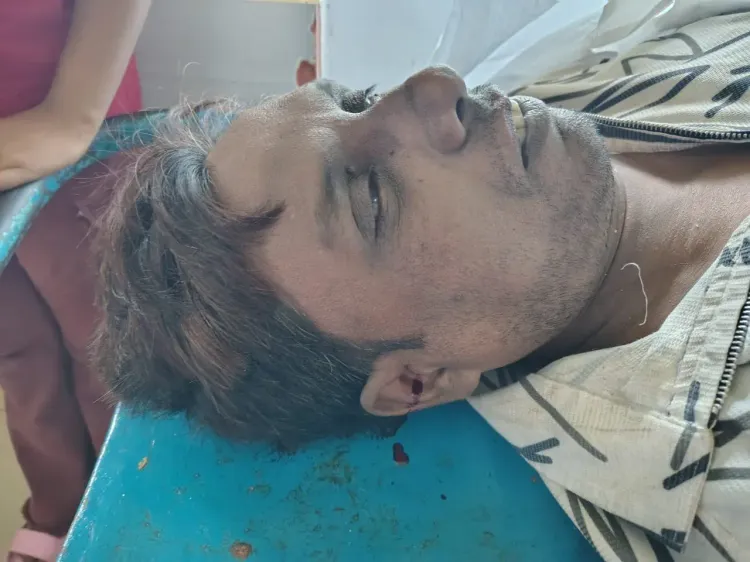
Moitra called Bengal Police 'the new Jallads of the government' — a term meaning executioners — in a post accompanied by four images .
The allegation is politically significant because West Bengal is governed by the TMC , making this a ruling-party MP accusing her own government's police.
The National Human Rights Commission has mandated independent inquiries and video documentation in custodial death cases since 1993 .
The Supreme Court's 2006 Prakash Singh ruling directed states to separate police functioning from political control — a directive widely unenforced.
A referral to the NHRC or West Bengal State Human Rights Commission for an independent probe is the most likely immediate escalation path.
A TMC party worker is dead, and TMC MP Mahua Moitra is pointing directly at the West Bengal Police — calling it custodial torture and killing. On Saturday, 8 August 2026, the Krishnanagar MP posted a searing accusation on X, naming Birju Keot as the victim and branding Bengal Police 'the new Jallads of the government' — a loaded word invoking executioners.
The Allegation: A Party Worker Dead in Police Custody
Moitra's post — accompanied by four images — does not mince words. She alleges that Keot was subjected to custodial torture and subsequently killed, placing responsibility squarely on the state police force. The use of the word 'Jallads' (executioners) is a deliberate, incendiary choice: it frames law enforcement not as a protective institution but as an instrument of state violence.
What makes the allegation politically combustible is the chain of accountability. West Bengal is governed by the All India Trinamool Congress — the same party Moitra belongs to. The state police reports to the state government. A sitting TMC MP publicly accusing TMC-controlled police of killing a TMC worker signals either a serious internal fracture or a case so egregious it cannot be contained within party lines.
A Pattern India Has Seen Before
Custodial deaths are not a West Bengal-specific crisis — they are a national one. The National Human Rights Commission has mandated independent inquiry protocols and video documentation in custody cases since 1993. The Supreme Court's landmark Prakash Singh v. Union of India ruling in 2006 directed every state to insulate police functioning from political interference. Both directives have been honoured more in the breach than the observance across India.
In West Bengal specifically, allegations of custodial violence and political killings have surfaced under successive governments, cutting across party lines. They rarely result in swift accountability. The families of victims frequently wait years for justice — if it arrives at all.
What Happens Next for Birju Keot's Case
The immediate pressure point will be whether the case is referred to the National Human Rights Commission or the West Bengal State Human Rights Commission for an independent inquiry. Moitra's public intervention on X raises the political temperature and makes official silence harder to sustain.
Human rights groups and opposition parties are likely to amplify the demand for a probe. Whether the state government orders a magisterial or judicial inquiry — and how quickly — will be the first real test of whether this allegation is treated as a political inconvenience or a genuine accountability moment.
A party worker is dead. A ruling-party MP is calling her own government's police force executioners. The next move belongs to the state.
Point of View
And that makes it harder to dismiss as partisan noise. The allegation lands against a backdrop of long-standing, court-mandated police reform directives that Indian states have systematically ignored, suggesting the structural conditions for custodial violence remain intact regardless of which party governs. If Moitra's charge prompts an NHRC referral or judicial inquiry, it could set a precedent for internal accountability within ruling parties — a rarity in Indian state politics. The durability of that pressure, however, will depend on whether the party apparatus closes ranks or allows the case to be independently examined.
NationPress
22 Sept 2026
Frequently Asked Questions
Who is Birju Keot and what happened to him?
Birju Keot is alleged to be a TMC party worker who, according to TMC MP Mahua Moitra's post on 8 August 2026, was tortured and killed while in West Bengal Police custody. No independent verification of the specific incident is available at this time.
Why is Mahua Moitra criticising Bengal Police when TMC runs West Bengal?
Mahua Moitra is a TMC MP, and West Bengal is governed by the TMC — meaning the state police reports to her own party's government. Her public accusation signals either a serious internal dispute or a case she considers too grave to address through internal party channels alone.
What is a custodial death and what are the rules in India?
A custodial death is any death that occurs while a person is in the custody of police or other state authorities. The National Human Rights Commission has required mandatory independent inquiries and video documentation in such cases since 1993, and the Supreme Court's 2006 Prakash Singh ruling directed states to insulate police from political control.
What action can be taken in cases of alleged custodial torture in India?
Cases of alleged custodial torture can be referred to the National Human Rights Commission or a State Human Rights Commission for independent inquiry. Courts can also take suo motu cognisance, and a magisterial or judicial inquiry can be ordered by the state government.
What does 'Jallad' mean and why did Mahua Moitra use the word?
'Jallad' is a Hindi and Urdu word meaning executioner or hangman. Moitra's use of the term was a deliberate rhetorical choice to frame the West Bengal Police not as a law-enforcement body but as an instrument of lethal state violence.