How Does the Hornbill Festival Welcome the World into Nagaland’s Heart?
Synopsis
The Hornbill Festival stands as a vibrant showcase of Nagaland's rich culture and heritage. Union Minister Jyotiraditya Scindia emphasizes the festival's role in inviting global attention to the state's potential, urging recognition beyond the festival itself. Discover the incredible experiences and opportunities that Nagaland has to offer.
Key Takeaways
Hornbill Festival invites global participation and recognition.
Nagaland's cultural diversity is a significant asset.
Scindia emphasizes the need for broader recognition beyond the festival.
Potential for growth in Nagaland's coffee industry.
Engagement of international partners enhances cultural exchange.
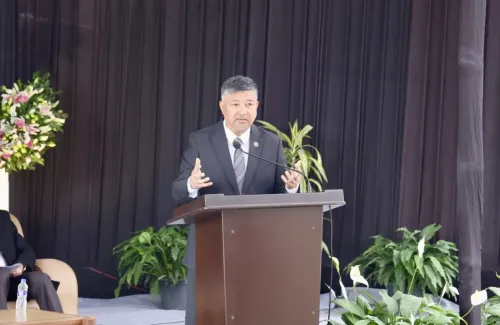
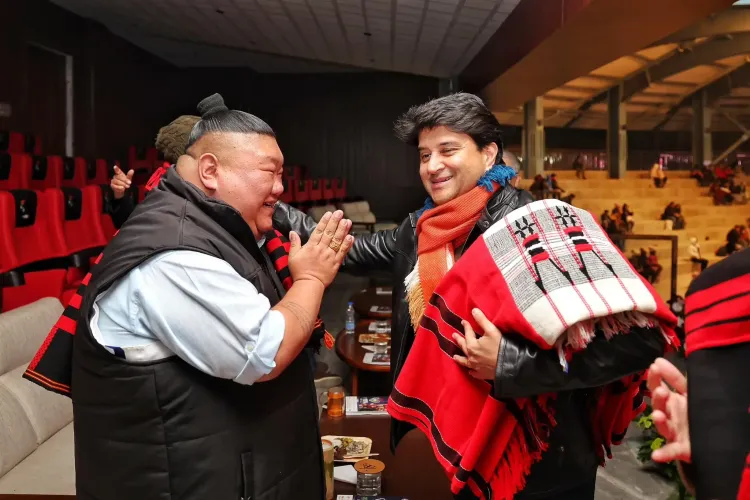
Kohima, Dec 6 (NationPress) Union Minister of Communications and Development of the North Eastern Region (DoNER) Jyotiraditya M. Scindia stated on Saturday that the current Hornbill Festival is not merely a platform for presenting Nagaland to the global audience, but it is also an invitation for the world to enter the heart of Nagaland.
While addressing the press at Dimapur airport, prior to wrapping up his three-day visit to Nagaland, the DoNER Minister stressed that the state should be appreciated beyond the boundaries of the Hornbill Festival.
He acknowledged that Nagaland's cultural richness, artisanal skills, and growing economic potential warrant far greater recognition on both national and international stages. Scindia described his experiences in Nagaland—from observing the traditional stone-pulling ceremony to engaging with artisans in handloom, handicraft, and blacksmithing—as “an impressive journey” that highlighted the vast potential within the state's people, culture, and heritage.
“Hornbill is more than just a festival. The true strength of the state resides in its populace, and Nagaland’s vibrant culture and heritage are narratives the world should discover and embrace. Nagaland's offerings extend well beyond the Hornbill Festival; it is rich in cultural and heritage assets,” the Union Minister asserted.
Scindia also noted the promising future of Nagaland’s coffee industry, after touring the Arabica and Robusta plantations, praising the quality, branding, and packaging of the state's beans as “truly world-class.”
The minister mentioned that both the Union Commerce and DoNER ministries are exploring avenues to bolster Nagaland’s coffee sector, which Chief Minister Neiphiu Rio has designated as one of the state's standout selling points.
“Currently, we have approximately 11,000 hectares under coffee cultivation. Our aim is to establish a common processing facility, promote value addition, and secure improved income for our coffee farmers,” Scindia explained.
He further shared that he has been collaborating closely with Rio “on various matters,” noting that “numerous opportunities exist and substantial potential is yet to be tapped.”
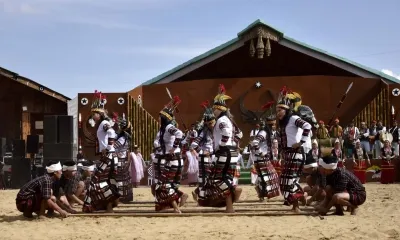
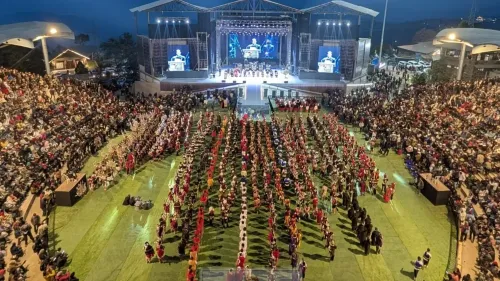
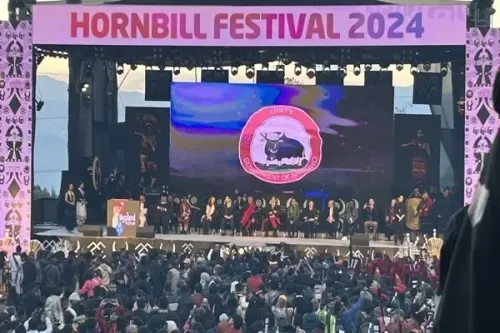
In a post on his X handle, the DoNER Minister expressed: “Wow… The Hornbill festival is undeniably a VIBE! There’s absolutely nothing like being here at Kisama, immersed in this captivating energy where the rhythms, colors, and tales of all 17 Naga tribes come to life in an extraordinary celebration.”
He added, “What resonates with me deeply is how this festival has evolved into a global cultural connector. With countries such as Switzerland, Ireland, and the United Kingdom participating this year, Hornbill isn’t simply presenting Nagaland to the world… It’s inviting the world into Nagaland’s core. Each morung, performance, and craftsperson embodies a story of heritage and tradition that has been cherished and handed down through generations.”
The DoNER Minister, who arrived in Dimapur on Thursday for a three-day visit to Nagaland, was guided by Prime Minister Narendra Modi’s ‘Act East Vision’. On Friday, he unveiled development initiatives worth over Rs 645 crore in Nagaland.
He inaugurated completed projects valued at over Rs 202 crore and laid the foundation for new projects worth approximately Rs 443 crore, bringing total investments to over Rs 645 crore.
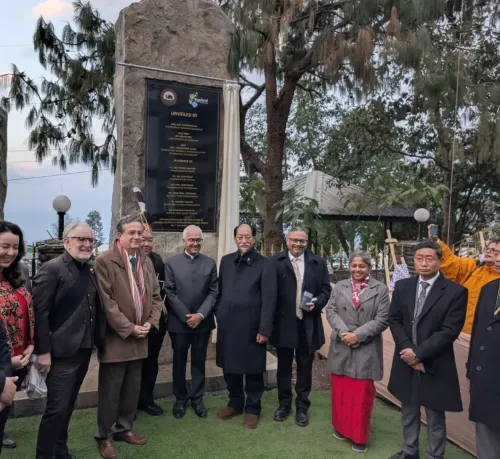
Additionally, he participated in the traditional Naga stone-pulling ceremony at Tuophema village as part of the ongoing Hornbill Festival.
Six countries—Austria, France, Ireland, Malta, Switzerland, and the United Kingdom—are partnering in this year’s 26th edition of the 10-day Hornbill Festival (December 1-10), emphasizing regional collaboration. Arunachal Pradesh is the state partner.
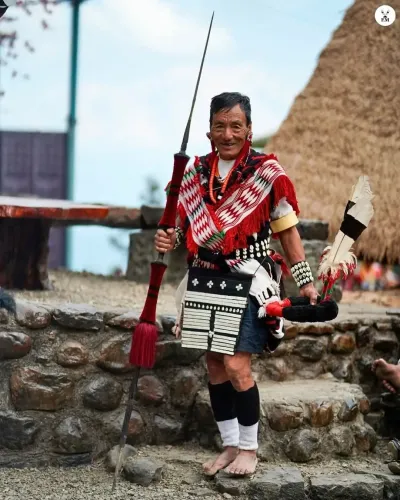
More than 86 percent of Nagaland’s two-million population (according to the 2011 Census) comprises tribal communities. Nagaland is home to 17 major tribes and numerous sub-tribes, each possessing its own unique cultural heritage, traditional dances, music, attire, and customs.
Point of View
The Hornbill Festival serves as a significant cultural event, promoting not just local heritage but also positioning Nagaland on the global stage. It reflects the state’s diverse traditions and its potential for economic growth through tourism and cultural exchanges, advocating for national recognition and support.
NationPress
25 Sept 2026
Frequently Asked Questions
What is the Hornbill Festival?
The Hornbill Festival is an annual cultural festival celebrated in Nagaland, showcasing the rich traditions, customs, and heritage of the state's various tribes.
How many tribes participate in the Hornbill Festival?
The festival features performances and displays from all 17 major tribes of Nagaland.
What is the significance of the festival?
The Hornbill Festival promotes cultural exchange, tourism, and showcases the unique heritage of Nagaland to the world.
When does the Hornbill Festival take place?
The festival usually takes place from December 1st to December 10th each year.
Who are the partner countries for this year’s festival?
This year, partner countries include Austria, France, Ireland, Malta, Switzerland, and the United Kingdom.