HP CM Office: 26,168 Students Registered on Him Access Portal
Synopsis
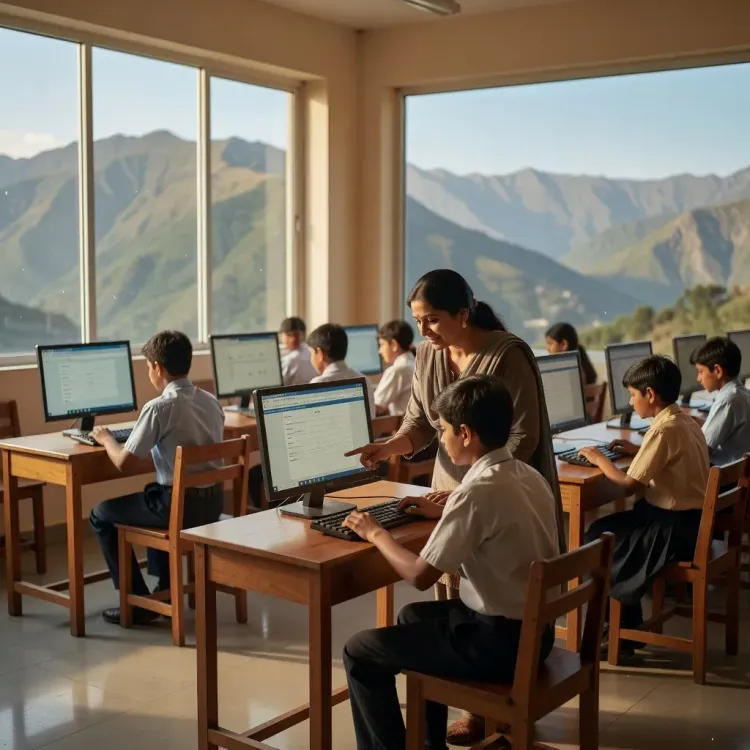
The Chief Minister's Office of Himachal Pradesh has announced that 26,168 students are registered on the Him Access Integration Portal, with 23,054 having completed skill mapping — a significant milestone in the state's digital skilling push under the national Skill India framework.
Key Takeaways
26,168 students have been registered on the Him Access Integration Portal in Himachal Pradesh.
23,054 students — approximately 88 per cent of those registered — have completed their skill mapping.
The portal is part of Himachal Pradesh's effort to align student competencies with industry demand under the Skill India Mission .
The HP State Skill Development Mission , established in 2016 , coordinates vocational courses with the state's school and higher-education systems.
The initiative mirrors similar digital-skill portal models deployed in Rajasthan and Andhra Pradesh since 2018.
Future steps hinge on linking portal data to actual vocational training programmes and industry placement pipelines.
The Chief Minister's Office of Himachal Pradesh announced on Tuesday, 21 July 2026 that 26,168 students have been registered through the Him Access Integration Portal, a state-run digital platform designed to track and map student skills against employment opportunities. Of these, 23,054 students have already completed their skill mapping, signalling rapid progress in the state's youth skilling drive.
Context
The Chief Minister's Office shared the update in a post on X, stating: 'Him Access Integration Portal ke madhyam se 26,168 chhatron ka panjikaran kiya ja chuka hai. Inme se 23,054 chhatron ki kaushal mapping poori ho chuki hai' — ('26,168 students have been registered through the Him Access Integration Portal. Of these, the skill mapping of 23,054 students has been completed.')
The announcement underscores the state government's push to build a comprehensive digital registry of student competencies, linking academic records with vocational aptitude data. The Him Access Integration Portal appears to serve as the technological backbone of this effort, aggregating registration and skill-mapping data in a single interface.
Policy Backdrop
The initiative is rooted in the National Skill Development Policy of 2015, which mandated that states create digital skill registries and track trainee outcomes systematically. The Himachal Pradesh State Skill Development Mission, established in 2016, was set up specifically to coordinate vocational courses with the state's school and higher-education systems under the broader Skill India Mission framework.
The Skill India Mission, launched by the central government in 2015, set an ambitious target of skilling 400 million people by 2022 through standardised training and assessment frameworks tied to the National Skill Qualification Framework (NSQF). Himachal Pradesh's portal-driven approach mirrors similar digital-governance models adopted by states such as Rajasthan and Andhra Pradesh since 2018, where integrated education-skill platforms have been used to match student aptitudes with industry demand.
Stakeholders and Impact
The primary beneficiaries are Himachal Pradesh's student population — particularly youth at the secondary and higher-secondary levels who stand to gain clearer vocational pathways based on their mapped competencies. With 23,054 of 26,168 registered students — roughly 88 per cent — already having completed skill mapping, the state appears to be moving at a significant pace toward building an actionable skills database.
Employers and industry bodies operating in the state are also indirect stakeholders, as a verified, portal-linked skills registry can help bridge the gap between trained youth and available jobs, reducing recruitment friction. For students in Himachal Pradesh's hilly and semi-rural districts, where physical access to vocational guidance is limited, a digital platform of this kind could have an outsized impact on career planning.
What's Next
The critical question now is how the state government intends to translate skill-mapping data into concrete placement or training outcomes. Observers will watch whether state budget allocations are directed toward portal-linked vocational courses and whether the initiative aligns with the revised National Education Policy (NEP) implementation timelines, which also emphasise vocational integration at the school level.
If the Him Access Integration Portal's data is effectively channelled into structured training programmes and industry partnerships, Himachal Pradesh could emerge as a model for smaller states seeking to operationalise skill-mapping at scale under the national skilling architecture.
Point of View
054 of 26,168 — is a calibrated move to project administrative efficiency and build political credibility around youth skilling, a theme that resonates strongly in a state with significant youth unemployment pressures. Situating this within the national Skill India architecture also allows the state to leverage central visibility while positioning its own portal as an innovation. The real test, however, will be whether skill-mapping data translates into measurable placement outcomes rather than remaining a well-publicised but under-utilised registry.
NationPress
20 Oct 2026
Frequently Asked Questions
What is the Him Access Integration Portal in Himachal Pradesh?
The Him Access Integration Portal is a state government digital platform in Himachal Pradesh used to register students and map their skills against vocational and employment opportunities, functioning as part of the state's broader skill development framework.
How many students have been registered on the Him Access Integration Portal?
As of 21 July 2026 , 26,168 students have been registered on the Him Access Integration Portal, according to the Chief Minister's Office of Himachal Pradesh.
What is skill mapping and why does it matter for students?
Skill mapping is the process of assessing a student's competencies and aptitudes against standardised frameworks like the National Skill Qualification Framework (NSQF). It helps match students with suitable vocational training programmes and job opportunities, improving employment outcomes.
How does Himachal Pradesh's portal connect to the national Skill India Mission?
Himachal Pradesh's Him Access Integration Portal aligns with the national Skill India Mission launched in 2015, which mandated state-level digital skill registries and standardised tracking of trainee outcomes to improve youth employability across India.
Which other Indian states have similar student skill-mapping portals?
States such as Rajasthan and Andhra Pradesh have operated integrated education-skill portals since 2018, combining school records with NSQF levels to improve student placement rates — a model Himachal Pradesh appears to be following.