CM Sukhu Eyes Mid-Day Meal Extension to Class 12 in HP
Synopsis
Himachal Pradesh CM Sukhvinder Singh Sukhu has said his government will consider phasing in mid-day meals for Classes 9 to 12, responding to a schoolgirl who questioned why the benefit stops at Class 8. The move would require state funding beyond the centrally sponsored PM POSHAN ceiling.
Key Takeaways
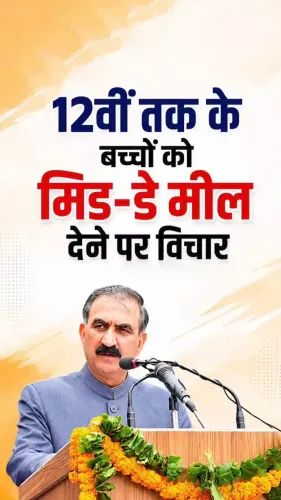
CM Sukhvinder Singh Sukhu announced on 27 May 2026 that the Himachal Pradesh government will consider extending mid-day meals to Classes 9–12 in a phased manner.
The proposal was prompted by a schoolgirl who questioned why the scheme stops at Class 8 .
The current national ceiling under the PM POSHAN scheme covers only Classes 1 to 8 , a limit set by the Right to Education Act, 2009 .
Any state-level extension beyond Class 8 would require Himachal Pradesh to fund the programme from its own budget.
The announcement is a statement of intent, not a formal policy order or budget commitment.
Adolescent nutrition and secondary school retention — especially for girls — are the primary welfare goals such an extension would address.
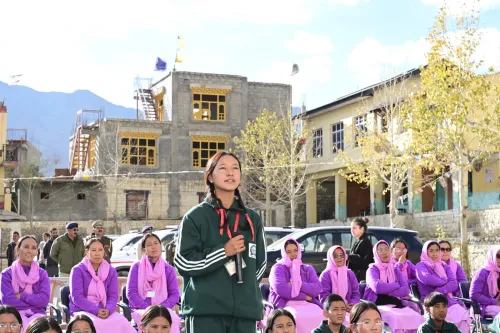
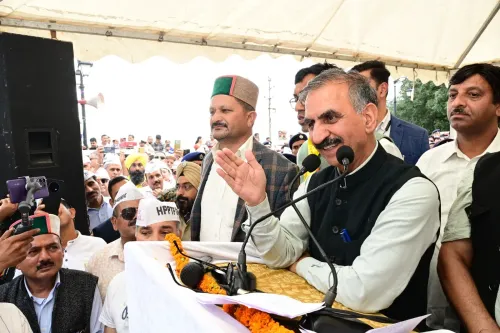
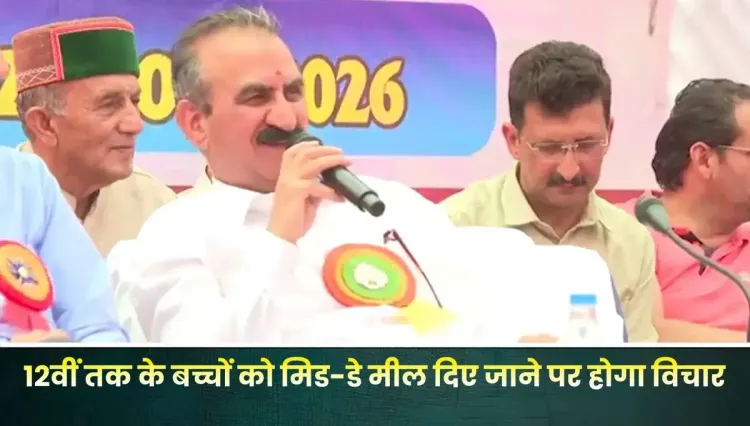
Himachal Pradesh Chief Minister Sukhvinder Singh Sukhu announced on Wednesday, 27 May 2026 that his government will consider extending the mid-day meal scheme from the current ceiling of Class 8 to Class 12 in a phased manner, crediting the suggestion to a schoolgirl who raised the question during an interaction.
Context
Sukhu shared the exchange on social media, writing that a girl had asked a pointed question: 'मिड-डे मील अभी 8वीं कक्षा तक के बच्चों को मिलता है, तो इसे 12वीं तक क्यों नहीं बढ़ाया जा सकता?' ('Mid-day meals are currently available to children up to Class 8 — why can't this be extended to Class 12?'). The Chief Minister called the question a reflection of the student's 'curiosity and wisdom', adding that such questions give governments the opportunity to examine policies more carefully and test them against actual need.
He stated that the Himachal Pradesh government 'will consider starting mid-day meal facilities for children from Classes 9 to 12 in a phased manner.'
Policy Backdrop
The Mid-Day Meal Scheme, now officially called PM POSHAN, is a centrally sponsored programme that has provided cooked meals to government school children since 1995, when it was launched for primary classes. Coverage was extended to upper-primary classes (6 to 8) in 2002–03, and the Right to Education Act, 2009 mandated nutritional support up to Class 8 — setting the national ceiling that the schoolgirl's question directly challenged.
The 2021 rebranding to PM POSHAN added fortified nutrition components but did not alter the Class 8 upper limit. Any state-level extension to secondary classes would therefore require Himachal Pradesh to fund the additional coverage from its own budget, since the central scheme does not presently cover Classes 9 to 12.
Stakeholders and Impact
Secondary school students in Himachal Pradesh's government schools — particularly girls, who face higher dropout risk at the Class 9 transition — stand to benefit most if the proposal moves forward. Adolescent nutrition and retention in secondary education have been central concerns in post-NEP 2020 discussions, with several states examining similar pilots to address these gaps.
The state education department and district administrations would bear the primary implementation load. Budget planners will need to assess the cost implications ahead of the 2026–27 state budget cycle, and any formal proposal would require coordination with central authorities given the PM POSHAN framework.
What's Next
Chief Minister Sukhu's statement stops short of a formal policy commitment, framing the move as a consideration rather than an announced scheme. The critical next steps will be whether the Himachal Pradesh education department tables a phased pilot in the upcoming budget session or issues a formal order. Watchers of state welfare policy will track whether this citizen-prompted signal translates into a concrete rollout — a development that could also prompt other states to revisit their own secondary-school nutrition gaps.
Point of View
If implemented, would place Himachal Pradesh among a small group of states willing to shoulder the fiscal burden of extending school nutrition beyond the central mandate. It also fits the Congress government's broader pattern since 2022 of using education and welfare extensions to differentiate itself in a hill state with high literacy expectations. The real test will come at budget time: a 'phased consideration' can easily remain aspirational without a concrete allocation or pilot announcement.
NationPress
20 Oct 2026
Frequently Asked Questions
What did CM Sukhu say about extending mid-day meals to Class 12?
CM Sukhu said the Himachal Pradesh government will consider starting mid-day meal facilities for students from Classes 9 to 12 in a phased manner, inspired by a schoolgirl who asked why the benefit stops at Class 8.
Currently up to which class is mid-day meal provided in India?
Under the centrally sponsored PM POSHAN scheme, mid-day meals are currently provided to students from Class 1 to Class 8 in government schools across India.
What is PM POSHAN and how does it relate to the mid-day meal scheme?
PM POSHAN is the 2021 renaming and expansion of the original Mid-Day Meal Scheme. It provides fortified cooked meals to government school children up to Class 8 to improve nutrition, enrolment, and attendance.
Will Himachal Pradesh fund mid-day meals for Classes 9 to 12 on its own?
Since the central PM POSHAN scheme covers only up to Class 8, any extension to Classes 9–12 in Himachal Pradesh would need to be funded from the state's own budget. No formal allocation has been announced yet.
When could mid-day meals for Class 9 to 12 start in Himachal Pradesh?
No implementation timeline has been officially announced. CM Sukhu described it as a consideration, and the next concrete indicator would be whether the proposal appears in the state's 2026–27 budget session.