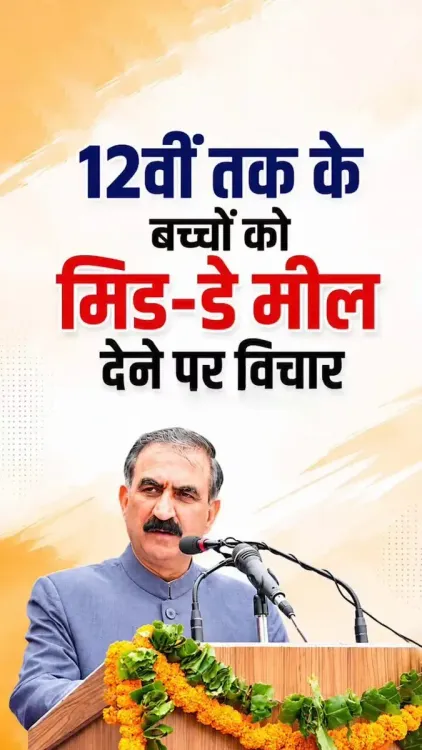
CM Sukhu backs mid-day meals up to Class 12 in Himachal
Synopsis
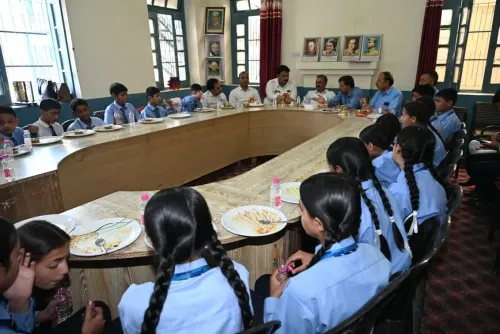
Himachal Pradesh CM Sukhvinder Singh Sukhu on 1 June 2026 backed extending mid-day meals from Class 8 to Class 12, calling the suggestion praiseworthy and pledging serious deliberation. The move would go beyond national PM POSHAN norms and require fresh state budgetary support.
Key Takeaways
CM Sukhvinder Singh Sukhu on 1 June 2026 publicly backed extending mid-day meals to Class 12 students in Himachal Pradesh.
Current national coverage under PM POSHAN extends only up to Class 8 ; an extension would require state funding.
The mid-day meal scheme was first launched in 1995 for Classes 1–5 and expanded to Class 8 in 2002-03 .
Sukhu described the suggestion as 'praiseworthy' and said the government would 'seriously consider' the proposal.
If implemented, Himachal Pradesh would become one of few Indian states providing cooked meals through the higher secondary level.
The National Education Policy 2020 flagged secondary-level dropout as a key concern, lending policy context to the proposal.
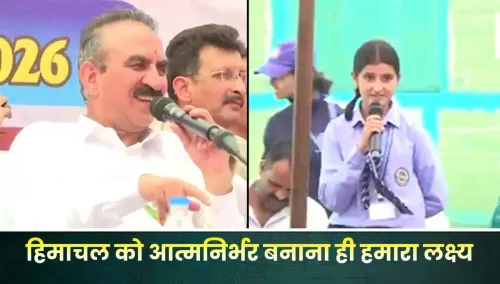
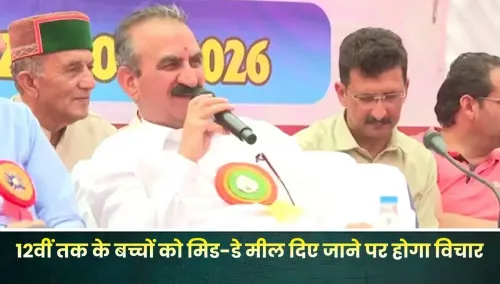
Himachal Pradesh Chief Minister Sukhvinder Singh Sukhu on Monday, 1 June 2026, expressed serious consideration for extending the mid-day meal programme to students up to Class 12, calling the suggestion 'praiseworthy' and reaffirming his government's openness to constructive ideas on student welfare.
Posting in Hindi on X, CM Sukhu wrote: 'कक्षा 8वीं तक ही नहीं, 12वीं तक के विद्यार्थियों को मध्याह्न भोजन उपलब्ध कराया जाना चाहिए' ['Mid-day meals should be provided not just up to Class 8, but up to Class 12 as well']. He added that his government would 'seriously consider' the proposal.
Context
The mid-day meal scheme has been a cornerstone of India's school nutrition policy for three decades. Launched nationally in 1995 to cover Classes 1 to 5, it was extended to upper primary classes up to Class 8 in 2002-03. The PM POSHAN programme, introduced in 2021 under the Union Ministry of Education, retained this upper limit nationally but encouraged states to explore coverage beyond Class 8 using their own resources.
Himachal Pradesh implements the scheme through its state education department, supplementing central norms with local provisions. CM Sukhu acknowledged in his post that the suggestion came from outside his government, describing the future generation as 'full of immense energy, wisdom, and foresight' and capable of turning every challenge into an opportunity.
Policy Backdrop
The National Education Policy 2020 highlighted secondary-level dropout rates as a persistent challenge, particularly among students from economically weaker sections. Several Indian states have incrementally expanded mid-day meal coverage in response to retention data showing that nutritional support at the secondary level can reduce absenteeism and improve completion rates.
Congress-led state governments have frequently positioned welfare extensions in the education sector as a social equity priority. An expansion up to Class 12 in Himachal Pradesh would go beyond current national norms and would require a dedicated budgetary allocation from the state government, as central funding under PM POSHAN does not presently cover secondary classes.
Stakeholders and Impact
The proposal, if formalised, would benefit students in Classes 9 to 12 across government and government-aided schools in Himachal Pradesh. This age group — typically between 14 and 18 years — is considered most vulnerable to dropout pressures linked to household economic stress and the need to contribute to family income.
The state education department would be the primary implementing body, and any rollout would require coordination with the school mid-day meal kitchen infrastructure already in place. Teachers' bodies, parent associations, and civil society groups working on child nutrition are among the stakeholders likely to weigh in as the proposal moves forward.
What's Next
CM Sukhu stopped short of announcing a formal policy decision, framing his statement as an intent to 'seriously deliberate' on the proposal. The next steps to watch include any cabinet discussion, a formal directive to the Himachal Pradesh education department, or a budget line item in an upcoming state expenditure review. If adopted, the move would make Himachal Pradesh one of the few states in India to provide cooked mid-day meals through the higher secondary level, potentially setting a precedent for other states grappling with secondary-school retention challenges.
Point of View
The government positions itself as consultative and responsive. The proposal also fits a national pattern where state governments use welfare expansion in education to differentiate themselves from central policy baselines. Whether it translates into a budget line or remains aspirational rhetoric will be the true test of political intent.
NationPress
19 Sept 2026
Frequently Asked Questions
What did CM Sukhu say about mid-day meals for Class 12 students?
CM Sukhvinder Singh Sukhu said on 1 June 2026 that his government would seriously consider extending mid-day meals to students up to Class 12, calling the suggestion praiseworthy.
What is the current coverage of the mid-day meal scheme in India?
Under the PM POSHAN programme, mid-day meals are currently provided to students in Classes 1 to 8 in government and government-aided schools across India.
Will Himachal Pradesh extend mid-day meals to Class 12?
No formal decision has been announced yet. CM Sukhu has expressed intent to deliberate seriously on the proposal; a cabinet discussion or budget allocation would be the next formal step.
Which scheme governs mid-day meals in Indian schools?
The PM POSHAN scheme, launched in 2021 as a revamp of the earlier mid-day meal programme, governs nutritional norms and funding for school meals under the Union Ministry of Education.
How would extending mid-day meals to Class 12 help students?
Research and policy documents including the National Education Policy 2020 indicate that nutritional support at the secondary level can reduce dropout rates among students aged 14 to 18, particularly those from economically weaker backgrounds.