HP CM Office: 150 Govt Schools CBSE-Affiliated, Fees Cut to Rs 2,000
Synopsis
Himachal Pradesh has affiliated 150 government schools with CBSE, enrolling 24,000 children at just Rs 2,000 annual fees — down from nearly Rs 50,000 in private institutions — marking a significant push to democratise nationally standardised education across the state.
Key Takeaways
150 government schools in Himachal Pradesh have been affiliated with the Central Board of Secondary Education (CBSE) .
24,000 students have enrolled in these newly affiliated CBSE government schools.
Annual fees have dropped from approximately Rs 50,000 in private CBSE schools to just Rs 2,000 in state-run institutions — a reduction of roughly 96 per cent .
The initiative aligns with the National Education Policy 2020 's goal of expanding access to standardised curricula.
Student performance in upcoming CBSE board examinations will serve as the key indicator of whether the affiliation translates into real learning gains.
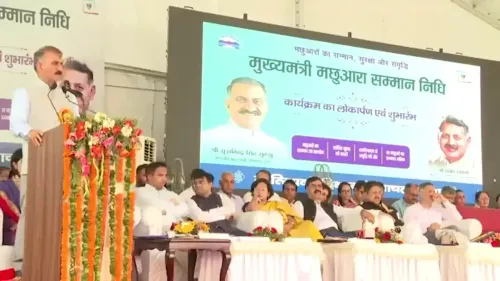
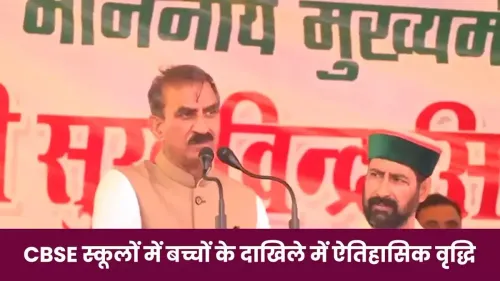
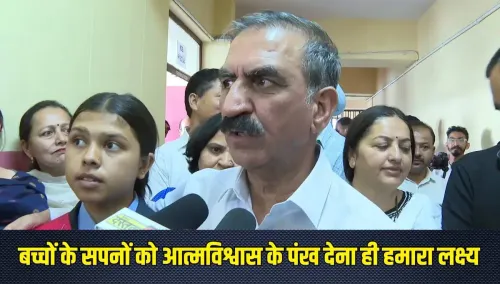
From Rs 50,000 a year to just Rs 2,000 — that is the distance Himachal Pradesh has travelled for 24,000 children who now sit in CBSE-affiliated government classrooms. The Chief Minister's Office of Himachal Pradesh announced on Wednesday, August 12, 2026 that the state has successfully affiliated 150 government schools with the Central Board of Secondary Education (CBSE), slashing annual fees by roughly 96 per cent compared to what private CBSE schools charged.
From Rs 50,000 to Rs 2,000: What the fee cut means for hill families
The post, shared by the official CMO Himachal Pradesh X account, put the contrast in plain numbers: families who once paid close to Rs 50,000 annually to access CBSE-standard education in private institutions now pay Rs 2,000 a year in state-run schools. For households in Himachal Pradesh's rural and semi-urban belts — where incomes are modest and distances to private schools are long — that gap is not arithmetic. It is the difference between a child staying in the education system and dropping out.
The CMO framed the journey as one of deliberate persistence: 'हमने हर चुनौती को अवसर में बदला' — 'we turned every challenge into an opportunity.' The admission that challenges were 'many' is rare candour from a government account, and it anchors the achievement in real effort rather than smooth inevitability.
150 schools, one national board — how HP got here
CBSE affiliation for government schools is not a paperwork exercise. Schools must meet infrastructure norms, faculty qualifications, and administrative standards set by the board before they receive approval. Scaling that process across 150 institutions in a mountainous state with dispersed populations represents a significant administrative push. Himachal Pradesh has historically posted strong literacy numbers, but access to nationally standardised curricula — the kind that smooths a student's path to competitive examinations — has largely been a private-school privilege.
Several Indian states have pursued similar CBSE affiliation drives for government schools, aligning with the National Education Policy 2020's emphasis on quality standardisation and reduced educational inequality. Himachal Pradesh's move places it within that national current, though the scale and the fee structure it has achieved stand out.
What the board-exam scorecard will reveal
The real test arrives in the examination hall. 24,000 students now enrolled in these schools will eventually sit CBSE board examinations — the results of which will determine whether affiliation alone translates into learning outcomes. Infrastructure, trained teachers, and sustained budget support for these schools will be as consequential as the affiliation certificate itself. Any future expansion announcements or dedicated budget provisions for school upgrades will be closely watched by parents and policy observers alike.
For now, the headline is hard to argue with: nearly a lakh-rupee saving over two years, a national curriculum within reach, and a state government that has moved a number that matters — 24,000 children — from the margins of quality education toward its centre.
Point of View
000 to Rs 2,000 is politically potent and, if sustained, structurally significant for hill-district families. The harder question is whether teacher quality and infrastructure investment will keep pace with the affiliation numbers; without that, the CBSE badge risks becoming a credential without the substance behind it. How these 24,000 students perform in board examinations over the next two to three cycles will determine whether this is a genuine policy win or a well-marketed headline.
NationPress
12 Aug 2026
Frequently Asked Questions
How many government schools in Himachal Pradesh are now affiliated with CBSE?
150 government schools in Himachal Pradesh have been affiliated with CBSE, according to the Chief Minister's Office.
How much do students pay in HP's CBSE government schools?
Students in Himachal Pradesh's CBSE-affiliated government schools pay just Rs 2,000 per year , compared to roughly Rs 50,000 annually that private CBSE schools charged.
How many children have enrolled in CBSE government schools in Himachal Pradesh?
24,000 children have enrolled in the state's CBSE-affiliated government schools as of the announcement on August 12, 2026 .
Why is Himachal Pradesh affiliating government schools with CBSE?
The move aims to provide standardised, nationally recognised education at minimal cost, reducing financial barriers for families who previously could not afford private CBSE schools. It aligns with the National Education Policy 2020 's equity goals.
What challenges did Himachal Pradesh face in affiliating schools with CBSE?
The CMO acknowledged 'many challenges' in the process, which typically includes meeting CBSE's infrastructure, faculty, and administrative standards — particularly complex in a mountainous, dispersed-population state like Himachal Pradesh .