HP CM Office flags Chandigarh Sadan need, land identified

Synopsis
The Chief Minister's Office of Himachal Pradesh has raised the need for an additional Himachal Sadan in Chandigarh, stating the state has been denied its rightful entitlement. Following talks with the Chandigarh Administration, 4.736 acres in Sector-52 has been identified for the project.
Key Takeaways
The Chief Minister's Office of Himachal Pradesh publicly flagged the state's demand for an additional Himachal Sadan in Chandigarh on June 26, 2026 .
The office stated that Himachal Pradesh has so far been deprived of its 'legitimate right' regarding official accommodation in the Union Territory.
4.736 acres of land in Sector-52, Chandigarh has been identified for the proposed Sadan after consultations with the Chandigarh Administration .
The demand is rooted in the state's growing need for administrative infrastructure following the Punjab Reorganisation Act of 1966 .
Formal land allocation and state budget approval remain the key next steps before construction can begin.
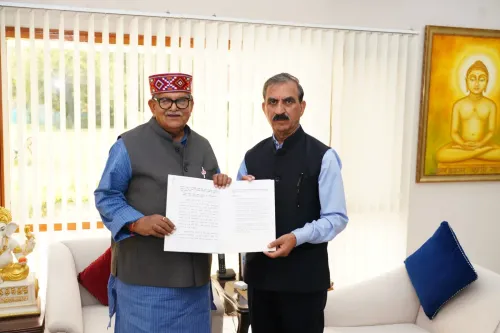
The Chief Minister's Office of Himachal Pradesh on Friday, June 26, 2026, raised the matter of constructing an additional Himachal Sadan in Chandigarh, stating that the state has so far been deprived of its legitimate right. The office noted that following consultations with the Chandigarh Administration, 4.736 acres of land in Sector-52 has been identified for the proposed construction.
Context
The post, shared in Hindi, states: 'जबकि हिमाचल प्रदेश अब तक अपने वैध अधिकार से वंचित है' ('while Himachal Pradesh has so far been deprived of its legitimate right'). It further notes that the need for an additional Himachal Sadan in Chandigarh was raised prominently, and that land in Sector-52 measuring 4.736 acres has been earmarked following deliberations with the Chandigarh Administration.
The statement frames the absence of adequate official accommodation in Chandigarh as an unaddressed entitlement for the state, signalling that the government intends to pursue this as a priority infrastructure matter.
Policy Backdrop
Following the Punjab Reorganisation Act of 1966, Chandigarh was designated a Union Territory and retained as the joint capital of Punjab and Haryana. Himachal Pradesh, which became a full state in 1971, has since maintained administrative facilities in the city to support inter-governmental coordination and official travel.
Indian states routinely operate Sadans — official guest houses and liaison facilities — in major administrative centres such as Chandigarh and New Delhi. The demand for an additional Sadan reflects the state's growing administrative footprint and the volume of official engagements that require a base in the Union Territory.
Stakeholders and Impact
The primary stakeholders include Himachal Pradesh state officials, legislators, and government employees who travel to Chandigarh for administrative and judicial purposes. An additional Sadan would reduce dependence on private accommodation and lower the state's hospitality expenditure for official visits.
The Chandigarh Administration plays a central role as the authority responsible for land-use decisions within the Union Territory. The identification of land in Sector-52 indicates that preliminary inter-governmental coordination has already taken place, though formal allocation and construction approvals remain pending.
What's Next
The next critical steps will be a formal land allocation order from the Chandigarh Administration and a budgetary provision or cabinet decision from the Himachal Pradesh government to fund design, tendering, and construction of the facility.
If the land is formally allotted and funding is approved, the additional Sadan in Sector-52 could significantly improve the state's administrative infrastructure in Chandigarh — a city that remains the closest major urban centre for much of Himachal's government machinery. The framing of this as a 'legitimate right' suggests the state may escalate the matter through official channels if progress stalls.
Point of View
' the Himachal Pradesh government is doing more than flagging an infrastructure gap — it is building a political and administrative case that could be escalated to the Centre if the Chandigarh Administration delays formal land allocation. The identification of a specific plot in Sector-52 signals that groundwork has been laid, but the harder task of securing budgetary commitment and formal allotment lies ahead. This move also fits a broader pattern of hill states asserting greater visibility and resources in the plains-based administrative hubs that govern much of their inter-governmental business. How quickly the state follows up with a cabinet decision on funding will be the real test of intent.
NationPress
26 Jun 2026
Frequently Asked Questions
Why does Himachal Pradesh want an additional Sadan in Chandigarh?
Himachal Pradesh wants an additional Sadan in Chandigarh to improve administrative infrastructure for state officials who travel to the city for inter-governmental coordination, judicial matters, and official engagements. The CM's Office has described this as a legitimate right the state has so far been denied.
Where in Chandigarh is the land identified for the new Himachal Sadan?
According to the Chief Minister's Office of Himachal Pradesh, 4.736 acres of land in Sector-52, Chandigarh has been identified for the construction of the additional Himachal Sadan following consultations with the Chandigarh Administration.
What is a Sadan and why do Indian states maintain them?
A Sadan is an official state guest house or liaison facility maintained by Indian state governments in major administrative centres outside their home territory. States use Sadans to accommodate officials, ministers, and legislators during official visits, reducing costs and improving coordination.
What is the connection between Himachal Pradesh and Chandigarh?
Chandigarh is a Union Territory and serves as the joint capital of Punjab and Haryana. As a neighbouring state with frequent administrative and judicial engagements in the city, Himachal Pradesh maintains official facilities there, though the state's capital is Shimla.
What are the next steps for the proposed Himachal Sadan in Chandigarh?
The key next steps are a formal land allocation order from the Chandigarh Administration and a budgetary provision or cabinet approval from the Himachal Pradesh government to fund design and construction of the facility in Sector-52.