HP CM Office flags roads as critical for disaster emergency response

Synopsis
The Chief Minister's Office of Himachal Pradesh has flagged rural roads as critical for emergency response in disaster-prone zones, sharing details of a high-level meeting attended by the Rural Development Minister, Chief Secretary, and Advocate General on 19 June 2026.
Key Takeaways
The Chief Minister's Office of Himachal Pradesh publicly emphasised that roads in disaster-prone areas are critical for emergency response on 19 June 2026 .
Anirudh Singh , Minister for Rural Development and Panchayati Raj, attended the high-level meeting alongside Chief Secretary K.K.
Pant and Advocate General Anoop Ratan .
Himachal Pradesh is among India's most disaster-vulnerable states, with landslides and flash floods frequently severing road links to remote villages.
The Pradhan Mantri Gram Sadak Yojana (PMGSY) , across its three phases since 2000 , has specifically targeted rural road upgradation in hilly and disaster-affected regions.
The Advocate General's presence suggests legal or contractual dimensions of road projects were part of the deliberations.
With monsoon season imminent, outcomes of this meeting carry direct implications for emergency preparedness across the state's vulnerable districts.
The Chief Minister's Office of Himachal Pradesh on Friday, 19 June 2026 underscored the critical importance of rural roads for emergency response in the state's disaster-prone zones, sharing key details from a high-level meeting that brought together senior ministers, officials, and the state's top legal officer.
Context
The post, shared from the official @CMOFFICEHP handle, stated — 'ये सड़कें विशेष रूप से राज्य के आपदा संभावित क्षेत्रों में आपातकालीन प्रतिक्रिया के लिए अत्यंत महत्वपूर्ण हैं' — translated: 'These roads are extremely important for emergency response, especially in the disaster-prone areas of the state.' The statement came in the context of a formal government meeting convened to discuss road infrastructure.
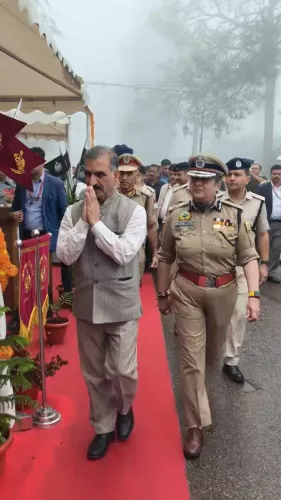
The meeting was attended by Anirudh Singh, Minister for Rural Development and Panchayati Raj; K.K. Pant, Chief Secretary; and Anoop Ratan, Advocate General, among others. The presence of both a senior cabinet minister and the state's top bureaucrat signals that the deliberations carried significant administrative and legal weight.
Policy Backdrop
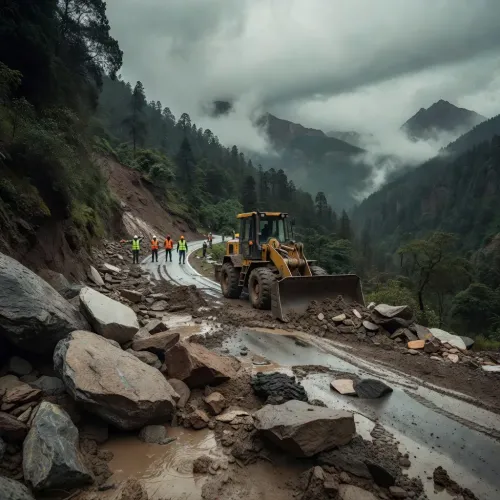
Himachal Pradesh is one of India's most disaster-vulnerable states, regularly battered by landslides, cloudbursts, and flash floods that sever road links and delay emergency services reaching remote villages. The state's mountainous terrain makes all-weather road connectivity not merely a development priority but a life-safety imperative.
The Pradhan Mantri Gram Sadak Yojana (PMGSY), launched in 2000, has been a central pillar of rural connectivity in hilly states. Successive phases — PMGSY-II (2013) and PMGSY-III (2019) — specifically emphasised upgradation of rural roads in disaster-affected and ecologically fragile areas to cut response times. The Disaster Management Act, 2005 further mandated that states integrate infrastructure resilience into emergency planning frameworks.
Stakeholders and Impact
Rural communities in Himachal Pradesh's high-altitude and geologically unstable blocks stand to benefit most directly from improved road infrastructure. During monsoon seasons, blocked or damaged roads frequently leave villages cut off for days, hampering the movement of rescue teams, medical supplies, and relief material.
Emergency services — including the State Disaster Response Force (SDRF) and district administration units — depend on functional road networks to mount timely responses. Advocate General Anoop Ratan's presence at the meeting suggests legal or contractual dimensions of road projects — potentially related to land acquisition, contractor disputes, or compliance with central scheme guidelines — were also on the agenda.
What's Next
The government's public emphasis on roads in disaster-prone zones signals that fresh tenders or budget allocations for identified high-risk blocks could follow. Observers will watch the Rural Development Department's project pipeline and any new state-level guidelines on climate-resilient road specifications aligned with the Ministry of Rural Development's evolving PMGSY norms.
With monsoon season approaching, the urgency of operationalising or repairing critical road links in vulnerable districts will only intensify — making the outcomes of this meeting consequential for communities across Himachal Pradesh's hills.
Point of View
A cabinet minister, and the Advocate General in a single meeting, the administration is signalling that it is treating road projects in vulnerable zones with both bureaucratic urgency and legal seriousness. This fits a wider pattern in Himalayan states of leveraging disaster risk narratives to strengthen the case for enhanced central funding under PMGSY and related schemes. The political calculus is straightforward: visible infrastructure action in disaster-prone constituencies yields both administrative credibility and electoral goodwill ahead of any future polls.
NationPress
19 Sept 2026
Frequently Asked Questions
Why is Himachal Pradesh focusing on roads in disaster-prone areas?
Himachal Pradesh is highly vulnerable to landslides and flash floods that regularly cut off remote villages, making all-weather roads essential for emergency response and rescue operations. The state government has flagged these roads as critical for timely disaster relief.
What is PMGSY and how does it help Himachal Pradesh?
The Pradhan Mantri Gram Sadak Yojana (PMGSY), launched in 2000, is a central scheme to provide all-weather rural road connectivity, with special provisions for hilly and disaster-prone states like Himachal Pradesh. Its later phases specifically targeted upgradation in ecologically fragile and disaster-affected areas.
Who attended the Himachal Pradesh road infrastructure meeting on 19 June 2026?
The meeting was attended by Rural Development and Panchayati Raj Minister Anirudh Singh, Chief Secretary K.K. Pant, and Advocate General Anoop Ratan, among others, as shared by the Chief Minister's Office.
What is the role of the Advocate General in a road infrastructure meeting?
The Advocate General's presence at such a meeting typically indicates that legal matters — such as land acquisition disputes, contractor compliance, or adherence to central scheme guidelines — were part of the agenda alongside administrative planning.
How does Himachal Pradesh manage disaster response in cut-off areas?
The state relies on functional road networks, the State Disaster Response Force (SDRF), and district administration units for emergency response. The Disaster Management Act, 2005 mandates that states integrate infrastructure resilience into their emergency planning frameworks.