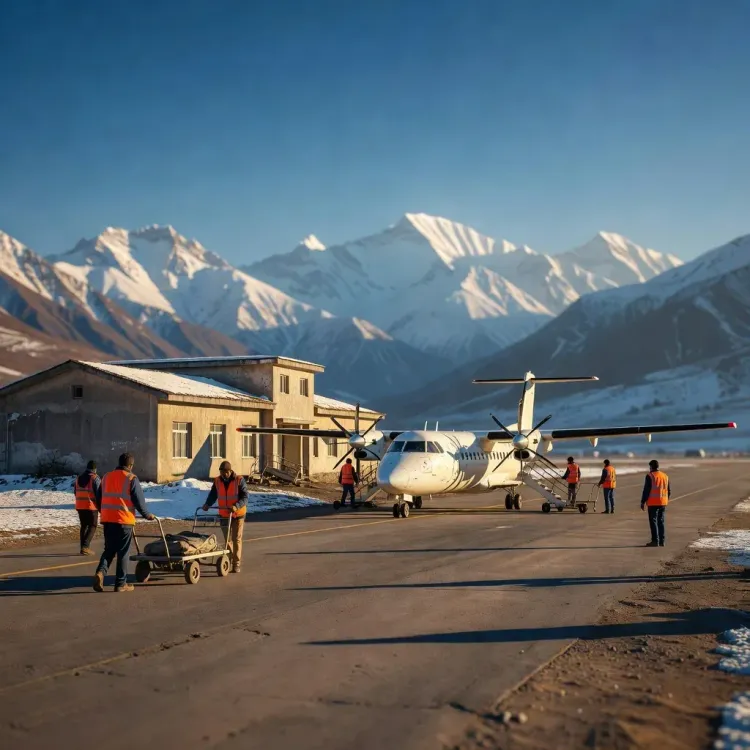
HP CM Office: Kangra Airport to be Hub, Flights for Hamirpur, Chamba, Palampur Soon
Synopsis
The Chief Minister's Office of Himachal Pradesh says air services for Hamirpur, Chamba and Palampur are under negotiation for the next 3-4 months, with Kangra Airport to serve as the regional hub once flights begin — a push backed by the central UDAN scheme's viability gap funding.
Key Takeaways
The HP CM Office announced on 21 October 2026 that talks are underway to launch air services at Hamirpur, Chamba, and Palampur within three to four months .
A Technical Feasibility Report (TFR) is pending; formal expansion steps will follow once it is received.
Kangra Airport (Gaggal Airport) will be designated as the regional aviation hub once aircraft operations begin on new routes.
The plan aligns with the central government's UDAN scheme (launched 2016), which provides viability gap funding for underserved hill routes.
Himachal Pradesh's difficult terrain — especially in districts like Chamba — makes air connectivity a priority for tourism, emergency services, and economic integration.
The hub-and-spoke model mirrors approaches already adopted in Uttarakhand and India's Northeast .
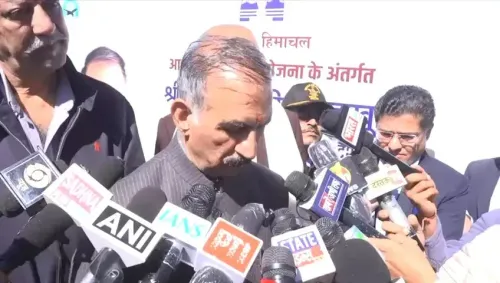
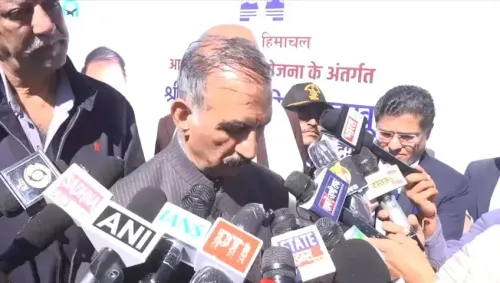
Three hill districts in Himachal Pradesh — long cut off from quick air access — are now squarely in the state government's crosshairs for new flight services, with the Chief Minister's Office of Himachal Pradesh announcing that talks are underway to launch air connectivity to Hamirpur, Chamba, and Palampur within the next three to four months.
The CMO's post on Wednesday, 21 October 2026, shared as a reply, outlines a sequenced plan: a Technical Feasibility Report (TFR) is being awaited, and once received, the expansion process will be formally set in motion. In the original Hindi, the office stated: 'आने वाले तीन-चार महीनों में हमीरपुर, चंबा और पालमपुर में हवाई सेवा शुरू करने की दिशा में बातचीत चल रही है' ('Talks are underway to start air services in Hamirpur, Chamba and Palampur within the next three to four months').Kangra Airport as the Anchor Hub
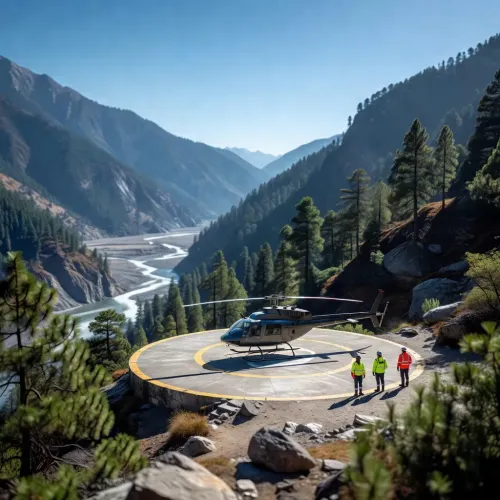
The strategic centrepiece of the plan is Kangra Airport — also known as Gaggal Airport — which the CMO confirmed will be designated as the hub once aircraft movement begins across the new routes. Kangra has historically been Himachal Pradesh's most operationally active commercial airport, and successive upgrade rounds have strengthened its case as the regional nerve centre for a hub-and-spoke network.
That hub-and-spoke logic is not new to Himalayan aviation policy. States like Uttarakhand and those in India's Northeast have pursued identical frameworks — anchoring a primary airport and radiating routes outward to remote districts where terrain makes road travel slow, expensive, or seasonally impossible. For Himachal, the stakes are especially high: Chamba in particular remains one of the more isolated districts in the state, with road access frequently disrupted by landslides.
UDAN's Role in Unlocking Remote Routes
The broader enabling architecture for these routes is the central government's UDAN (Ude Desh ka Aam Naagrik) scheme, launched in 2016 to subsidise flight operations on underserved and unserved routes across India. Several Himachal Pradesh locations — including Kangra — were identified in successive UDAN bidding rounds for viability gap funding, which makes otherwise commercially unviable hill routes financially feasible for airlines.
Without that subsidy backbone, carriers have little incentive to operate thin-frequency routes to small airports. With it, the model has shown it can work — and the CMO's framing of Kangra as a hub suggests the state is ready to build upward from that foundation.
What the TFR Window Means
The reference to a pending TFR (Technical Feasibility Report) is the critical gating factor. Until that report clears, no formal expansion process moves. The CMO's statement signals confidence that the report will arrive soon and that the three-to-four-month conversation window for Hamirpur, Chamba, and Palampur is being treated as live, not aspirational. For residents and the tourism sector in these districts, the difference between a conversation and an operational schedule is the document now in transit.
Himachal's terrain is both its greatest draw and its hardest constraint — the same mountains that fill hotels make overland logistics punishing. Getting air connectivity to even a handful of additional districts would compress travel times dramatically, open new tourism corridors, and strengthen emergency medical access. The next few months will test whether the timeline holds.
Point of View
And the three-to-four-month window is ambitious given terrain-specific regulatory requirements. If the state can hold that timeline, it sets a replicable model for other underserved hill districts.
NationPress
21 Oct 2026
Frequently Asked Questions
Which new cities in Himachal Pradesh will get air service soon?
Hamirpur, Chamba, and Palampur are the three cities where the Himachal Pradesh government is working to start air services within the next three to four months, according to the Chief Minister's Office.
Which airport will be the hub for Himachal Pradesh flights?
Kangra Airport, also known as Gaggal Airport, will be designated as the regional aviation hub once flight operations begin on the new routes.
What is the UDAN scheme and how does it help Himachal Pradesh?
UDAN (Ude Desh ka Aam Naagrik) is a central government scheme launched in 2016 that subsidises flights on underserved routes through viability gap funding, making it financially viable for airlines to operate in hill states like Himachal Pradesh.
What is a TFR report in airport expansion?
A Technical Feasibility Report (TFR) assesses whether a site can operationally and safely support air services. The HP government is awaiting this report before formally advancing the expansion plan for new airports.
Why is air connectivity important for Himachal Pradesh districts like Chamba?
Chamba and similar hill districts face frequent road disruptions due to landslides and difficult terrain, making air connectivity critical for tourism, emergency medical access, and reducing travel times to major cities.