CM Sukhu Commits ₹2,400 Cr to Expand Kangra Airport
Synopsis
Himachal Pradesh CM Sukhvinder Singh Sukhu has committed ₹2,400 crore in state funds for Kangra (Gaggal) Airport expansion, with a TFR report due shortly and air services planned for Hamirpur, Chamba, and Palampur within three to four months.
Key Takeaways
₹2,400 crore from Himachal Pradesh's own state resources allocated for land acquisition for Kangra (Gaggal) Airport expansion.
Funds for rehabilitation of families affected by the land acquisition have also been secured.
A TFR (Traffic Forecast Report) is expected within days; its receipt will formally advance the expansion process.
Air services to Hamirpur , Chamba , and Palampur are under active negotiation, targeted within three to four months .
Kangra Airport will be developed as the central hub, with helicopter services connecting all district headquarters across the state.
The connectivity plan is aimed at boosting tourism and enabling faster emergency medical transport to remote areas.
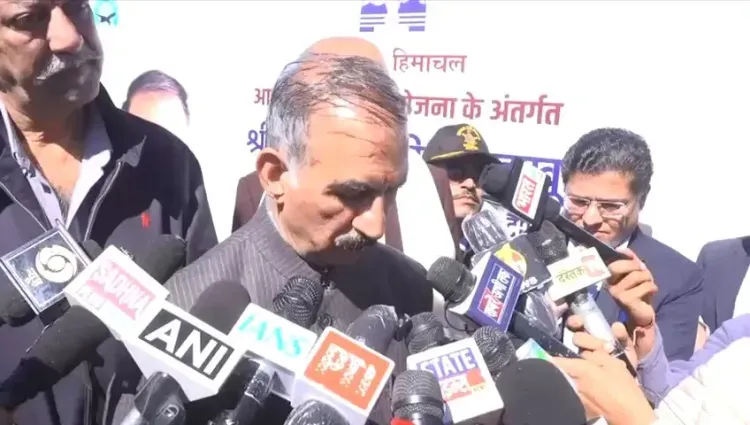
A ₹2,400 crore commitment from state funds — not central grants, but Himachal Pradesh's own resources — marks the most concrete step yet toward transforming Kangra (Gaggal) Airport into a regional aviation hub. Himachal Pradesh Chief Minister Sukhvinder Singh Sukhu announced on Wednesday, October 21, 2026, that the funds have been earmarked for land acquisition, with rehabilitation support for displaced families already secured alongside it.
₹2,400 Crore from State Coffers — and What Comes Next
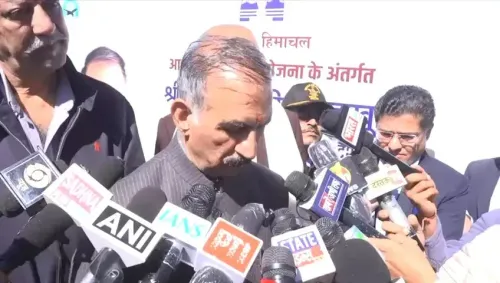
The Chief Minister's post, originally in Hindi, states: 'पर्यटन को बढ़ावा देने के लिए कांगड़ा (गग्गल) एयरपोर्ट के विस्तार हेतु हमारी सरकार ने अपने संसाधनों से भूमि अधिग्रहण के लिए 2,400 करोड़ रुपये उपलब्ध करवाए हैं' — 'To promote tourism, our government has made available ₹2,400 crore from its own resources for land acquisition for the expansion of Kangra (Gaggal) Airport.' The explicit 'own resources' framing is pointed: this is the state government putting its fiscal credibility on the line, independent of central scheme allocations.
The immediate trigger for forward movement is administrative: a TFR (Traffic Forecast Report) is expected within days. Once received, the formal expansion process advances to the next stage. Land acquisition and family rehabilitation funds are already committed — meaning the state is positioned to move without delay once the paperwork clears.
Hamirpur, Chamba, Palampur: The Hub-and-Spoke Ambition
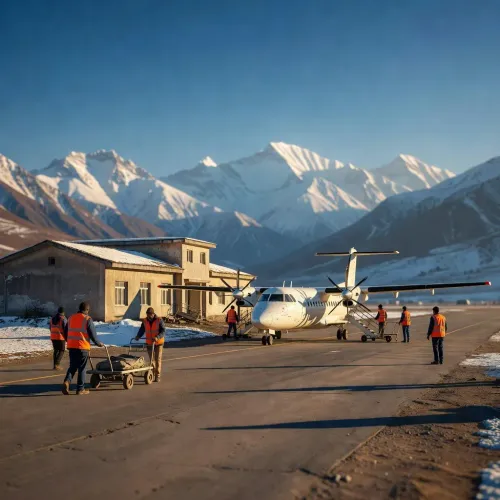
Sukhu outlined a connectivity vision that stretches well beyond Gaggal itself. Within the next three to four months, the government is in active negotiations to launch air services in Hamirpur, Chamba, and Palampur — three districts spanning Himachal's geographic spread. Once flight movements begin, Kangra Airport will be designated the central hub, with helicopter services radiating outward to connect every district headquarters in the state.
This hub-and-spoke model is a direct answer to a stubborn geographic reality. Himachal Pradesh's mountainous terrain means that road journeys between districts can stretch into hours — sometimes impassable in winter or after landslides. Helicopter links to district headquarters don't just mean faster travel for tourists or business travellers. Sukhu specifically cited medical emergencies: patients in remote valleys could reach hospitals in time. That is a life-or-death case for aviation infrastructure that road projects alone cannot make.
Tourism as the Economic Engine Behind the Expansion
The Chief Minister explicitly frames the entire initiative as a tourism-push. Kangra district anchors the Kangra Valley circuit — temples, tea gardens, Dharamsala, and the Dhauladhar range — already among Himachal's most visited corridors. A capable, expanded airport at Gaggal directly raises the ceiling on how many visitors can arrive and depart without the deterrent of a long road journey from Chandigarh or Pathankot.
The broader pattern across hilly Indian states has been to combine state investment with central schemes such as the UDAN regional connectivity programme (launched 2016) to build these networks incrementally. Whether central partnership supplements the state's ₹2,400 crore outlay here will become clearer once the TFR report is in hand and the expansion formally kicks off.
The TFR report's release — expected within days — is the watch point. It will either confirm the traffic case for a full expansion or shape how ambitious the final scope turns out to be. Either way, the money is committed, the families' rehabilitation is funded, and three new districts are in active air-service talks. Himachal Pradesh's aviation map is about to look very different.
Point of View
Allowing the Congress-led government to own the political credit for a high-visibility infrastructure milestone. The three-to-four-month timeline for Hamirpur, Chamba, and Palampur air services is ambitious given the complexity of aviation licensing and terrain-specific clearances, making it a political commitment that will be closely measured. The hub-and-spoke design mirrors successful models in other hilly states and aligns neatly with the UDAN programme's regional-connectivity logic, suggesting eventual central co-financing remains part of the strategy. The emergency medical transport rationale embedded in the announcement broadens the constituency of support beyond tourists and investors, framing this as a welfare project as much as an economic one.
NationPress
21 Oct 2026
Frequently Asked Questions
How much money has Himachal Pradesh allocated for Kangra Airport expansion?
The Himachal Pradesh government has allocated ₹2,400 crore from its own resources specifically for land acquisition for the expansion of Kangra (Gaggal) Airport .
Which new districts will get air services under Himachal Pradesh's aviation plan?
Hamirpur , Chamba , and Palampur are the three locations where the state government is in active negotiations to launch air services within the next three to four months.
What is the TFR report mentioned by CM Sukhu for Kangra Airport?
A TFR (Traffic Forecast Report) is an aviation planning document that assesses projected passenger and cargo traffic; CM Sukhu has stated it is expected within days, after which the formal expansion process will proceed.
How will Kangra Airport connect to other parts of Himachal Pradesh?
Once flight operations scale up, Kangra Airport will serve as the central hub, with helicopter services linking it to all district headquarters across Himachal Pradesh, including remote areas with limited road access.
What is the benefit of Himachal Pradesh's airport expansion for medical emergencies?
CM Sukhu highlighted that improved air and helicopter connectivity will allow patients in remote and mountainous areas to be transported to hospitals quickly during emergencies, where long road journeys currently cost critical time.