Pralhad Joshi chairs AgriVoltaics World Conference, unveils PM-KUSUM expansion plan
Synopsis
At the 7th AgriVoltaics World Conference 2026, Union Minister Pralhad Joshi announced plans for one of the world's largest agrivoltaic programmes under a new PM-KUSUM phase, highlighting that 25 lakh farmers have already benefited and 800 million litres of diesel saved.
Key Takeaways
Union Minister Pralhad Joshi and Agriculture Minister Shivraj Singh Chouhan co-chaired the 7th AgriVoltaics World Conference 2026 in New Delhi on 21 October 2026 .
The government stated that 25 lakh farmers have benefited under PM-KUSUM , with 800 million litres of diesel saved.
India plans to launch one of the world's largest agrivoltaic programmes under the next phase of PM-KUSUM.
German Ambassador Dr.
Jasper Wieck joined the conference, underscoring bilateral cooperation on sustainable energy.
The conference launched key knowledge resources to guide the scaling of agrivoltaics in India and the Global South .
India's agrivoltaic push aligns with its 500 GW non-fossil fuel capacity target by 2030 pledged at COP26.
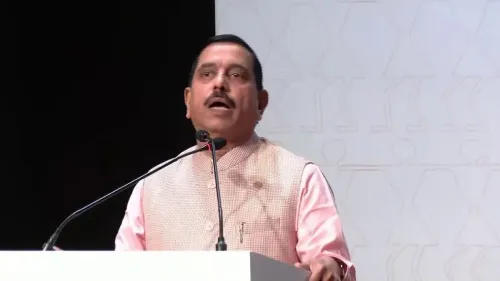
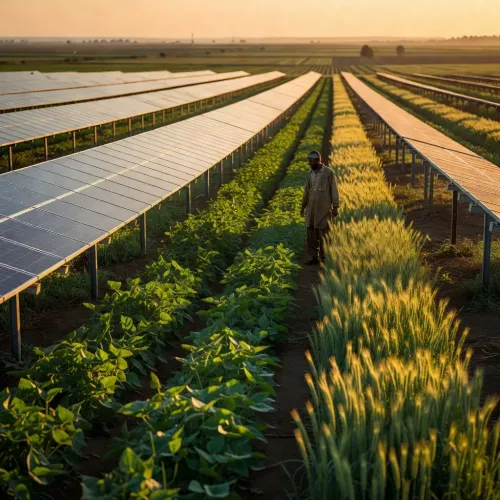
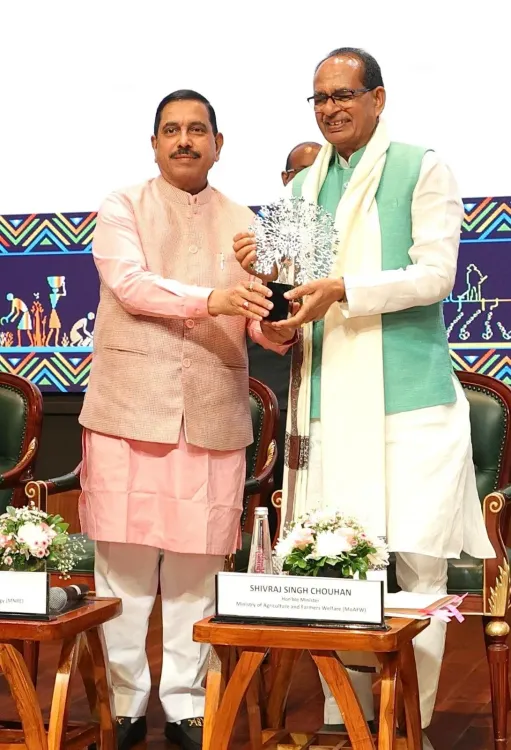
Solar panels above, crops below — and 25 lakh farmers already reaping the rewards. Union Minister for New and Renewable Energy Pralhad Joshi co-chaired the 7th AgriVoltaics World Conference 2026 in New Delhi on Wednesday, 21 October 2026, using the global platform to announce India's intention to launch one of the world's largest agrivoltaic programmes under the next phase of PM-KUSUM.
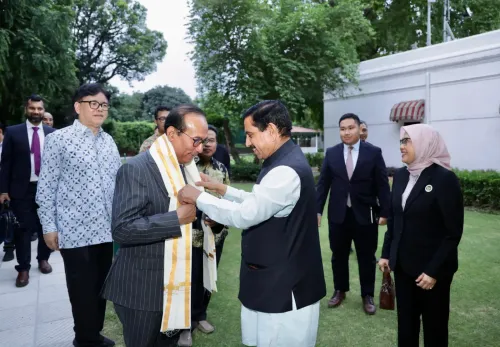
Joshi shared the stage with Union Agriculture Minister Shivraj Singh Chouhan and Dr. Jasper Wieck, Germany's Ambassador to India and Bhutan — a pairing that signalled both the domestic political weight and the international appetite behind agrivoltaics. The minister told the gathering that India's existing push under PM-KUSUM has already saved 800 million litres of diesel, translating directly into lower input costs for farmers who once ran diesel pumps across their fields.
What PM-KUSUM has built — and where it goes next
PM-KUSUM (Pradhan Mantri Kisan Urja Suraksha evam Utthaan Mahabhiyan) was launched in 2019 with a deceptively simple idea: let the same land that grows food also generate electricity. The scheme finances solar pumps and grid-connected renewable plants on farmland, giving farmers a dual income — from their crop and from selling surplus power to the grid. By October 2026, the government says the scheme has touched 25 lakh farmers nationwide.
The next phase, outlined by Joshi at the conference, would significantly scale the agrivoltaic component — solar structures elevated high enough to allow cultivation underneath. The minister pitched this not just as a domestic energy play but as a model the Global South could replicate: sun-rich, farm-heavy developing nations that face the same diesel-dependency trap India is steadily dismantling.
Germany's stake in India's solar-farm frontier
Ambassador Wieck's presence was more than diplomatic courtesy. German technical cooperation has underpinned several Indian renewable energy pilots and policy exchanges over the past decade, and agrivoltaics is a field in which Germany has invested serious research capital. The conference also saw the launch of key knowledge resources aimed at standardising agrivoltaic design, data-sharing, and deployment guidelines — groundwork that India will need before any large-scale tender can take off.
India committed to reaching 500 GW of non-fossil fuel electricity capacity by 2030 at COP26 in Glasgow in 2021. Agrivoltaics, which unlocks solar deployment on agricultural land without sacrificing food production, sits at a critical intersection of that target and the government's parallel promise to double farmers' incomes.
A Global South blueprint in the making
The framing Joshi chose — addressing a 'global gathering' and explicitly invoking the Global South — was deliberate. India has increasingly positioned itself as a clean-energy model exporter through the International Solar Alliance and similar forums. Agrivoltaics, if the next PM-KUSUM phase delivers, gives New Delhi a concrete, field-tested programme it can hold up to peer nations grappling with the same food-versus-fuel land tension.
The immediate watchlist is straightforward: official guidelines and tender documents for the expanded PM-KUSUM agrivoltaic component, and whether the India-Germany dialogue at this conference crystallises into a formal pilot or bilateral agreement.
India is no longer just talking about agrivoltaics — it is drafting the scale-up. The world, it seems, is watching to see if the blueprint holds.
Frequently Asked Questions
What is PM-KUSUM and how does it help farmers?
PM-KUSUM (Pradhan Mantri Kisan Urja Suraksha evam Utthaan Mahabhiyan) is a central government scheme launched in 2019 that finances solar pumps and grid-connected solar plants on farmland, allowing farmers to cut diesel costs and earn additional income by selling surplus power to the grid.
What is agrivoltaics?
Agrivoltaics refers to the dual use of agricultural land for both crop cultivation and solar power generation, typically using elevated solar panel structures that allow sunlight and farming activity to coexist beneath them.
What did Pralhad Joshi announce at the AgriVoltaics World Conference 2026?
Joshi announced India's plans to launch one of the world's largest agrivoltaic programmes under the next phase of PM-KUSUM, and highlighted that the existing scheme has already benefited 25 lakh farmers and saved 800 million litres of diesel.
Why was Germany's Ambassador present at an Indian energy conference?
Germany has been a long-standing partner in Indian renewable energy pilot projects and policy exchanges. Ambassador Dr. Jasper Wieck's participation signals continued bilateral interest in co-developing agrivoltaic standards and potentially funding or technically supporting India's expansion plans.
How does India's agrivoltaic push connect to its 2030 climate goals?
India committed at COP26 in 2021 to achieving 500 GW of non-fossil fuel electricity capacity by 2030. Agrivoltaics allows solar deployment on farmland without displacing food production, helping bridge the gap between renewable energy targets and agricultural land constraints.