How Has India Solarised Over 1.1 Million Farm Pumps Under the PM-KUSUM Scheme?
Synopsis
In a significant advancement for India's agricultural sector, Union Minister Pralhad Joshi reveals that over 1.1 million farm pumps have been solarized under the PM-KUSUM scheme. This initiative not only enhances energy security but also strengthens rural livelihoods and climate resilience. Discover the impact of this transformative program.
Key Takeaways
Over 1.1 million farm pumps solarized under the PM-KUSUM scheme.
The initiative enhances energy security for farmers.
It reduces reliance on diesel and lowers emissions.
PM-KUSUM promotes the dual role of farmers as food and energy providers .
Future plans include a focus on agri-photovoltaics .
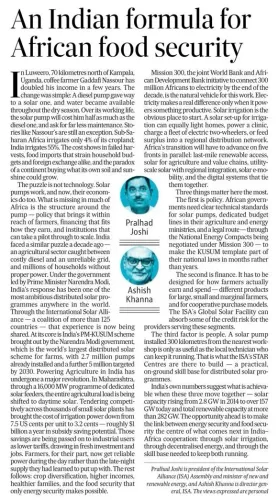
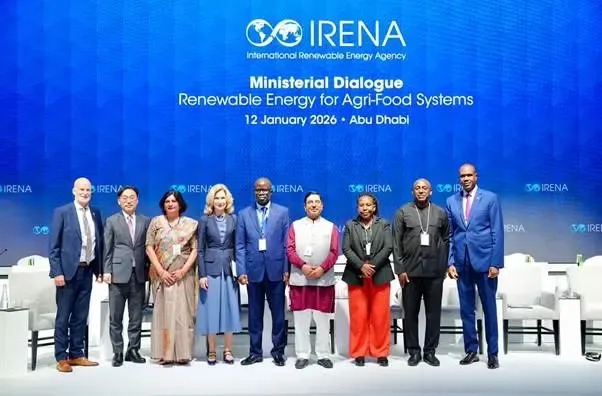
New Delhi, Jan 12 (NationPress) Union Minister for New and Renewable Energy Pralhad Joshi emphasized India's dedication to merging renewable energy with agricultural practices and food systems to bolster energy security, enhance climate resilience, and improve rural livelihoods.
The minister spoke at the inter-ministerial dialogue regarding Scaling Renewable Energy in Agrifood Systems, organized collaboratively by the International Renewable Energy Agency (IRENA) and the Food and Agriculture Organisation (FAO) in Abu Dhabi.
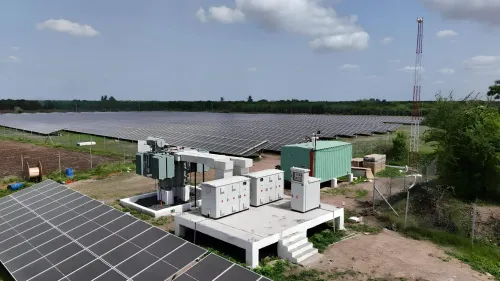
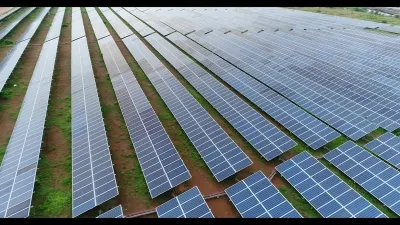
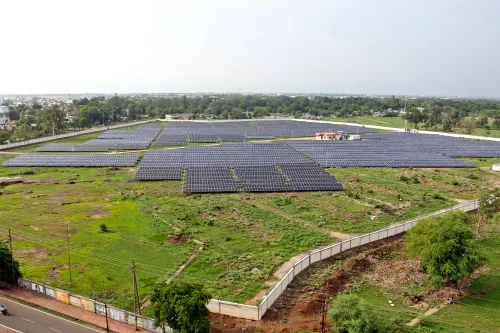
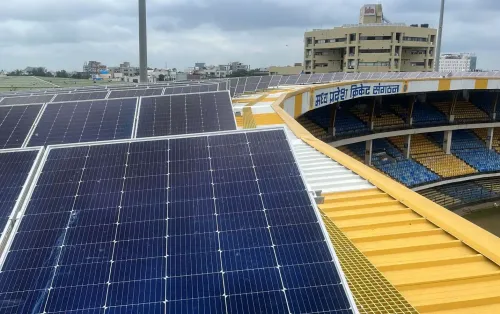
Joshi mentioned the PM-KUSUM scheme, which brings solar energy into farming via standalone solar pumps, solarization of grid-connected pumps, and decentralized solar power plants.
As of late 2025, around one million standalone solar pumps have been installed, with over 1.1 million grid-connected pumps solarized, resulting in more than 10,200 MW of installed capacity.
The scheme has decreased reliance on diesel, stabilized irrigation costs, reduced emissions, and shifted fiscal aid from ongoing subsidies to long-term asset-based investments, according to an official statement.
Joshi pointed out that when India addresses global platforms, it represents nearly one-sixth of humanity and some of the largest food security initiatives, along with one of the fastest-growing renewable energy sectors.
Highlighting India's agrarian culture, he noted that farmers, honored as Annadata, are increasingly becoming Urjadata, providers of both food and clean energy through the growth of distributed renewable energy, as stated in the announcement.
The Minister stressed that renewable energy presents a collective solution to the multifaceted global challenge of providing energy access, tackling climate change, boosting agricultural productivity, and enhancing rural livelihoods simultaneously.
On attracting private investment, Joshi highlighted initiatives like the surplus solar power sale by farmers, the National Bioenergy Programme for converting agricultural waste into energy, and the PM Surya Ghar Muft Bijli Yojana for rooftop solar, which have created new revenue streams, minimized imports, and reinforced rural energy security.
The Union Minister announced plans for PM-KUSUM 2.0, focusing on decentralized solar solutions and agri-photovoltaics (agri-PV), allowing agricultural practices and solar power generation to coexist. Well-structured agri-PV systems, he asserted, can sustain or boost crop yields, moderate micro-climates, generate clean electricity, and diversify farmer incomes.
Concluding his remarks, the minister reaffirmed India's eagerness to strengthen partnerships and scale solutions, asserting that with abundant sunshine and over 146 million small landholdings, the nation is well-equipped to become a global leader in renewable energy-enhanced agrifood systems.
On the sidelines of the 16th Assembly of IRENA, Joshi met with Elín Rós, Director General of International Development Cooperation, Ministry for Foreign Affairs of Iceland, focusing on enhancing technical collaboration to scale geothermal energy initiatives in India as part of its clean energy transition.
In another important bilateral meeting, the Indian minister engaged with Ditte Juul Jorgenson, Director-General for Energy at the European Commission, discussing the continued progress of the India–European Union Clean Energy and Climate Partnership, with a shared focus on achieving tangible results.
He also had a fruitful discussion with Mohammed Hassan Al Suwaidi, Minister of Investment of the United Arab Emirates, regarding the enhancement of India–UAE collaboration in renewable energy and clean infrastructure.
Point of View
This initiative represents a transformative step for India's agricultural landscape. The integration of renewable energy through the PM-KUSUM scheme not only addresses energy security but also reinforces the livelihoods of farmers, showcasing India's commitment to sustainable development. It is imperative that we continue to support such programs that align with global climate goals and empower local communities.
NationPress
18 Oct 2026
Frequently Asked Questions
What is the PM-KUSUM scheme?
The PM-KUSUM scheme aims to integrate solar energy into agriculture through standalone solar pumps, solarisation of grid-connected pumps, and decentralized solar power plants.
How many pumps have been solarized under this scheme?
As of late 2025, approximately 1.1 million grid-connected pumps have been solarized, along with nearly one million standalone solar pumps.
What are the benefits of the PM-KUSUM scheme?
The scheme reduces diesel dependence, stabilizes irrigation costs, lowers emissions, and shifts fiscal support to long-term asset-based investments.
How does renewable energy impact farmers?
Farmers are transitioning from being mere food providers to becoming clean energy producers, enhancing their income through renewable energy initiatives.
What is the future of the PM-KUSUM scheme?
The upcoming PM-KUSUM 2.0 will focus on decentralized solar solutions and agri-photovoltaics, allowing agriculture and solar power generation to coexist.