India Achieves Major Milestone: Over 1 Million Solar Pumps Installed
Synopsis
India has successfully installed over 1 million standalone solar pumps and solarised more than 1.3 million grid-connected agricultural pumps, enhancing farmers' incomes and promoting renewable energy in rural areas, according to Minister Pralhad Joshi.
Key Takeaways
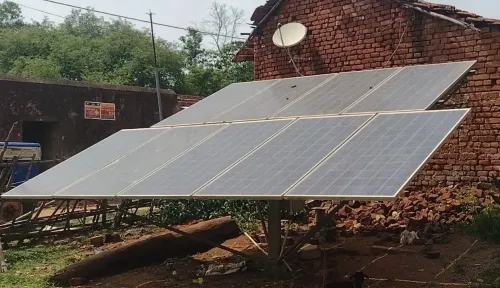
Over 1 million standalone solar pumps installed under PM-KUSUM.
More than 1.3 million grid-connected pumps solarised across India.
Farmers can save Rs 5,000 to Rs 6,500 per acre with solar pumps.
India's agrivoltaic potential ranges from 3,000 GW to 14,000 GW .
Non-fossil fuel capacity has grown to 275 GW from 81 GW since 2014.
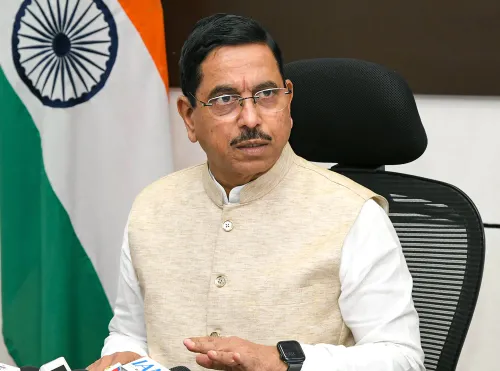
New Delhi, March 11 (NationPress) As part of the PM-KUSUM initiative, over 1 million standalone solar agricultural pumps have been installed, alongside more than 1.3 million grid-connected agricultural pumps that have been solarised throughout India, as stated by the Minister of New and Renewable Energy, Pralhad Joshi.
During an event, Joshi underscored the expanding influence of renewable energy in bolstering India’s rural economy and boosting farmers’ earnings.
He emphasized that renewable energy is progressively making its way to farms and homes across India, enabling farmers to obtain dependable power while simultaneously lowering irrigation expenses and enhancing agricultural productivity.
“Today, a farmer watering his crops may be utilizing solar energy, and a household that used to stress over power bills can now generate its own electricity through rooftop solar systems. This represents not merely an energy shift, but a profound transformation of the rural economy,” the minister remarked.
Renewable energy technologies have become crucial in agriculture, particularly through solar irrigation pumps, which allow farmers to lessen their reliance on diesel and secure reliable irrigation during the day.
The costs associated with diesel irrigation can reach approximately Rs 6,790 per acre for wheat and over Rs 8,000 per acre for cotton. In contrast, solar pumps can facilitate savings of between Rs 5,000 and Rs 6,500 per acre annually, while simultaneously curtailing emissions.
The minister also shared that the government is in the process of launching PM-KUSUM 2.0, which will feature a dedicated 10 GW Agri-PV component aimed at promoting the co-location of solar panels with crops.
This initiative will empower farmers to produce electricity while continuing agricultural activities on the same land, establishing a new paradigm for decentralized renewable energy production in rural India.
Joshi noted that the integration of solar power generation with farming practices can significantly enhance land productivity and provide farmers with an extra income stream.
Estimates suggest that India's agrivoltaic potential could range from 3,000 GW to nearly 14,000 GW, showcasing the vast opportunities in merging renewable energy with agriculture.
Furthermore, Joshi brought attention to the advancements of the PM Surya Ghar: Muft Bijli Yojana. More than 3.1 million households have already benefited from rooftop solar installations under this initiative, allowing families to generate their own power and lower their electricity bills.
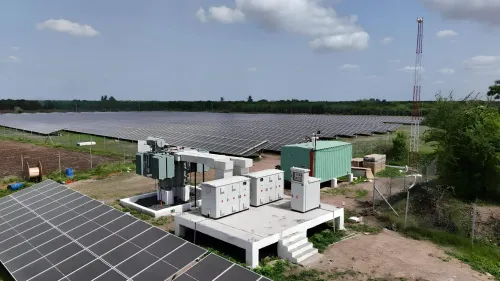
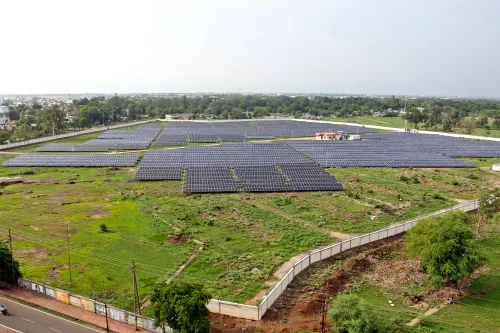
India's non-fossil fuel capacity has surged from about 81 GW in 2014 to nearly 275 GW today, with over half of the nation’s installed power capacity now sourced from non-fossil fuels.
Solar capacity has expanded from approximately 2.8 GW in 2014 to around 143 GW, wind power has increased from about 21 GW to 55 GW, and biopower capacity has risen from 8.1 GW to approximately 12 GW, highlighting the swift advancement of renewable energy deployment in the nation.
Point of View
Showcasing the government's efforts to empower farmers and enhance agricultural productivity through solar energy. By shifting towards renewable sources, India is positioning itself for a sustainable future.
NationPress
19 Sept 2026
Frequently Asked Questions
What is the PM-KUSUM scheme?
The PM-KUSUM scheme is an initiative by the Indian government aimed at promoting the installation of solar pumps to enhance farmers' access to reliable energy and reduce irrigation costs.
How many solar pumps have been installed under this scheme?
Over 1 million standalone solar agricultural pumps and more than 1.3 million grid-connected agricultural pumps have been solarised under the PM-KUSUM scheme.
What are the financial benefits of using solar pumps?
Farmers can save between Rs 5,000 and Rs 6,500 per acre annually by using solar pumps, significantly reducing their irrigation costs compared to diesel irrigation.
What is the potential of agrivoltaics in India?
India's agrivoltaic potential is estimated to range from 3,000 GW to nearly 14,000 GW, indicating vast opportunities for integrating renewable energy with agriculture.
How has India's non-fossil fuel capacity changed?
India's non-fossil fuel capacity has increased from approximately 81 GW in 2014 to around 275 GW today, with a significant portion coming from solar, wind, and biopower.