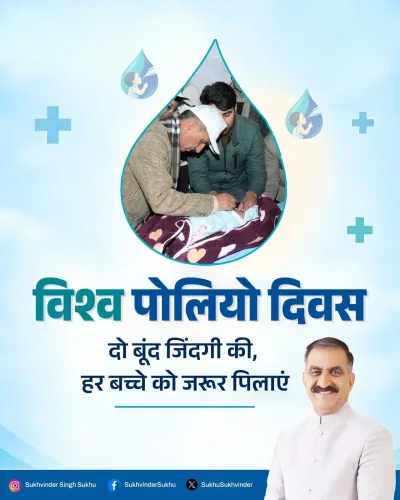
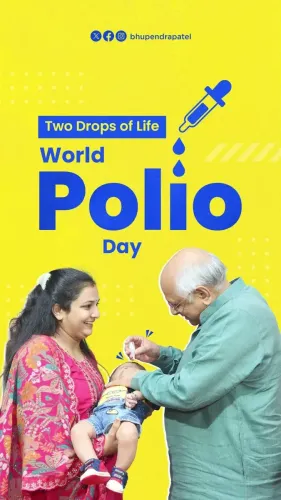
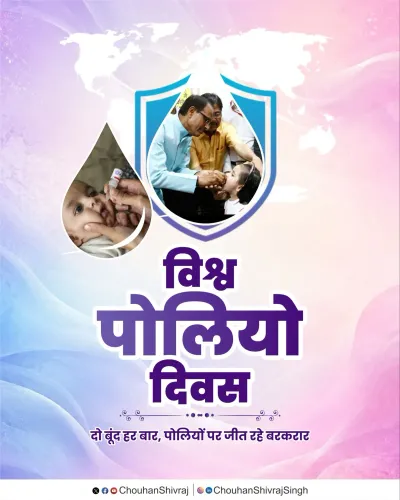
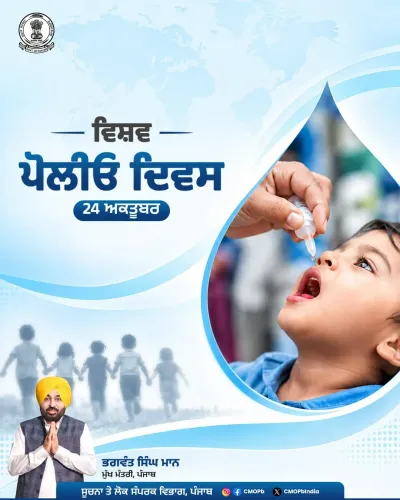
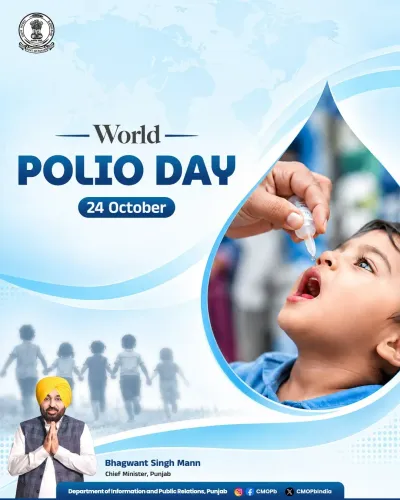
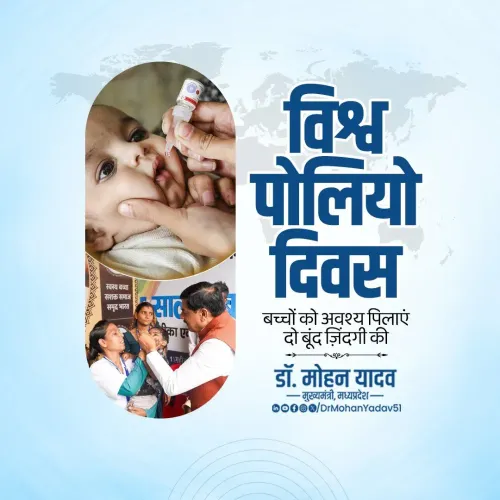
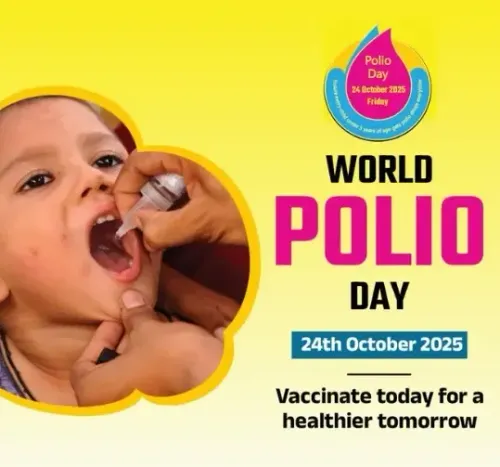
HP CM Office Marks World Polio Day, Salutes Health Workers
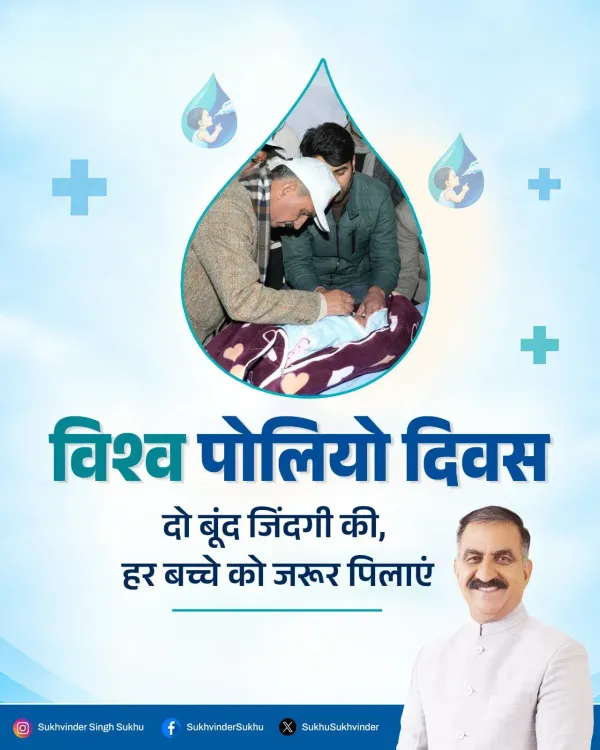
Synopsis
On World Polio Day 2026, the Himachal Pradesh Chief Minister's Office paid tribute to health workers behind India's historic WHO polio-free declaration of 27 March 2014, recalling the Congress-era milestone and the Pulse Polio drive that made it possible.
Key Takeaways
27 March 2014 : WHO officially declared India polio-free, a milestone the HP CMO attributed to the Congress-led central government.
The Pulse Polio Immunization Programme , launched in 1995 , drove repeated supplementary immunization rounds that interrupted wild poliovirus transmission by 2011 .
The eradication effort was backed by the Global Polio Eradication Initiative involving WHO, UNICEF, Rotary International, and the CDC.
As of certification, only Afghanistan and Pakistan retained endemic wild poliovirus transmission.
Health workers continue acute flaccid paralysis surveillance and immunization rounds to guard against re-importation.
World Polio Day is observed annually on 24 October to sustain global momentum against the disease.
Twelve years after the World Health Organization certified India polio-free, the victory still carries the weight of a generational struggle — door-to-door vaccination drives, millions of health workers in the field, and a country that refused to let the virus win. On World Polio Day, 24 October 2026, the Chief Minister's Office of Himachal Pradesh marked the occasion by honouring everyone who made that milestone possible.
The post recalled that on 27 March 2014, the WHO formally declared India polio-free — an achievement the CMO attributed to the efforts of the Congress-led central government at the time. The message, though truncated, was directed at the swasthyakarmiyõ aur sahayogiõ (health workers and collaborators) whose ground-level work powered the eradication campaign.
From 1995 to 2014: The Road to a Polio-Free India
India's journey began in earnest with the Pulse Polio Immunization Programme, launched in 1995 by the Government of India. The scheme used repeated supplementary immunization rounds — massive, coordinated drives where volunteers fanned out to every village and urban slum to administer oral polio drops to children under five. Wild poliovirus transmission was interrupted by 2011, three years before the formal WHO certification.
The effort was not India's alone. The Global Polio Eradication Initiative — a partnership of WHO, UNICEF, Rotary International, and the US Centers for Disease Control and Prevention — provided technical and logistical backbone. India's certification made it a landmark in one of the most ambitious public-health campaigns in history, leaving only Afghanistan and Pakistan with endemic wild poliovirus transmission at the time.
Why Vigilance Cannot Afford to Rest
Certification was not the finish line. Health authorities continue acute flaccid paralysis surveillance across the country, watching for any sign that the virus could return via importation from neighbouring endemic countries. Supplementary immunization rounds remain active, especially in high-risk border districts — a quiet, unglamorous second act that health workers have sustained for over a decade.
World Polio Day, observed every 24 October, exists precisely to keep that vigilance alive — and to remind the public that eradication is a promise renewed each year in the field, not just a certificate on a wall.
Point of View
The tribute draws attention to a genuinely underappreciated public-health workforce whose sustained door-to-door work made India's eradication possible. The broader signal is that polio vigilance — not just historical pride — demands continued institutional investment, particularly given endemic transmission in neighbouring countries.
NationPress
24 Oct 2026
Frequently Asked Questions
When did WHO declare India polio-free?
The World Health Organization officially declared India polio-free on 27 March 2014 , after three years of surveillance showing no wild poliovirus cases.
What is the Pulse Polio Immunization Programme?
The Pulse Polio Immunization Programme was launched by the Government of India in 1995 . It involved repeated supplementary immunization rounds where health workers administered oral polio drops door-to-door to children under five across the country.
What is World Polio Day and when is it observed?
World Polio Day is observed every year on 24 October to raise awareness about global efforts to eradicate polio and honour the health workers sustaining vaccination campaigns worldwide.
Which countries still have endemic polio?
As of India's 2014 certification, only Afghanistan and Pakistan retained endemic wild poliovirus transmission, making them the primary importation risk for polio-free countries nearby.
Is India still at risk of polio returning?
India continues acute flaccid paralysis surveillance and supplementary immunization rounds, particularly near its borders, to prevent re-importation of wild poliovirus from neighbouring endemic countries.