HP CM Office Pays Tribute to Sardar Udham Singh on Martyrdom Day
Synopsis
The Chief Minister's Office of Himachal Pradesh offered a solemn tribute to Sardar Udham Singh on his martyrdom day, 31 July, commemorating the revolutionary who assassinated Michael O'Dwyer in 1940 to avenge the Jallianwala Bagh massacre of 1919.
Key Takeaways
Sardar Udham Singh was executed on 31 July 1940 at Pentonville Prison, London, after assassinating former Punjab Lieutenant Governor Michael O'Dwyer in March 1940.
His act was a direct response to the Jallianwala Bagh massacre of 13 April 1919 , in which British troops killed hundreds of unarmed civilians in Amritsar .
The Chief Minister's Office of Himachal Pradesh paid tribute on 31 July 2026 , describing him as a protector of the nation's self-respect.
Udham Singh's remains were repatriated to India in 1974 and cremated with state honours in Sunam, Punjab .
Annual tributes to revolutionary martyrs on their death anniversaries are a consistent practice across Indian state governments.
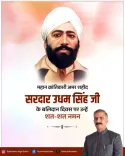
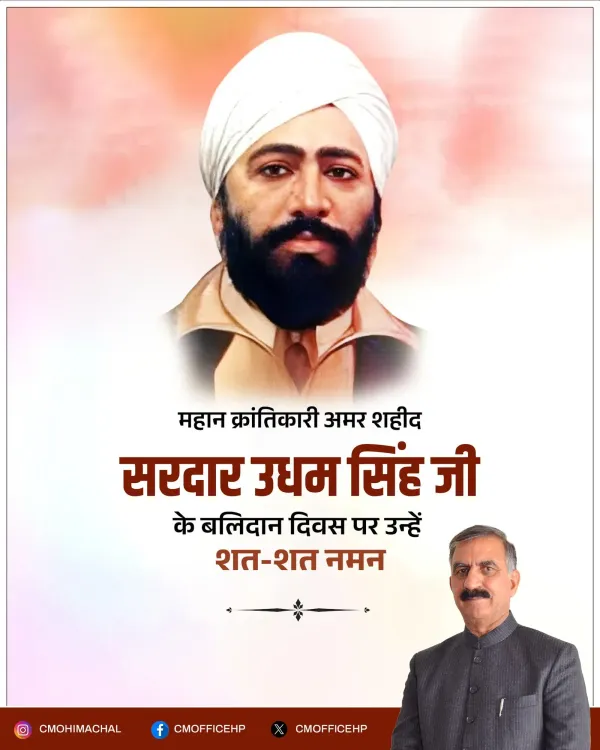
Eighty-six years after Sardar Udham Singh walked to the gallows in a London prison, his act of defiance still resonates across India. The Chief Minister's Office of Himachal Pradesh on Friday, 31 July 2026, marked his martyrdom anniversary with a solemn tribute, honouring the revolutionary who turned personal grief into an act of national reckoning.
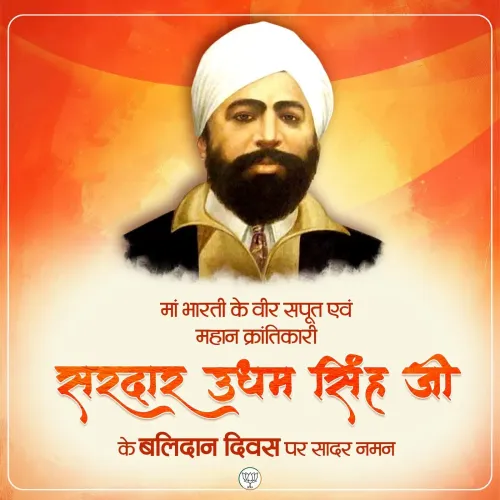
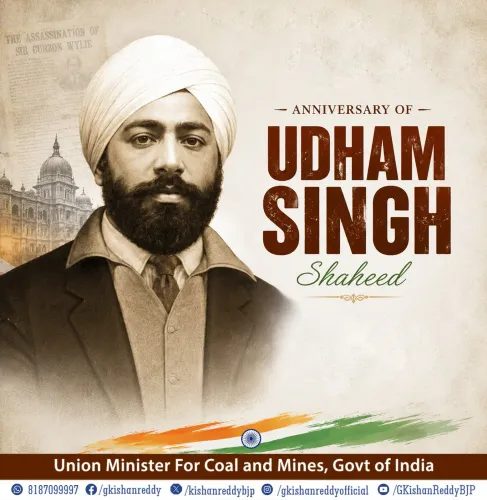
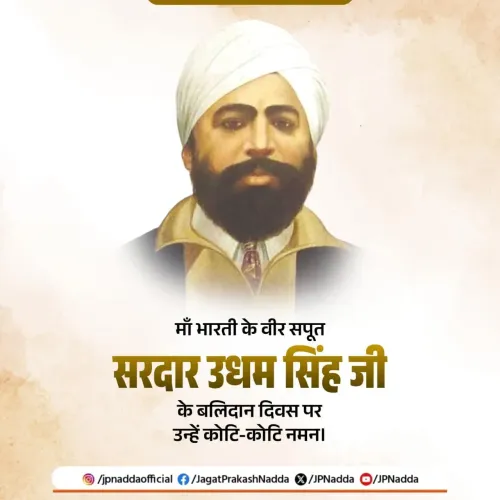
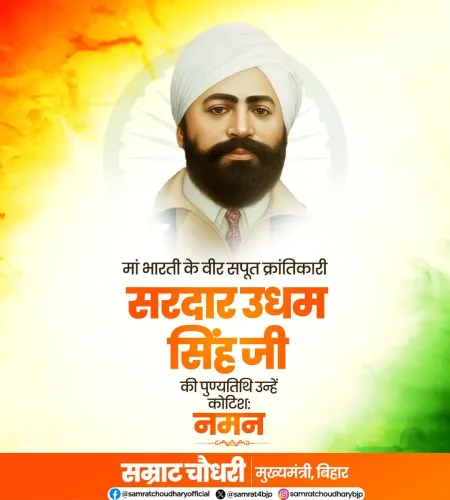
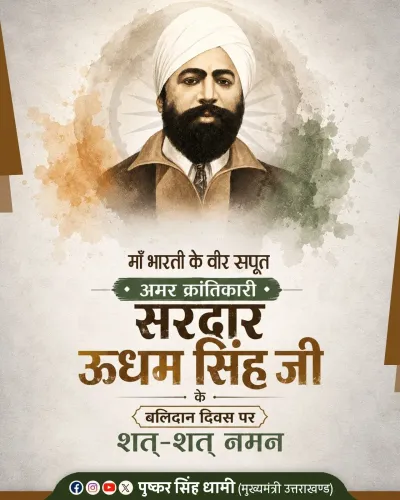
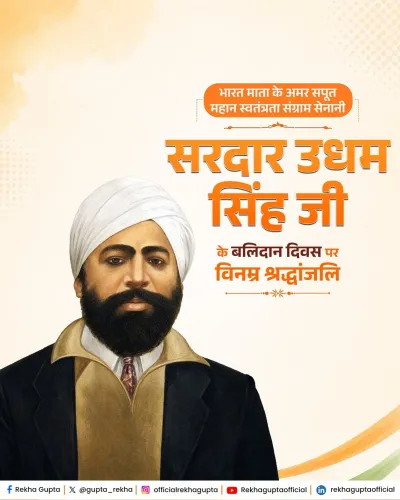
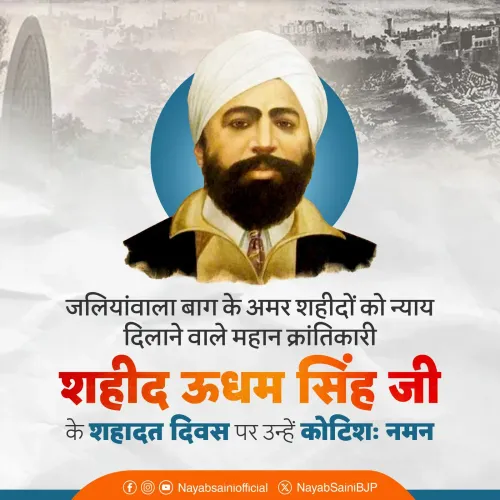
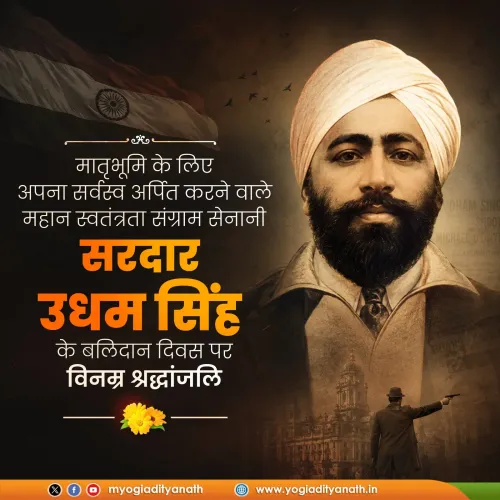
The post, written in Hindi, offered a deep bow — shata-shata naman ('a hundredfold salute') — to the 'great revolutionary who avenged the Jallianwala Bagh massacre and protected the self-respect of the nation.' The language was deliberate: not just remembrance, but recognition of what Udham Singh's sacrifice meant to a colonised people's dignity.
The act that defined a generation
On 13 March 1940, at Caxton Hall in London, Sardar Udham Singh shot and killed Michael O'Dwyer — the former Lieutenant Governor of Punjab who had sanctioned the actions of General Reginald Dyer at Jallianwala Bagh on 13 April 1919. That massacre, in which British troops opened fire on unarmed civilians gathered in an enclosed garden in Amritsar, killed hundreds and became one of the most searing atrocities of colonial rule. Udham Singh had been present that day as a young man. He waited twenty-one years to respond.
Arrested immediately after the shooting, he refused to show remorse. He was hanged on 31 July 1940 at Pentonville Prison, London. His remains were repatriated to India in 1974 and cremated with full state honours in his native Sunam, Punjab.
Why state offices mark this date every year
Across ruling dispensations and state governments, 31 July has become a fixed point in India's calendar of revolutionary remembrance. The tributes are not merely ceremonial — they are a recurring assertion that figures who operated outside the constitutional mainstream of the independence movement deserve equal standing in national memory. For Himachal Pradesh, a state that shares deep historical and cultural ties with Punjab, the day carries particular weight.
The pattern is consistent: where Bhagat Singh is remembered in March, Chandrashekhar Azad in February, and Mangal Pandey in May, Udham Singh owns July's end. Each anniversary is a small act of keeping the ledger of sacrifice open and visible.
A man who crossed oceans to settle a twenty-one-year-old account does not belong only to history. He belongs to every argument India still has about justice, dignity, and the cost of resistance.
Point of View
Cutting across party lines, as it signals both patriotic credibility and solidarity with Punjab-linked communities. The framing of Udham Singh's act as protecting national 'self-respect' rather than merely as revenge is significant — it positions his legacy within a dignity-centred nationalism that resonates with contemporary political discourse. As long as the Jallianwala Bagh wound remains a live reference point in Indo-British relations and domestic politics, figures like Udham Singh will continue to be invoked with fresh urgency each July.
NationPress
31 Jul 2026
Frequently Asked Questions
Who was Sardar Udham Singh?
Sardar Udham Singh was an Indian revolutionary who assassinated Michael O'Dwyer — the former Lieutenant Governor of Punjab who had sanctioned the Jallianwala Bagh massacre — in London on 13 March 1940. He was executed on 31 July 1940.
Why is 31 July observed as Udham Singh's martyrdom day?
31 July is observed as Udham Singh's martyrdom day because he was hanged at Pentonville Prison in London on 31 July 1940, following his conviction for the assassination of Michael O'Dwyer.
What was the Jallianwala Bagh massacre?
The Jallianwala Bagh massacre took place on 13 April 1919 in Amritsar, Punjab, when British troops under General Reginald Dyer opened fire on a crowd of unarmed civilians, killing hundreds. It became one of the most pivotal atrocities of British colonial rule in India.
Why did Udham Singh kill Michael O'Dwyer?
Udham Singh held Michael O'Dwyer responsible for the Jallianwala Bagh massacre, as O'Dwyer was the Lieutenant Governor of Punjab who had approved General Dyer's actions. Udham Singh, who was present at Jallianwala Bagh in 1919, waited over two decades before carrying out the assassination in London.
Where are Udham Singh's remains kept?
Udham Singh's remains were repatriated from Britain to India in 1974 and cremated with full state honours in Sunam, his native town in Punjab.